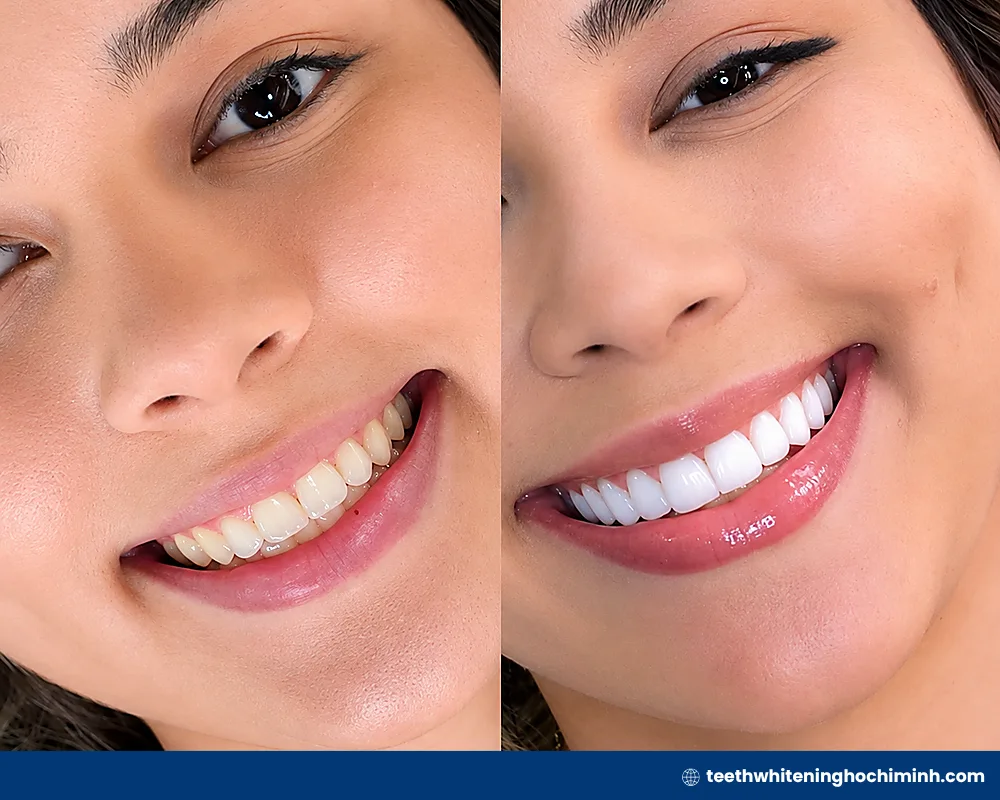
Teeth whitening for veneers doesn’t work like natural teeth. Discover why bleaching agents fail on porcelain restorations and explore smart alternatives to maintain color harmony. In this guide from Teeth Whitening Ho Chi Minh, learn why you should discuss veneer compatibility with your dentist before any whitening treatment.
The truth about teeth whitening for veneers
When exploring teeth whitening for veneers, the first essential fact to understand is that porcelain and composite veneers are manufactured from materials that resist staining differently than natural tooth enamel. The key distinction lies in their non-porous surface structure.
Natural teeth absorb stains into microscopic pores in the enamel, which whitening agents can penetrate and oxidize. Veneers have a glazed, non-porous surface that prevents both stain absorption and whitening agent penetration.
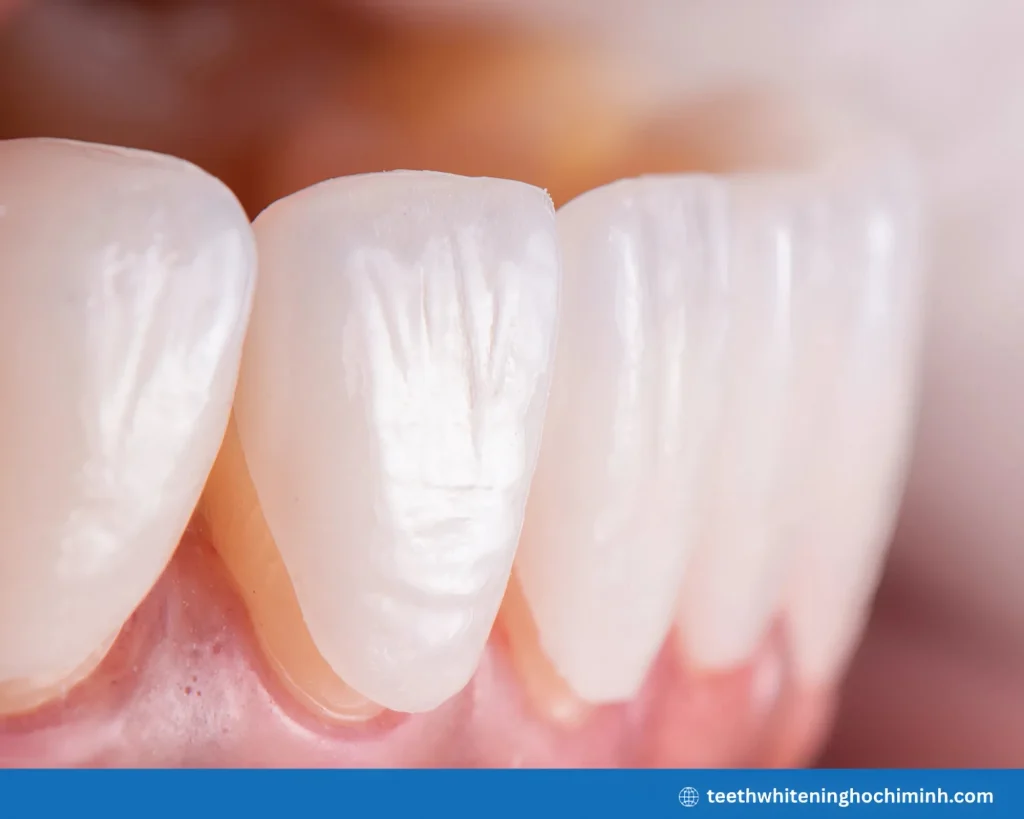
This fundamental difference means hydrogen peroxide and carbamide peroxide-the active ingredients in most whitening products-cannot alter veneer color. The shade selected during veneer placement remains permanent for the restoration’s lifespan.
Why veneers don’t respond to whitening?
The manufacturing process creates this difference:
- Porcelain veneers: undergo high-temperature firing that creates a glass-like, impenetrable surface
- Composite veneers: use resin materials that harden into a non-porous finish
Both materials lack the tubular structure of natural dentin that allows bleaching agents to work. However, veneers can accumulate surface stains from coffee, tea, red wine, and tobacco. These external stains sit on top of the veneer rather than penetrating it, making them removable through proper cleaning.
Teeth whitening safe for veneers
While teeth whitening for veneers products won’t change veneer color, certain options safely clean surface stains without damaging the restoration:
Professional in-office teeth whitening
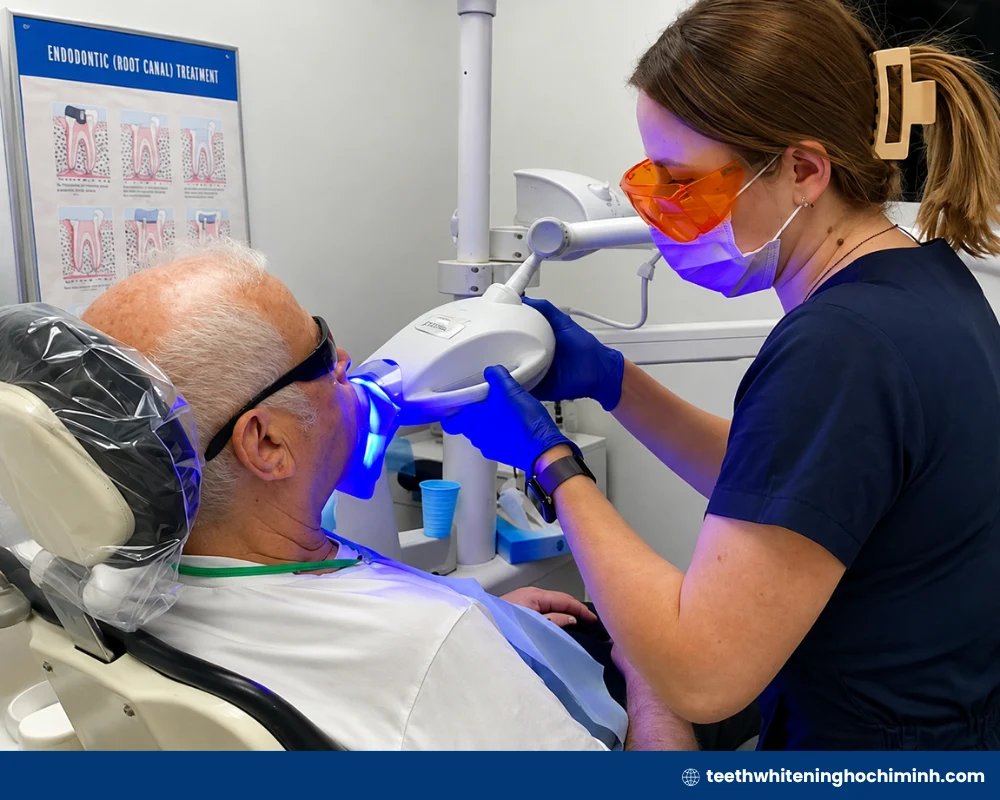
Regular hygienist appointments and in-office teeth whitening in Ho Chi Minh City provide the safest approach for maintaining veneer appearance. Professional cleaning tools and techniques remove surface buildup without compromising the veneer’s integrity or glaze. Ultrasonic scalers and polishing cups with non-abrasive paste effectively lift stains while preserving the smooth veneer surface that resists future discoloration.
Non-abrasive whitening toothpaste
Toothpastes specifically formulated for cosmetic dental work offer a gentler alternative to standard whitening products. These contain:
- Mild polishing agents instead of harsh abrasives
- Weaker concentration of cleaning chemicals
- Protective ingredients that maintain surface gloss
Brands marketed as safe for veneers typically avoid silica particles larger than 250 RDA (Relative Dentin Abrasivity), protecting the veneer surface from microscopic scratching. Look for products specifically labeled “safe for veneers” or “low-abrasive,” and consult your dentist for personalized recommendations based on your restoration type.
Whitening veneers with baking soda
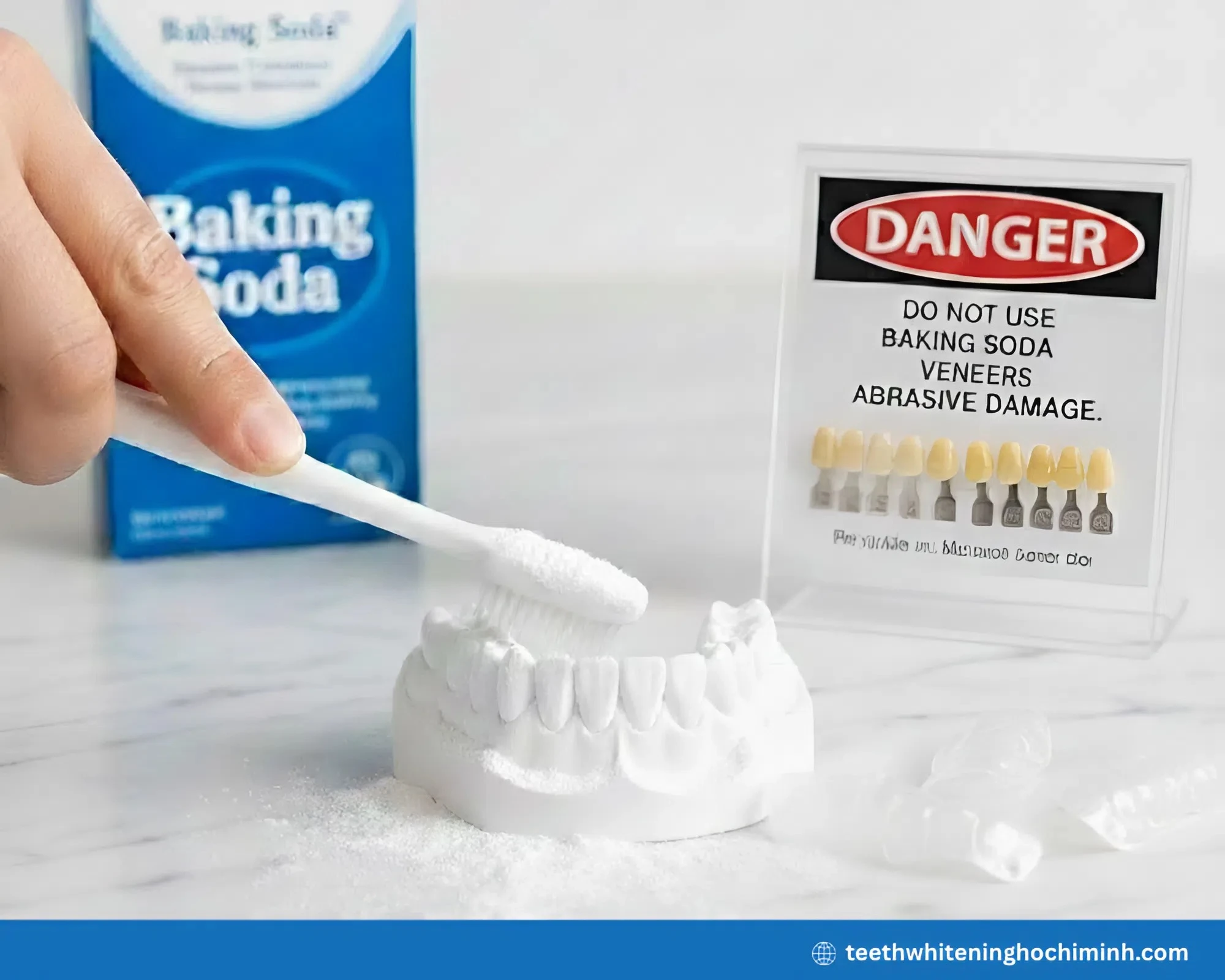
Baking soda frequently appears in home remedy recommendations teeth whitening for veneers , but its use on veneers requires careful consideration.
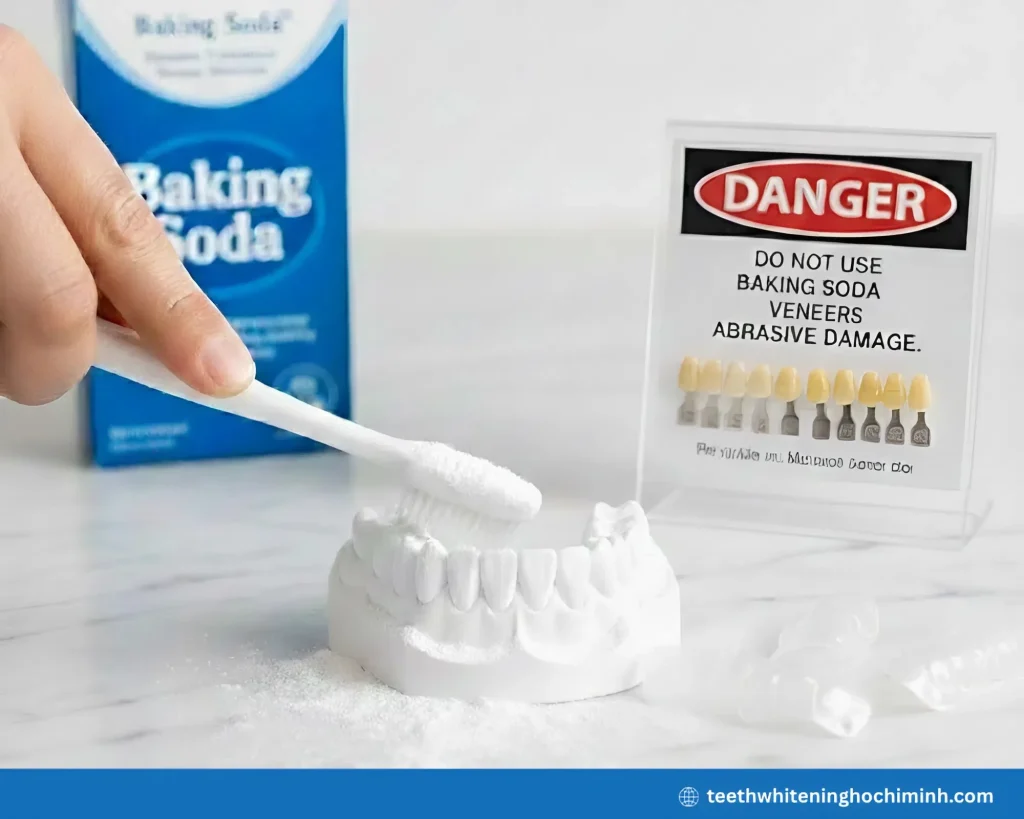
The mechanism: Sodium bicarbonate acts as a mild abrasive that physically scrubs away surface stains rather than chemically whitening teeth.
The risk: Repeated use of baking soda paste can gradually wear down the protective glaze on porcelain veneers, creating a rougher surface that actually attracts more stains over time.
Professional perspective: Most dentists advise against regular baking soda use on teeth whitening for veneers. While occasional gentle application may remove fresh surface stains, the long-term risks outweigh short-term benefits.
Composite veneers face even greater risk from baking soda, as their resin surface is softer than porcelain and more susceptible to abrasive damage. Patients with composite restorations should strictly avoid DIY whitening methods and use only dentist-approved products to prevent irreversible surface deterioration.
| Read more: Baking soda for teeth whitening – How to use it safely?
Teeth whitening for caps and veneers
Dental crowns (caps) present the same limitations as veneers regarding color change. Both restorations use similar materials-porcelain, ceramic or composite-that resist bleaching agents. Learn more about best teeth whitening for crowns to understand maintenance strategies for both restoration types.
| Restoration Type | Material | Whitening Response | Surface Stain Removal |
| Porcelain Veneers | Ceramic | No color change | Yes, with proper cleaning |
| Composite Veneers | Resin | No color change | Yes, more prone to staining |
| Porcelain Crowns | Ceramic | No color change | Yes, with proper cleaning |
| Composite Crowns | Resin | No color change | Yes, requires gentle methods |
Understanding that caps and veneers behave identically helps set realistic expectations for whitening outcomes when multiple restoration types are present.
| See detais: Teeth whitening for crowns – Does it work and is it safe in 2026
Whiten veneers at home – Safe methods
Home maintenance focuses on preventing and removing surface stains rather than changing the underlying veneer color.
Electric toothbrush technique
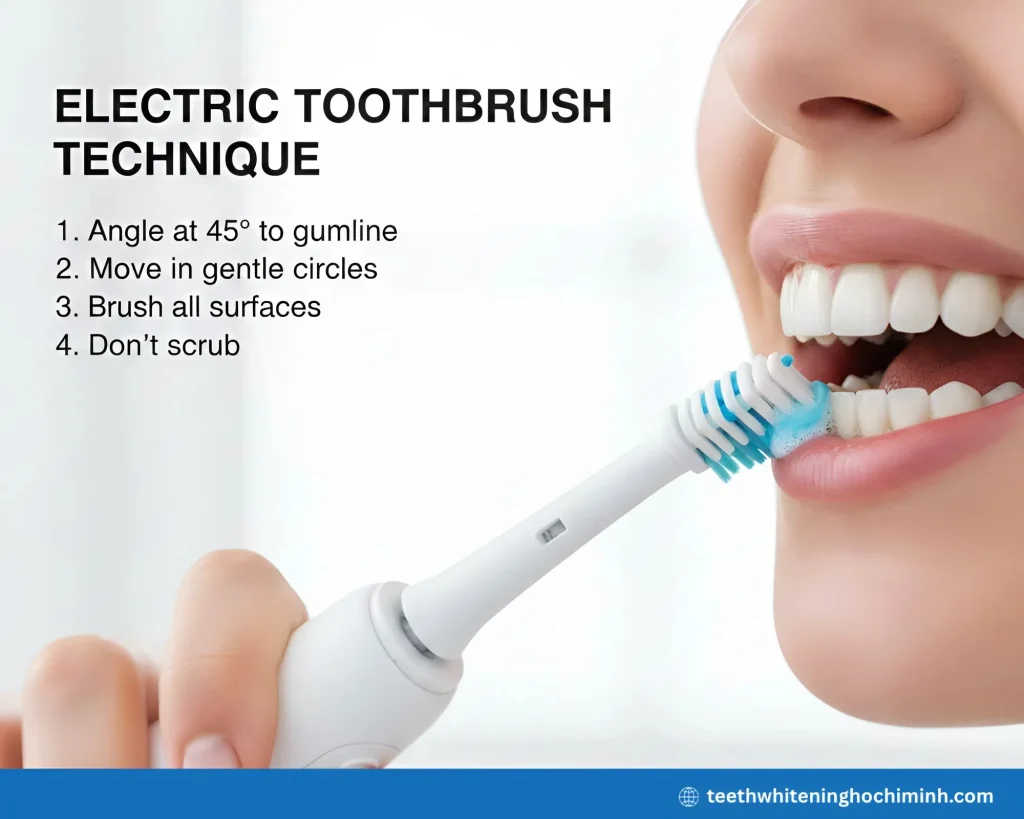
Quality electric toothbrushes remove surface debris more effectively than manual brushing without applying excessive pressure that could damage veneers. Look for models with:
- Built-in pressure sensors for safe brushing
- Gentle and ultra-gentle bristle heads
- Mild brushing settings for delicate teeth
Brush for two minutes twice daily using small circular motions rather than harsh scrubbing.
Hydrogen peroxide rinse
While hydrogen peroxide won’t penetrate veneers to change their color, diluted solutions can help lift fresh surface stains. Mix equal parts 3% hydrogen peroxide with water for a safe mouthwash.
Swish for 30-60 seconds after brushing, then rinse with plain water. Limit use to 2-3 times weekly to avoid soft tissue irritation. If you experience gum sensitivity, burning sensations, or prolonged discomfort, discontinue use immediately and consult your dentist.
Stain prevention strategies
Proactive prevention proves more effective than removal attempts:
- Rinse with water immediately after consuming staining beverages
- Use a straw for coffee, tea, and red wine to minimize contact
- Quit tobacco use or reduce frequency
- Have teeth professionally cleaned biannually
Professional options vs. DIY approaches
The table below compares effectiveness and safety of different methods:
| Method | Efficacy Against External Stains | Safety for Veneers | Cost Range |
| Professional Cleaning | Very High | Very Safe | $80-200 per session |
| Veneer Polishing | High | Safe when done properly | $100-300 |
| Non-abrasive Toothpaste | Moderate | Safe for daily use | $8-15 per tube |
| Baking Soda Paste | Moderate | Risky with regular use | $3-5 |
| Hydrogen Peroxide Rinse | Low to Moderate | Safe when diluted | $3-8 per bottle |
| Veneer Replacement | Complete color change | Safe | $800-2,500 per tooth |
Professional intervention provides the safest and most predictable results for maintaining veneer appearance. While DIY methods may seem cost-effective initially, professional guidance prevents expensive damage and ensures your veneers maintain their aesthetic quality for years.
Common misconceptions about veneer whitening
Several myths persist regarding veneer color modification:
Myth: “Laser teeth whitening can brighten veneers”
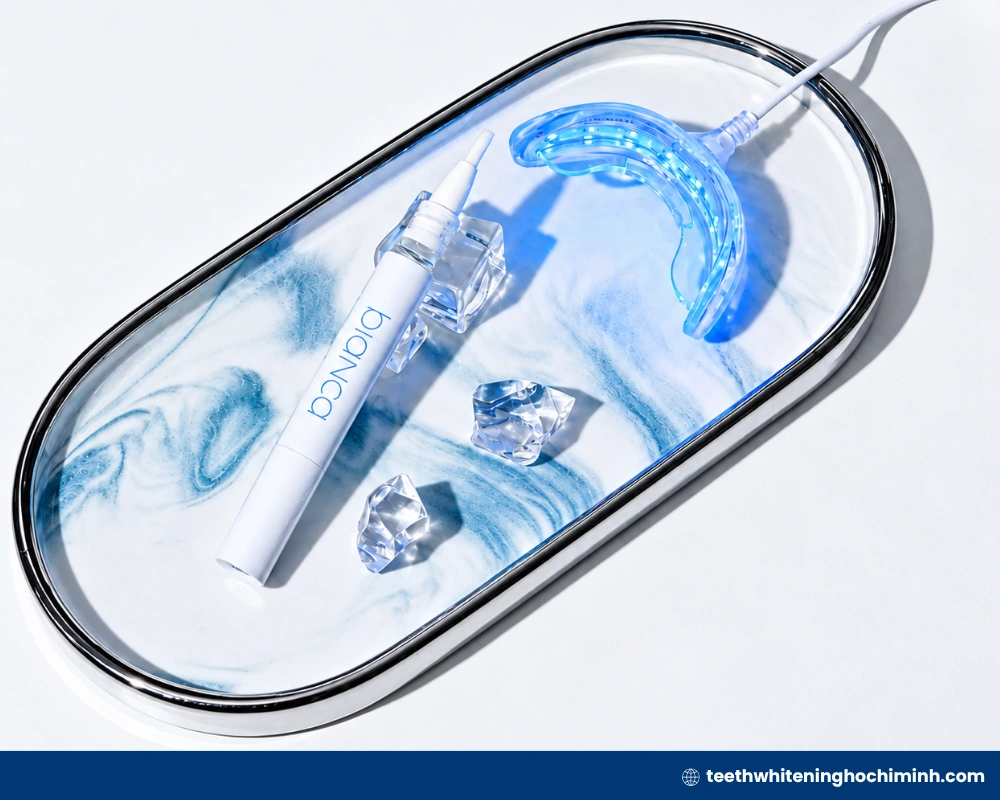
→ Reality: Laser systems accelerate peroxide activity but cannot penetrate non-porous veneer materials. However, laser teeth whitening works excellently on natural teeth before veneer placement or on natural teeth surrounding existing veneers.
Myth: “Charcoal toothpaste whitens all dental work”
→ Reality: Charcoal is highly abrasive and can scratch veneer surfaces, potentially causing more staining.
Myth: “Professional whitening works on all tooth surfaces”
→ Reality: Only natural enamel responds to chemical bleaching agents.
Frequently asked questions
Can teeth whitening damage veneers?
Whitening products won’t damage veneer materials, but they also won’t change veneer color; only natural teeth respond to bleaching agents.
Where can I find teeth whitening safe for veneers?
Dental offices offering professional cleaning services provide the safest veneer maintenance; look for cosmetic dentistry specialists in your area.
Why don’t veneers whiten like natural teeth?
Veneers have non-porous surfaces that prevent whitening agents from penetrating, unlike natural tooth enamel which absorbs and releases stain molecules.
What is the best method to teeth whitening for veneers at home?
Focus on removing surface stains with non-abrasive toothpaste and electric toothbrushes rather than attempting to change the veneer’s intrinsic color.
How much does it cost to whiten teeth with veneers?
Professional cleaning for veneer maintenance costs $80-200 per session, while veneer replacement for color change ranges from $800-2,500 per tooth.
Is whitening veneers with baking soda safe?
Occasional use may remove fresh stains, but regular baking soda application can damage the protective glaze on veneers, leading to increased staining over time.
Can I use regular whitening strips if I have veneers?
Whitening strips are safe for veneers but ineffective; they will brighten natural teeth while leaving veneer color unchanged, potentially creating shade mismatches.
How often should veneers be professionally cleaned?
Every 6 months is recommended to maintain veneer appearance and remove accumulated surface stains that home care cannot address.
Conclusion
Teeth whitening for veneers presents unique challenges that differ fundamentally from whitening natural teeth. The essential truth about teeth whitening for veneers is that while veneers themselves cannot be chemically whitened, maintaining their appearance through proper cleaning and stain prevention remains achievable.
The best approach to teeth whitening for veneers combines professional dental cleanings every six months with gentle daily home care using non-abrasive products. For those seeking to brighten their smile uniformly, natural teeth whitening before veneer placement or replacing existing veneers offers the only path to true color change.