Teeth whitening solutions are chemical preparations designed to remove stains and lighten tooth enamel through oxidation. These peroxide-based liquids and gels represent the core technology behind modern teeth whitening, whether applied professionally or at home.
Exploring different teeth whitening solutions
A teeth whitening solution contains active bleaching agents. Primarily hydrogen peroxide or carbamide peroxide. That penetrate tooth enamel to break down discoloration molecules. The concentration of these active ingredients determines the solution’s strength, speed, and safety profile.
The chemistry behind these solutions relies on oxidation. Peroxide molecules release oxygen radicals that react with chromophore compounds causing tooth stains. This chemical reaction breaks apart the molecular bonds of discoloration, converting them into colorless compounds that wash away naturally.
Solution viscosity plays a crucial role in effectiveness. Gel-based formulations maintain contact with tooth surfaces longer than liquid solutions, preventing dilution from saliva and maximizing bleaching action. Thicker gels also reduce the risk of solution migrating to gum tissue, which can cause irritation.
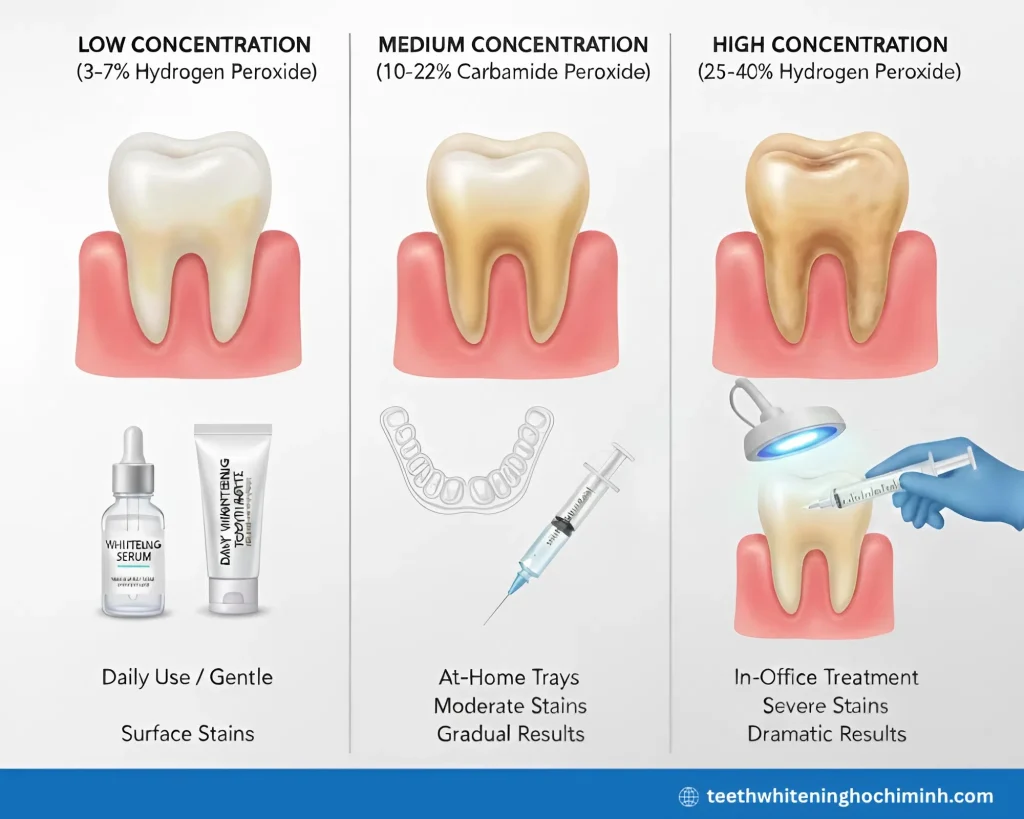
Types of teeth whitening solutions by concentration
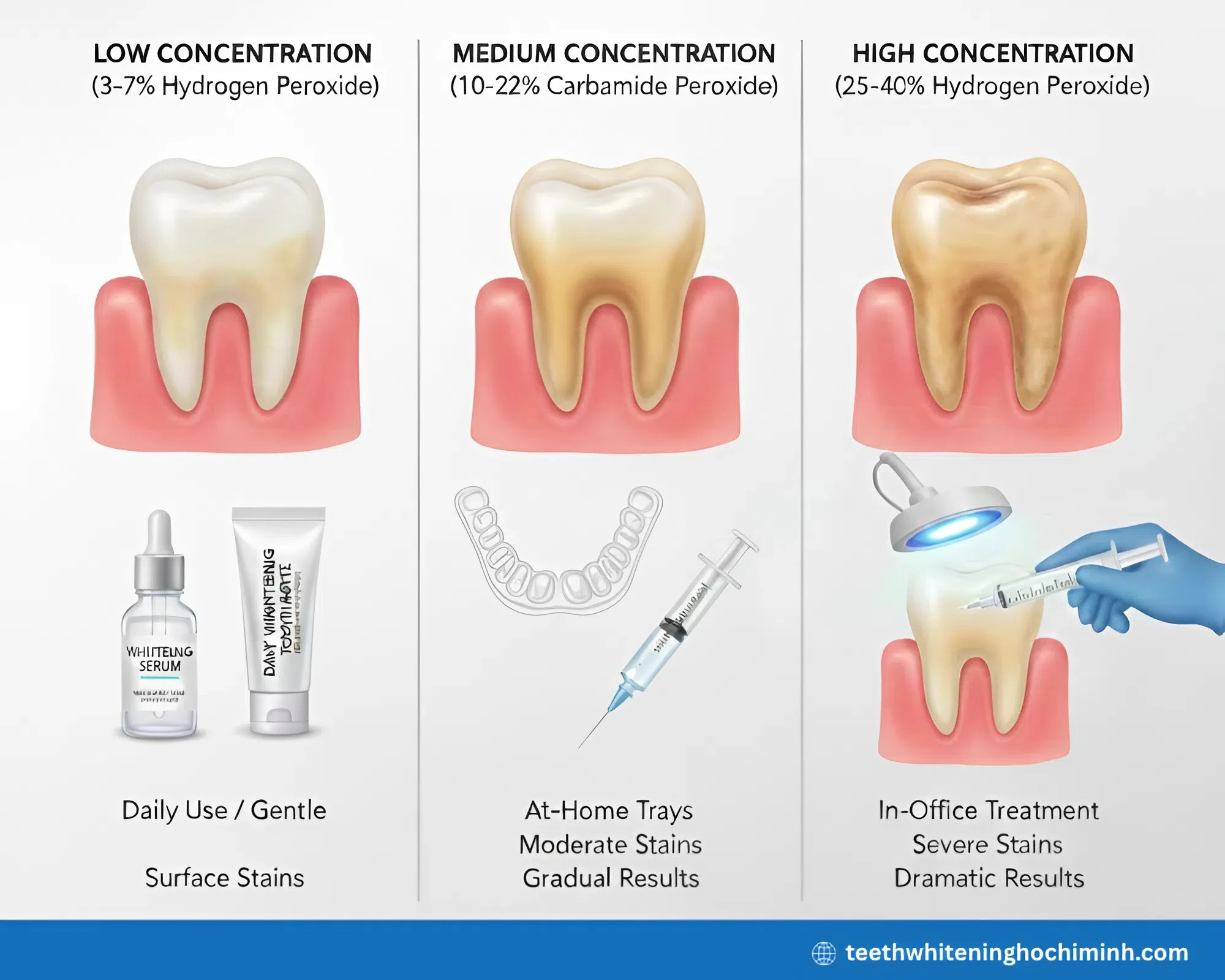
Whitening solutions are categorized by their peroxide concentration. Which directly affects potency, application time and whether professional supervision is required.
| Solution Category | Concentration Range | Typical Use | Application Duration |
| Professional-Grade | 25-40% hydrogen peroxide | Dental office only | 45-90 minutes |
| Dentist-Prescribed | 20-35% carbamide peroxide | Home use with custom trays | 2-4 hours |
| Over-the-Counter Strong | 10-20% carbamide peroxide | Home trays or strips | 30 min – overnight |
| OTC Mild | 3-10% hydrogen peroxide | Daily maintenance products | 5-30 minutes |
| Maintenance Solutions | 1.5-3% hydrogen peroxide | Rinses and touch-up pens | 60 seconds – 5 minutes |
High-concentration professional solutions
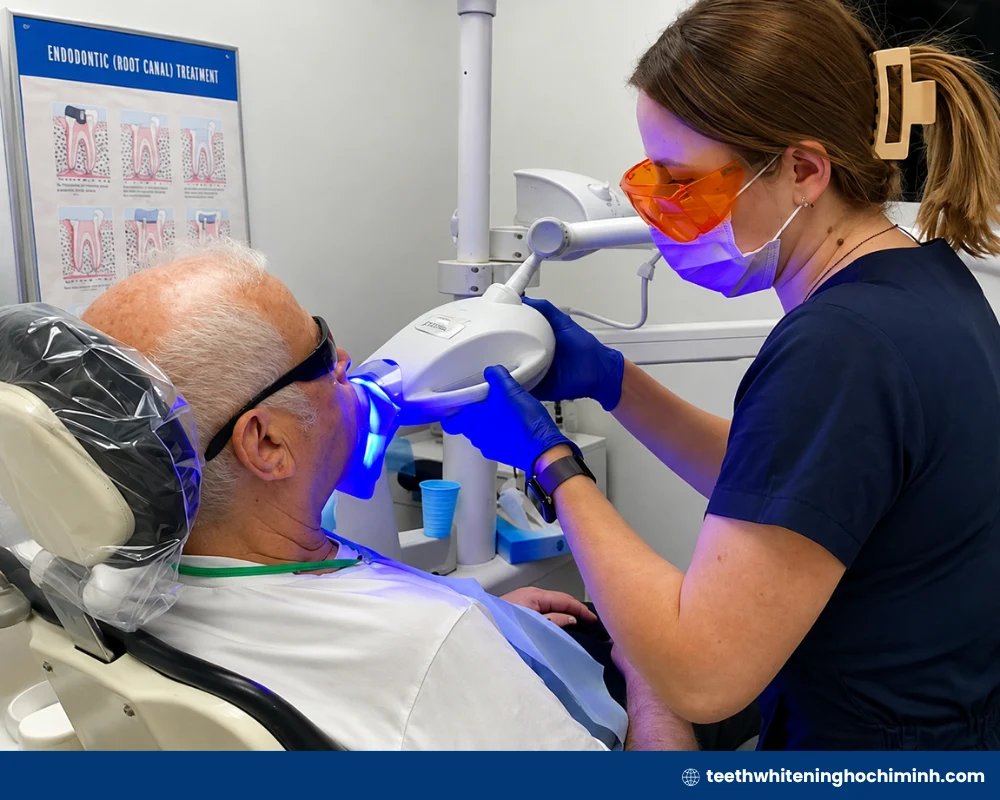
Professional teeth whitening solutions pack 25-40% hydrogen peroxide-up to 10 times stronger than store-bought products. Only licensed dentists can apply these pharmaceutical-grade formulations due to their potency.
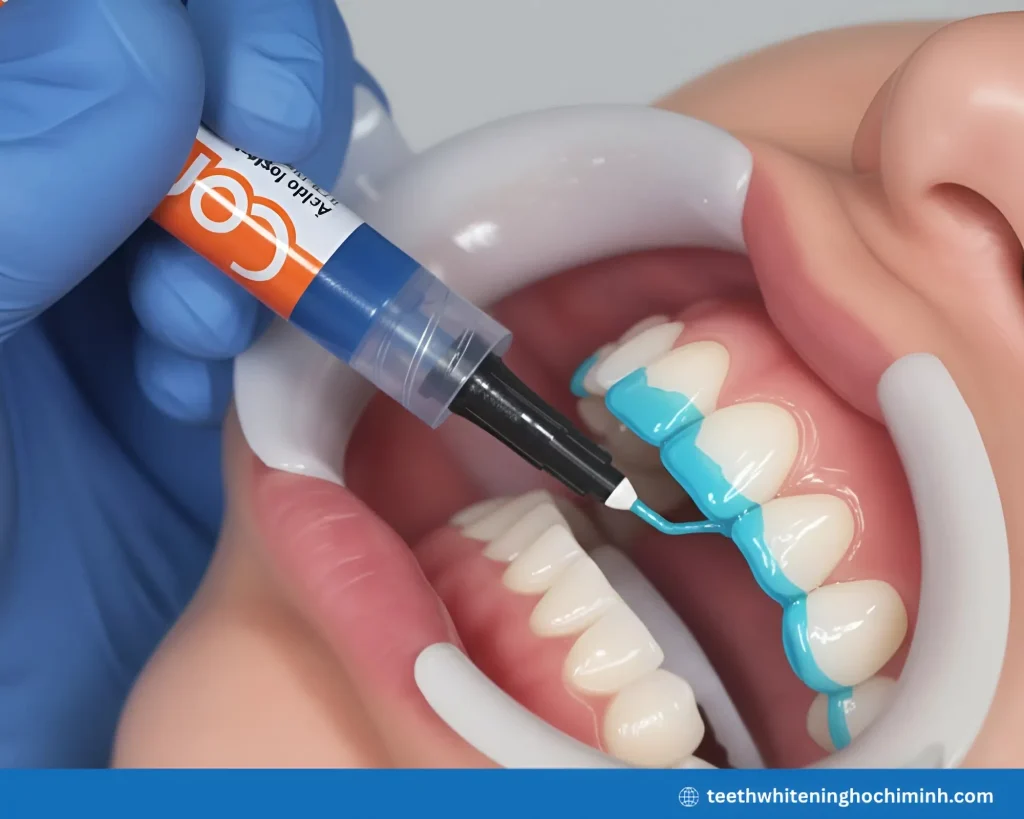
Why they work so fast: The high concentration breaks down deep stains quickly, lightening teeth 3-8 shades in just 60-90 minutes. But this strength demands careful handling – dentists apply protective gel to gums first, preventing chemical burns while the solution works on enamel.
Medium-concentration prescription solutions
Dentist-prescribed solutions for home use contain 15-35% carbamide peroxide – a gentler alternative that converts to hydrogen peroxide gradually inside the mouth.
The key difference: 10% carbamide peroxide equals roughly 3.5% hydrogen peroxide in strength, but works slower and longer. This extended release means less sensitivity while achieving similar results over 2-8 hours instead of minutes.
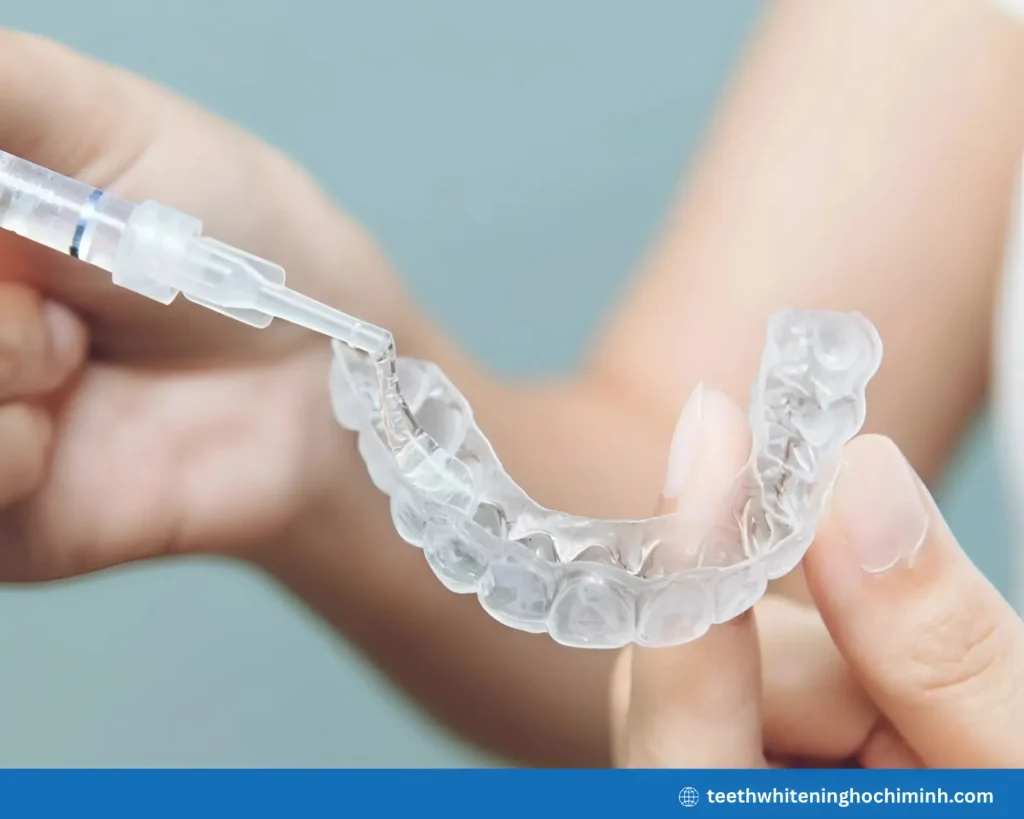
These prescription solutions come in syringes or bottles, giving users precise control over how much gel goes into their custom-fitted trays. The perfect tray fit ensures even coverage across all teeth while keeping solution away from sensitive gum tissue.
Low-concentration consumer solutions
Over-the-counter solutions range from 3-20% concentration – safe for home use without a dentist’s supervision. They work gradually over weeks, balancing effectiveness with safety. Three main types:
Carbamide peroxide gels (10-20%) Most popular for tray systems. Apply daily for 2-4 weeks to lighten teeth 2-4 shades with minimal sensitivity.
Hydrogen peroxide gels (6-14%) Used in pre-filled strips. The thinner consistency adheres well during 30-minute treatments, ideal for mild to moderate surface stains.
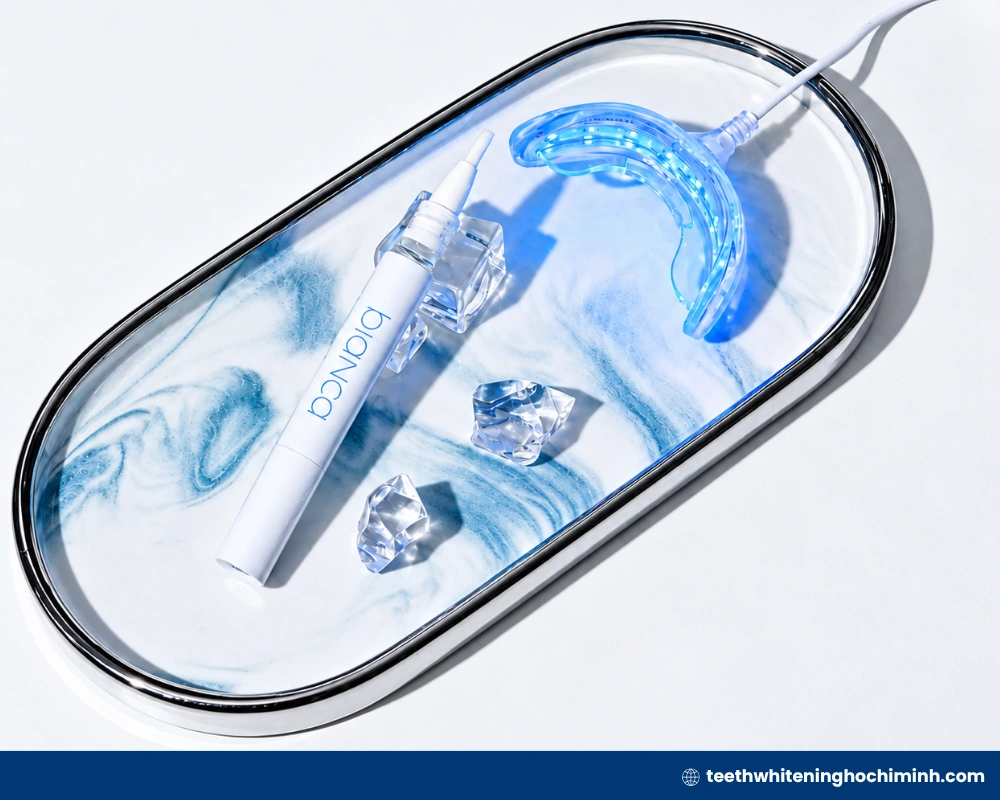
Low-concentration liquids (3-5%) Found in whitening pens for quick touch-ups. Best for maintaining brightness rather than dramatic color change.
Teeth whitening solution for trays
Tray-based delivery depends entirely on solution quality and proper application. The best solution to whiten teeth through trays must balance concentration, viscosity, and contact time.
Solution selection for tray systems
Custom tray solutions prescribed by dentists typically contain 15-25% carbamide peroxide. The custom fit teeth whitening trays allows use of stronger concentrations safely because excess solution cannot pool against gum tissue. These solutions produce results comparable to professional treatments but require consistent application over 2-4 weeks.
Generic tray solutions sold over-the-counter contain 10-16% carbamide peroxide. The lower concentration compensates for the imperfect fit of one-size-fits-all trays, which increases the risk of gum exposure. While slower-acting, these solutions remain effective for gradual whitening.
Optimal solution volume and application
Proper solution volume ensures complete coverage without waste or gum irritation. Most dental trays require approximately 0.5-0.75ml of solution per arch for full coverage.
Applying too little solution creates gaps in treatment, leaving some teeth less whitened than others. Excess solution overflows the tray, wasting product and potentially irritating gum tissue. Using a syringe-dispensed solution allows precise measurement.
Application timing based on concentration
- 10% carbamide peroxide: Safe for overnight wear (6-8 hours)
- 15-16% carbamide peroxide: 4-6 hours maximum
- 20-22% carbamide peroxide: 2-4 hours per session
- 15-20% hydrogen peroxide: 30-60 minutes only
Longer application times do not improve results beyond the solution’s active period. Once peroxide molecules are depleted, continued wear provides no additional benefit.
What makes the best teeth whitening solution
Beyond concentration percentage, several key factors determine how well a whitening solution actually works.
Critical solution components
| Component | Why it matters |
| Active Ingredient | Hydrogen peroxide works fast (30-90 min); carbamide peroxide works slowly (2-8 hours). Both deliver similar results at equivalent strength. |
| pH Balance | Neutral pH (6.5-7.5) protects enamel. Acidic solutions can temporarily soften teeth. Quality products include buffering agents. |
| Stabilizers | Prevent peroxide from breaking down before use, extend shelf life, protect against light and heat damage. |
| Thickening Agents | Keep solution on teeth longer, resist saliva dilution, prevent leaking onto gums. |
| Desensitizers | Potassium nitrate (5%) calms nerve sensitivity; fluoride (0.11-1.1%) strengthens enamel during treatment. |
How to spot quality solutions
Check freshness: Peroxide loses power over time, even sealed. Buy products manufactured within the past 6-12 months for maximum effectiveness.
Look at color: Fresh solutions are clear or slightly translucent. Yellow or brown tint means degradation – reduced whitening power regardless of what the label says.
Test consistency: Quality gels stay uniform without separating. Watery or overly thick textures signal formulation problems that hurt performance.
Comparing professional and at-home whitening solutions
The fundamental difference between professional and consumer solutions extends beyond concentration to formulation sophistication and application control.
| Characteristic | Professional Solution | At-Home Solution |
| Concentration | 25-40% hydrogen peroxide | 3-22% peroxide (various forms) |
| pH Control | Precisely buffered, monitored | Pre-buffered, unmonitored |
| Mixing | Fresh-mixed immediately before use | Pre-blended, long-lasting formulation |
| Application Precision | Professionally applied with isolation | Self-applied, user responsibility |
| Cost per Milliliter | $15-30/ml | $1-5/ml |
| Results Timeline | Single session (60-90 minutes) | Several applications over 2–4 weeks |
| Supervision | Direct dental monitoring | None (package instructions only) |
Frequently asked questions about teeth whitening solution
What is the best teeth whitening solution?
Professional-strength 35-40% hydrogen peroxide solutions provide the fastest and most dramatic results, lightening teeth 3-8 shades in a single session when applied by dental professionals.
Where can I buy professional-grade whitening solutions?
Licensed dental clinics dispense professional-strength solutions; over-the-counter products at pharmacies contain lower concentrations (3-20%) suitable for unsupervised home use.
Why do teeth whitening solutions work differently for everyone?
Natural tooth color, enamel thickness, stain type, and depth determine how enamel absorbs and responds to peroxide-based solutions, causing varied results among individuals.
How long do teeth whitening solution results last?
Professional solution results typically last 6-18 months; at-home OTC solutions require maintenance touch-ups every 3-6 months to preserve brightness.
What concentration should I use for tray whitening solutions?
Start with 10% carbamide peroxide to assess sensitivity; experienced users can progress to 15-20% concentrations with dentist guidance for faster results.
How does carbamide peroxide solution compare to hydrogen peroxide solution? Carbamide peroxide breaks down gradually into hydrogen peroxide over 2-8 hours, making it ideal for longer wear; hydrogen peroxide acts faster but requires shorter application times.
Can whitening solutions damage tooth enamel?
Properly formulated solutions used as directed are safe; excessive concentration, over-application, or acidic pH formulations can temporarily weaken enamel, making professional consultation important.
Conclusion
Selecting the appropriate solution strength – whether professional-grade for stubborn staining or moderate-concentration for maintenance – ensures safe, predictable whitening outcomes. For international patients, Teeth Whitening Ho Chi Minh provides comprehensive English-language reviews of dental clinics, comparing solution quality, concentrations available, international-standard practices, and transparent pricing to help navigate the local whitening market. Consulting dental professionals guides solution selection based on tooth condition, staining type, and sensitivity history.