Most people searching for a zimba teeth whitening pen review want one thing: a straight answer before spending money. Teeth Whitening Ho Chi Minh covers the ingredients, what results to realistically expect, how sensitivity holds up and where it stands against Crest Whitestrips – no fluff.
What is the Zimba teeth whitening pen?
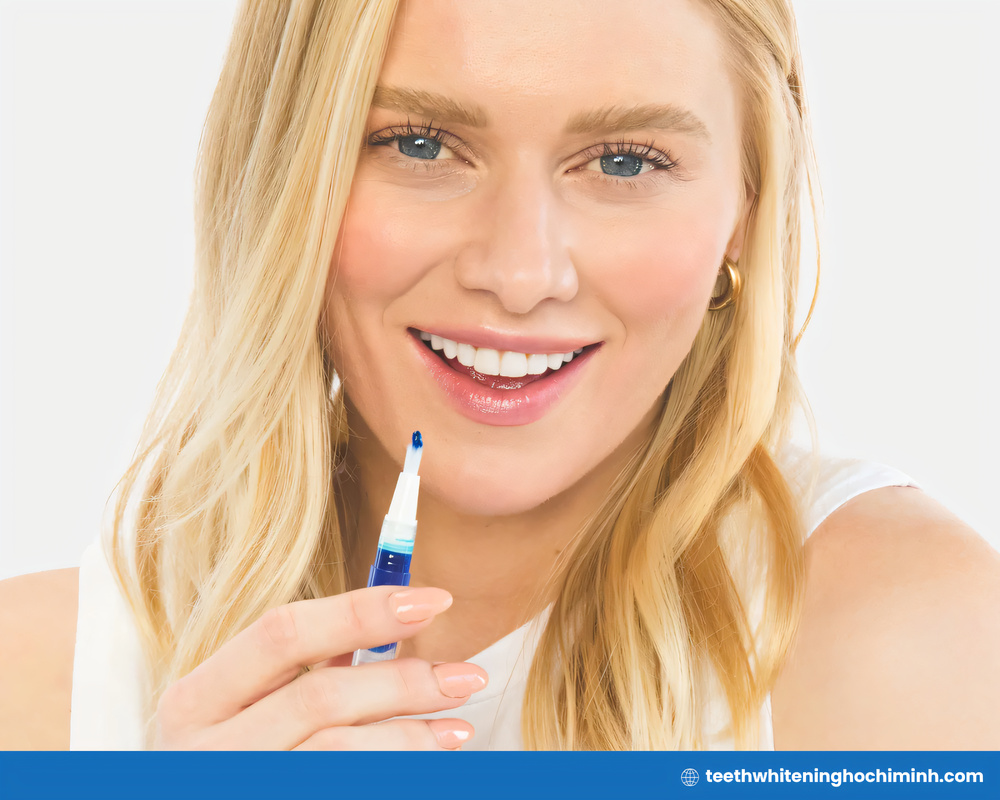
The zimba teeth whitening pen is a compact, brush-on gel applicator designed for on-the-go stain removal. It uses carbamide peroxide as its active bleaching agent – the same compound used in many professional dental offices – delivered through a twist-and-swipe brush tip.
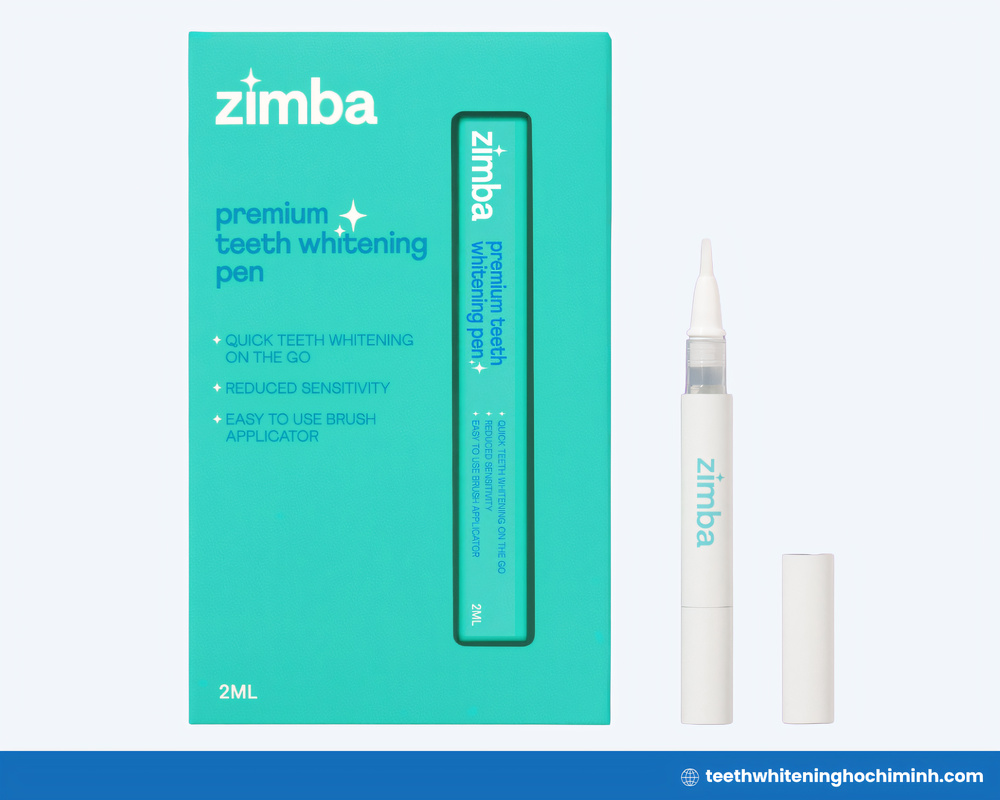
Zimba is a U.S.-based brand founded in 2018 with a stated goal of making professional-grade whitening affordable. The pen sits at roughly 60% less than comparable pharmacy-shelf products, positioning it firmly in the budget-to-mid-range category. It is vegan, cruelty-free and alcohol-free – points that matter to a growing number of health-conscious buyers.
How does the zimba whitening pen work?
The zimba teeth whitening pen works by delivering a peroxide-based gel directly onto enamel surfaces. Once applied, the gel releases oxygen molecules that break apart the chemical bonds holding stain compounds in place – targeting discoloration from coffee, tea, wine and tobacco.
The application takes just a few steps:
- Twist the bottom of the pen until gel reaches the brush tip
- Swipe evenly across the front teeth
- Avoid letting lips touch teeth for the first 30 seconds after applying the gel
- Leave the gel on for at least 5 minutes (some formulas up to 30 minutes)
- Rinse and repeat daily for one to two weeks
No trays, no strips, no mess. The precision brush tip is particularly useful for targeting individual teeth or reaching corners that strips tend to miss.
What are the ingredients in the Zimba teeth whitening pen?
Ingredient transparency matters for enamel safety. Here is what the zimba teeth whitening pen formula contains:
| Ingredient | Role |
| Carbamide Peroxide (35%) | Active whitening agent |
| Glycerin | Keeps gel from drying out |
| Propylene Glycol | Carrier and humectant |
| Carbomer | Thickening and gel stability |
| Cellulose Gum | Texture and adhesion |
| PVP | Adhesion to enamel surface |
| Menthol / Peppermint Oil | Flavoring and fresh feel |
| Sodium Hydroxide | pH balancer |
| Deionized Water | Solvent base |
Carbamide peroxide at 35% is a relatively strong concentration for an OTC product. It breaks down into hydrogen peroxide and urea when it contacts saliva, which is the actual bleaching mechanism at work. The formula excludes chlorine dioxide – an ingredient found in some cheaper whitening products that can strip enamel over time.
Does the Zimba whitening pen actually work?
The zimba whitening pen delivers noticeable results on surface stains – particularly those caused by coffee, tea, red wine and tobacco – within 3 to 7 days of consistent daily use.
Results vary based on:
- Type of staining: Extrinsic stains (surface level) respond well. Intrinsic stains caused by medication, fluorosis, or tooth trauma are largely unaffected by any OTC whitening product.
- Usage consistency: Daily application for 1 to 2 weeks produces the most reliable outcome.
- Baseline tooth shade: Naturally yellow teeth respond more visibly than grey-toned teeth.
Verified buyer feedback across Amazon and iHerb points to a common pattern: visible brightness after 3 to 5 uses, with the most stable results appearing mid-treatment. Heavy coffee drinkers tend to report the most dramatic before-and-after difference.
What the zimba teeth whitening pen will not do: it cannot reverse deep discoloration, teeth whitening for veneers, or match the shading correction achievable with professional chair-side treatment. For anyone with significant staining or mismatched tooth shades, a consultation with a dental clinic remains the more reliable path.
Zimba whitening pen vs. Crest whitestrips: Which one is better?
This is the comparison most buyers are actually making. Here is a direct breakdown:
| Feature | Zimba Teeth Whitening Pen | Crest 3D Whitestrips |
| Format | Brush-on gel pen | Adhesive strips |
| Active Ingredient | Carbamide peroxide (35%) | Hydrogen peroxide |
| Coverage | Targeted / precision | Full-arch |
| Application Time | 5–30 min | 30 min per session |
| Portability | High – pocket-sized | Moderate |
| Sensitivity Risk | Low to moderate | Moderate (known for “zingers”) |
| Price Range | ~$10–$16 per pen | ~$35–$55 per box |
| Best For | Touch-ups, travel, mild stains | Comprehensive whitening cycles |
Where the zimba whitening pen wins: portability, price per treatment and sensitivity profile. The brush applicator also allows for more precise coverage – useful for uneven staining or when someone only needs to touch up a few teeth.
Where crest teeth whitening strips win: full-arch coverage in a single session, longer contact time with enamel and a more established track record with heavy or widespread staining. Crest’s Professional Effects strips are ADA-accepted and widely recommended by dentists for comprehensive at-home whitening.
The honest verdict: for maintenance, travel, or light touch-ups between professional treatments, the zimba teeth whitening pen makes practical sense. For someone starting a whitening routine from scratch with moderate staining across all visible teeth, strips – including Zimba’s own strips – will generally produce more uniform results.
Is the zimba whitening pen safe for sensitive teeth?
The zimba teeth whitening pen is formulated with reduced sensitivity in mind. Carbamide peroxide, while effective, breaks down more slowly than hydrogen peroxide – meaning it causes less immediate nerve irritation.

That said, higher peroxide concentrations always carry some sensitivity risk. A few practical guidelines apply:
- Do not use the pen more than twice a day
- Avoid leaving the gel on longer than directed
- Stop use if significant discomfort develops
- Give teeth a rest day between treatments if sensitivity appears
How long do results last?
Results from the zimba whitening pen typically hold for several months, depending on diet and lifestyle habits. Regular coffee, red wine and tea consumption accelerates re-staining. Tobacco use significantly shortens results.
A common maintenance approach used by regular buyers: complete a full 1 to 2 week daily cycle, then use the pen 2 to 3 times per week for upkeep rather than repeating the full cycle each month.
For anyone undergoing or recently completing professional dental whitening, the zimba teeth whitening pen works well as a between-visit maintenance tool. It keeps shade gains intact without the cost of repeated clinical sessions.
| Read more: Zimba Teeth Whitening Reviews 2026: Before and After Real Results
Where to buy the Zimba whitening pen and how much does it cost?
The zimba teeth whitening pen is available through several channels:
- shopzimba.com (direct) – typically $10 to $16 per pen, with 10% off the first order
- Amazon – single pen and multi-pack options available
- iHerb and Walmart – both carry the product with international shipping options
Bundle options pairing the pen with Zimba teeth whitening strips and LED light start around $30 to $85 depending on the kit tier. For buyers outside the U.S., including those traveling in Southeast Asia, the pen is compact enough to pack without issues and does not require refrigeration.
FAQ – Quick answers about the Zimba Whitening Pen
What is the zimba teeth whitening pen?
It is a brush-on gel whitening applicator that uses carbamide peroxide to remove surface stains from coffee, tea, wine and tobacco. It is compact, vegan and designed for daily at-home use.
How does the zimba whitening pen work?
Twisting the base pushes whitening gel to the brush tip. The gel is applied to teeth, left on for 5 to 30 minutes and then rinsed. The peroxide in the gel oxidizes stain compounds inside the enamel, gradually brightening tooth color.
How long does the zimba teeth whitening pen take to show results?
Most users see a noticeable difference within 3 to 7 days of daily use. Full results are typically visible after 14 days of consistent treatment.
Is the zimba whitening pen safe?
Yes, when used as directed. The formula is enamel-safe and cruelty-free. Some users with sensitive teeth may experience mild, temporary discomfort – reducing application frequency usually resolves this.
How much does the zimba teeth whitening pen cost?
A single pen costs approximately $10 to $16 depending on the retailer. Bundle kits with strips and an LED light range from $30 to $85.
Can the zimba whitening pen replace professional whitening?
No. The pen is effective for surface stains and maintenance. For significant discoloration, mismatched shades, or intrinsic staining, professional dental whitening delivers far more controlled and lasting results.
Is the zimba whitening pen better than Crest Whitestrips?
It depends on the goal. The zimba whitening pen is more portable and lower cost per use, making it better for touch-ups. Crest Whitestrips provide broader arch coverage and are better suited to a comprehensive whitening cycle.
How often should the zimba teeth whitening pen be used?
Once or twice daily during an active whitening period (1 to 2 weeks), then 2 to 3 times per week for maintenance.
Where can the zimba whitening pen be purchased?
At shopzimba.com, Amazon, iHerb and Walmart. International shipping is available across most regions.
Who should avoid the zimba whitening pen?
Anyone with significant enamel erosion, active gum disease, or severe tooth sensitivity should consult a dentist before use. The product is not suitable for whitening crowns, veneers, or bonded restorations.
Conclusion
The zimba teeth whitening pen is a reliable, affordable tool for surface stain removal and whitening maintenance. It outperforms Crest Whitestrips on portability, price and precision – and underperforms on full-arch coverage and depth of whitening for heavier stains.
For expats and international visitors looking to maintain their smile while living or traveling in Vietnam, it fits neatly alongside professional dental care rather than replacing it. When deeper correction is needed, the team at Teeth whitening Ho Chi Minh provides professional whitening services tailored to international patients – delivering the kind of results no pen or strip can replicate.