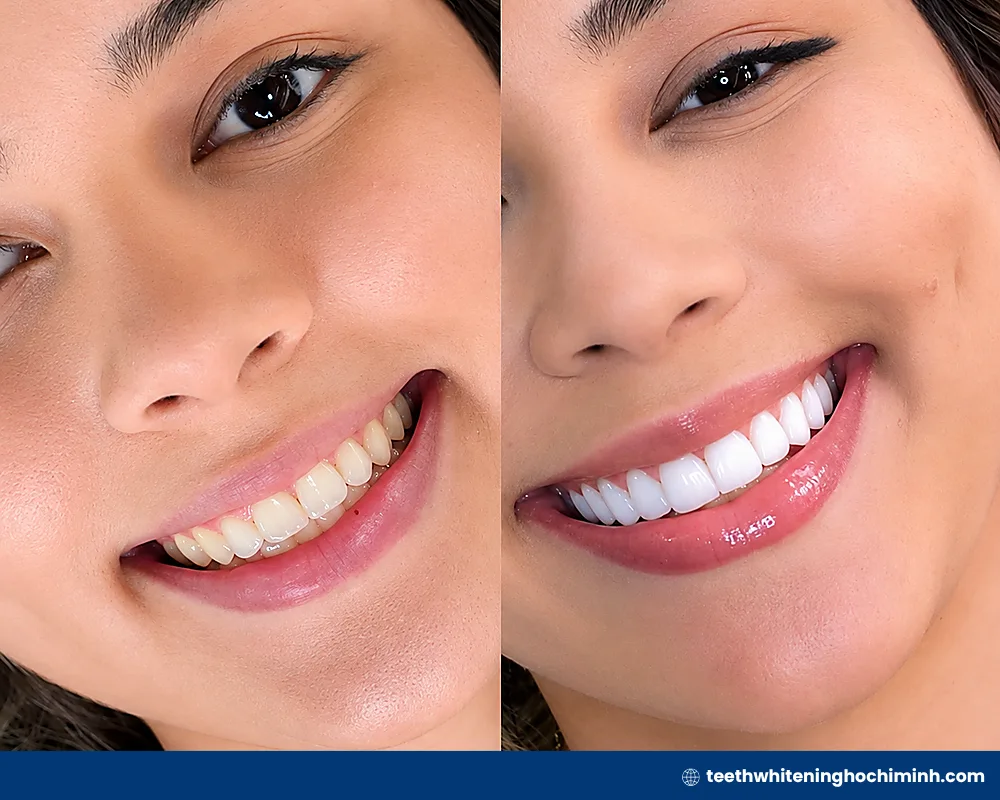
Safe teeth whitening is one of the most searched topics among expats living in Ho Chi Minh City. Many arrive without a regular dentist and feel unsure which whitening methods are actually trustworthy. This guide breaks down what makes a treatment safe, compares the most common methods available in 2026, and explains how to whiten teeth safely whether in a clinic or at home.
What is safe teeth whitening?
Safe teeth whitening is any bleaching method that lightens tooth color without damaging enamel, gums, or nerve tissue. It typically relies on controlled peroxide concentrations, proper application time and either professional supervision or dentist-approved home kits.

Foreigners living in or visiting Vietnam often search for safe teeth whitening options. Local clinics here offer lower prices than in the US, UK, or Australia. Low cost does not always mean low risk, though. Understanding what actually makes a whitening treatment safe matters more than chasing the cheapest option available.
Why safe teeth whitening matters more than speed?
Fast results look appealing on paper, but rushing the process often backfires. High-concentration gels applied without proper gum isolation can cause chemical burns and prolonged sensitivity. Dentists generally agree that gradual, monitored treatment produces more predictable and longer-lasting results than aggressive one-time bleaching.
Choosing the safest way to bleach teeth also protects the internal structure of the tooth. Enamel does not rebuild or grow back once it has worn away. Any method that thins or roughens this outer layer creates permanent vulnerability. In short, safe teeth whitening protects both the smile and the tooth structure for years to come.
How to choose the safest teeth whitening method?
Choosing the safest teeth whitening method starts with checking the peroxide type and concentration used. It also means confirming the practitioner’s qualifications and whether gums are properly protected during treatment. A licensed dentist should always assess oral health before any bleaching procedure begins.
Check the active ingredient
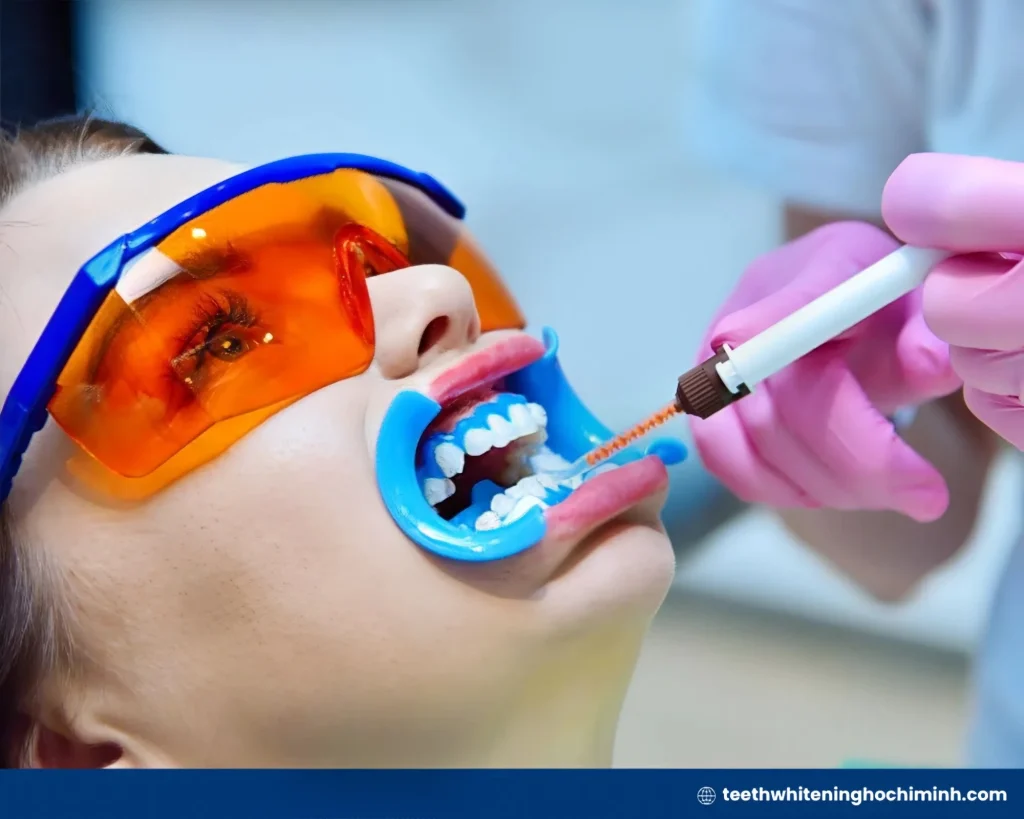
Most legitimate whitening products use either hydrogen peroxide or carbamide peroxide. Hydrogen peroxide acts faster and is usually applied in-office under professional supervision. Carbamide peroxide breaks down more slowly and suits take-home trays instead. Both are considered safe teeth bleaching agents when used at approved concentrations and exposure times.
Verify the provider’s credentials
Reputable clinics in Ho Chi Minh City employ dentists registered with Vietnam’s Ministry of Health. Many clinics also list these credentials directly on their websites. Expats should verify a clinic’s license, read patient reviews and ask directly about the whitening protocol before booking. This due diligence is one of the simplest ways to ensure a safe teeth bleaching experience from the start.
Discuss sensitivity management
A trustworthy provider explains how sensitivity is managed during and after treatment. This may involve desensitizing gel, fluoride application, or adjusted exposure time. Clinics that skip this conversation may be prioritizing speed over the safest way to whiten teeth.
Is professional teeth whitening safe?
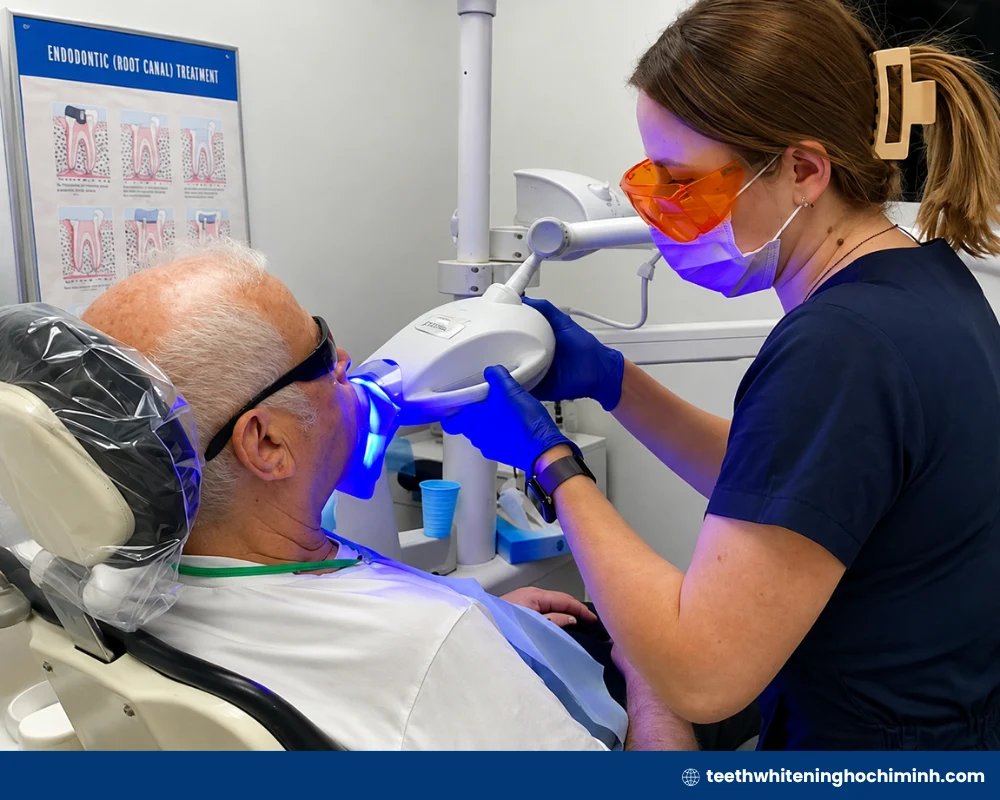
Professional teeth whitening is safe when performed by a licensed dentist using approved peroxide concentrations and protective gum barriers. In-office treatment allows real-time monitoring, which lowers the risk of chemical burns or enamel damage compared with unsupervised use.
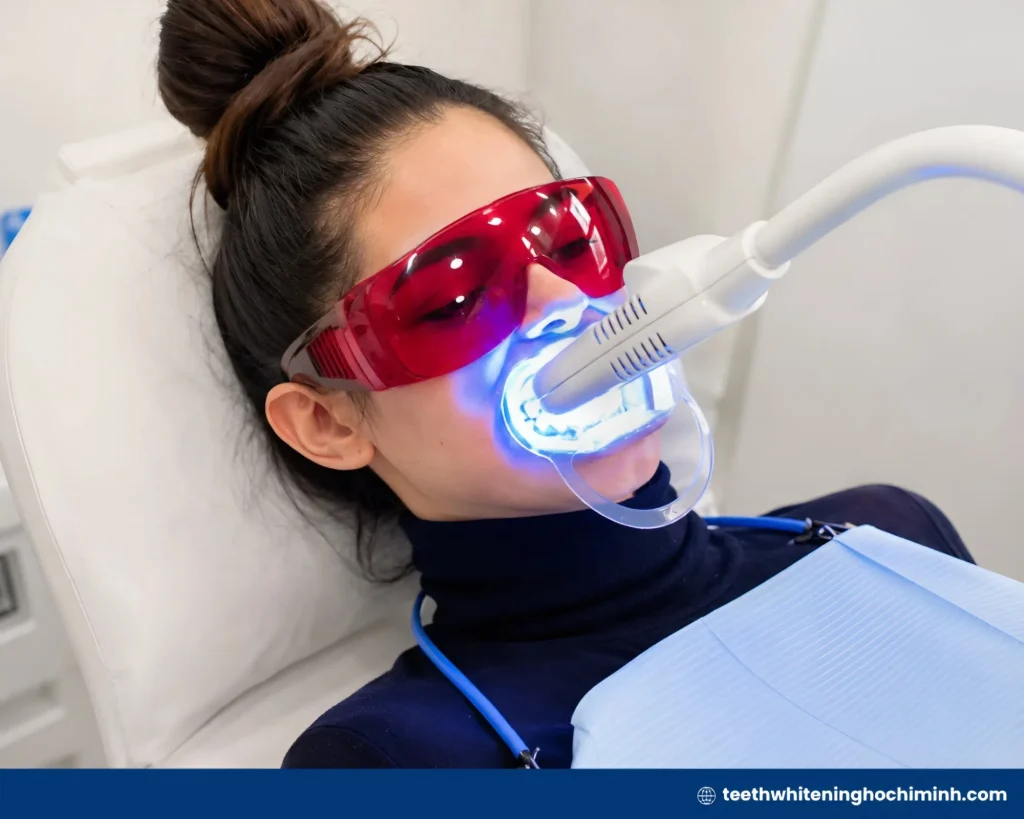
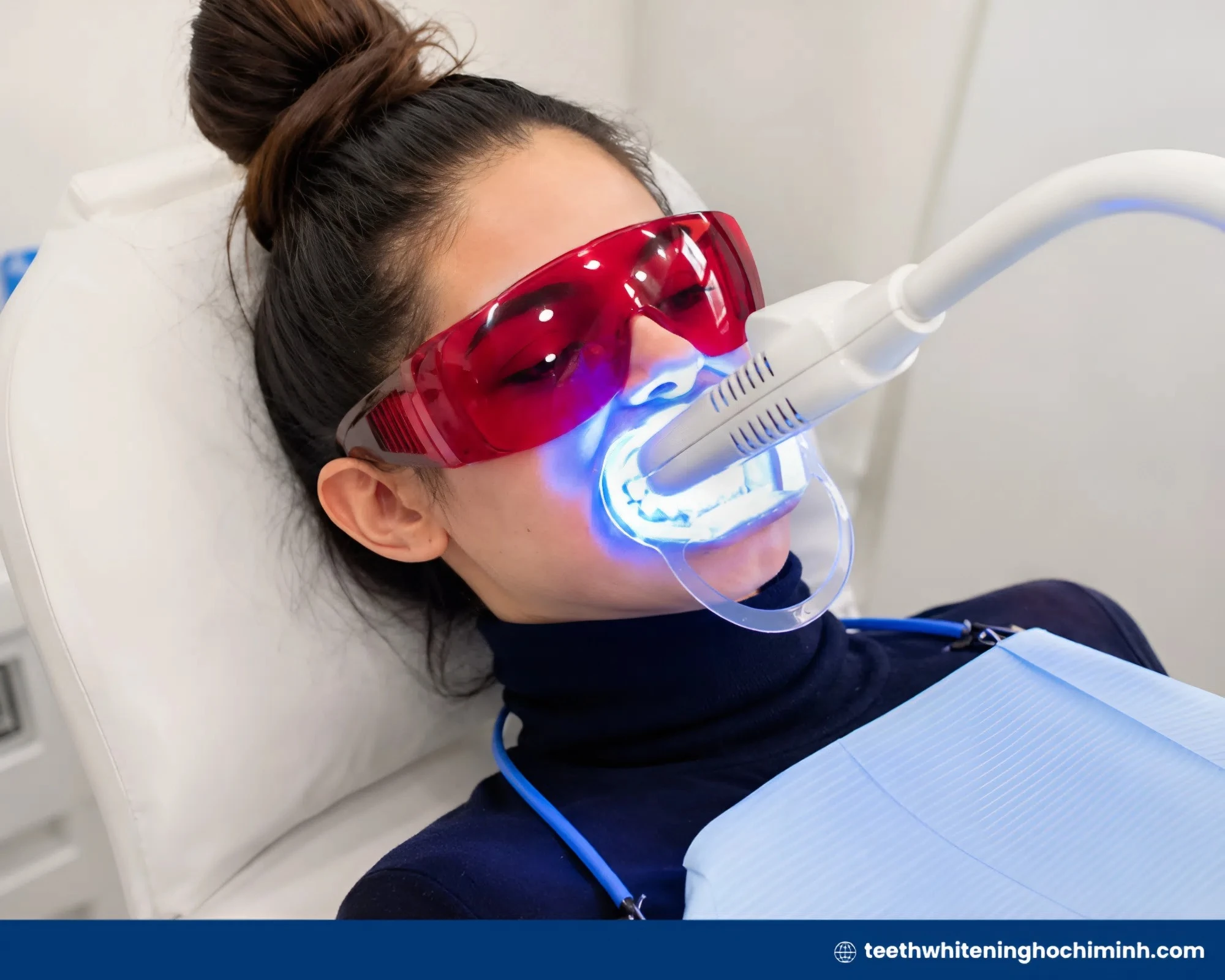
A pre-treatment oral exam is a key part of professional teeth whitening safe practice. Dentists check for cavities, exposed dentin, or gum recession before applying any bleaching agent, since these conditions can raise sensitivity risk. In-office options such as Zoom teeth whitening use light-activated hydrogen peroxide gel under a rubber dam that shields the gums, with visible results often achieved in a single visit.
Best and safest teeth whitening methods compared in 2026
Comparing options side by side makes it easier to find the safest way to bleach teeth for different budgets and needs.
| Method | Where it’s done | Typical duration | Safety level |
| In-office laser/LED whitening | Dental clinic | 60-90 minutes | Strong, backed by dental supervision |
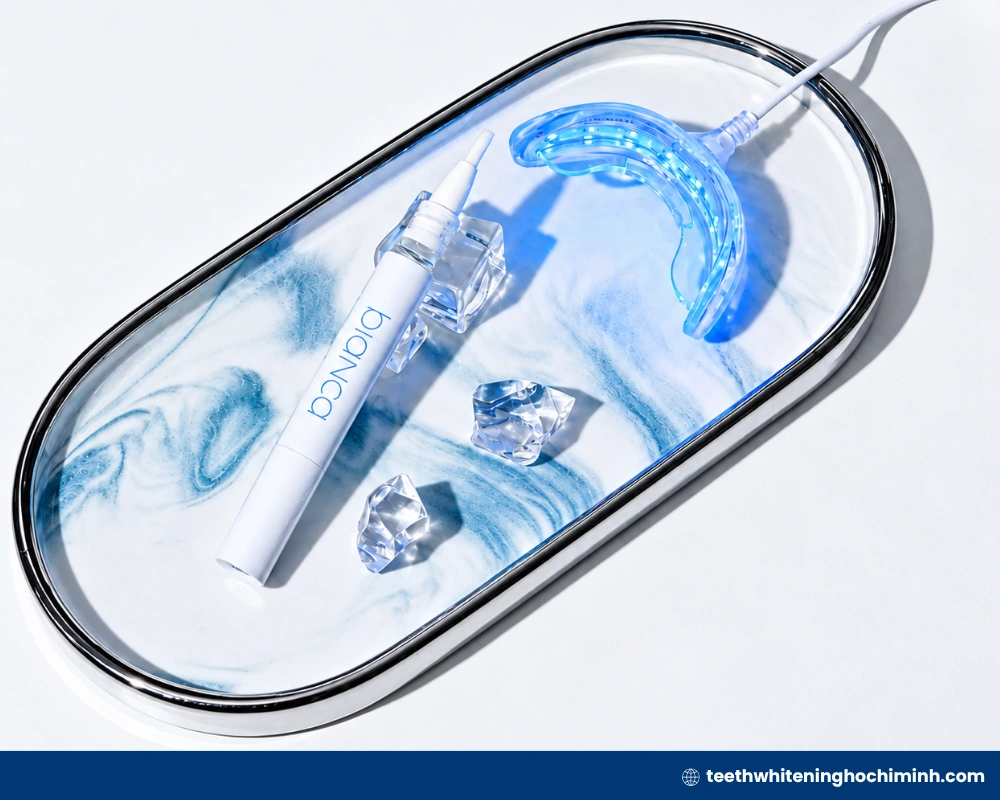
| Dentist-fitted take-home trays | Home, dentist-fitted | 1-2 weeks | High, custom-fitted for even gel coverage |
| Over-the-counter whitening strips | Home | 1-2 weeks | Moderate, depends on enamel condition |
| Whitening toothpaste | Home, daily use | Ongoing | Low risk, targets surface stains only |
| Charcoal or DIY remedies | Home | Varies | Often unsafe, abrasive to enamel |
This comparison shows that the best safe teeth whitening methods share one trait. They rely on controlled, dentist-approved concentrations instead of aggressive shortcuts. Options near the bottom of the table, particularly charcoal powders and lemon-based remedies, remain popular online. They still lack solid scientific support for safety.
How can you whiten teeth safely at home?
Whitening teeth safely at home is possible with dentist-dispensed trays, ADA-recognized whitening strips, or low-concentration gels. These must be used exactly as instructed. The safest way to bleach teeth outside a clinic still starts with a dentist consultation, especially for anyone with fillings, crowns, or sensitive gums.
Newcomers to Vietnam sometimes buy whitening kits from local pharmacies without checking the peroxide concentration on the label. Unregulated products can contain levels far above what dentists consider a safe way to bleach teeth for home use. Overusing teeth whitening strips beyond the recommended two-week cycle does not speed up results either. It only raises the risk of gum irritation and enamel thinning.
How long does safe teeth whitening last?
Results from safe teeth whitening typically last between six months and two years, depending on the method used and habits like coffee, tea, or tobacco use. In-office treatments tend to produce brighter, longer-lasting results than take-home kits because of the higher, still controlled, peroxide concentration used under supervision.
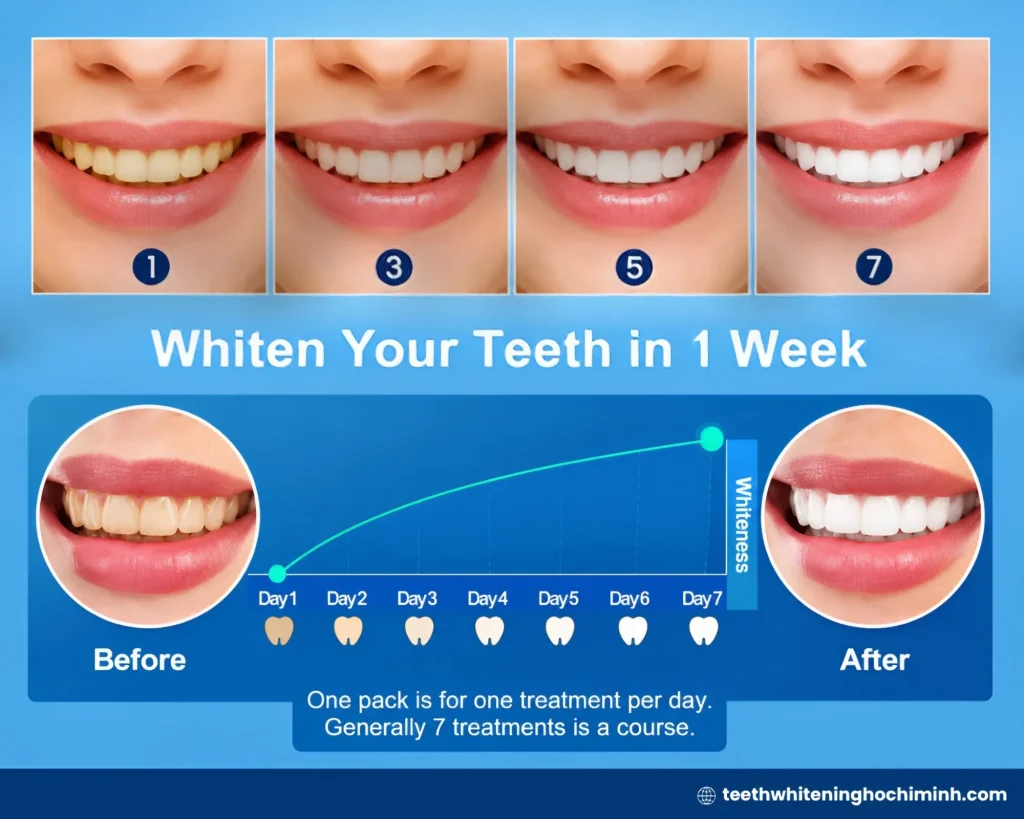
Diet plays a major role in how quickly whitening fades, since dark beverages and pigmented foods gradually re-stain the enamel surface. Many dentists recommend a short touch-up treatment every six to twelve months to maintain results without repeating a full cycle. Choosing the best safe teeth whitening method that includes a maintenance plan tends to produce more consistent long-term results than a one-time treatment alone.
Natural and safe teeth whitening options worth considering
Natural and safe teeth whitening habits include consistent oral hygiene, oil pulling, or occasional baking soda use. These habits can help remove surface stains but will not change the tooth’s underlying shade. These methods are gentler than bleaching but deliver more modest, gradual results.
Baking soda is mildly abrasive and safe in small amounts once or twice a week. Daily use, however, can wear down enamel over time. Oil pulling has anecdotal popularity, but it lacks strong clinical evidence for whitening specifically. It may still support general oral hygiene. Anyone hoping for a noticeably lighter shade typically still needs a peroxide-based treatment alongside these habits.
What is the safest way to whiten teeth with sensitive teeth or enamel?
The safest way to whiten teeth for people with sensitivity is a dentist-supervised, lower-concentration treatment. This is often combined with desensitizing toothpaste before and after bleaching, along with gradual, shorter sessions to reduce nerve irritation.
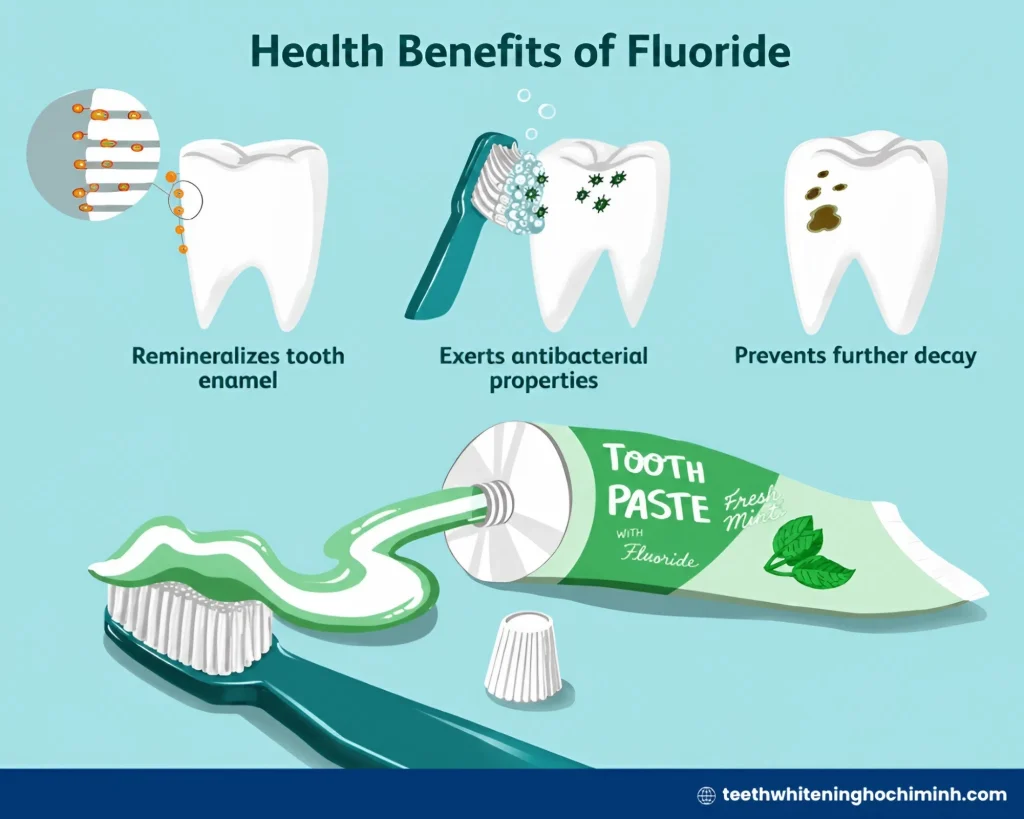
Dentists often recommend a potassium nitrate or fluoride-based toothpaste for one to two weeks before starting treatment to pre-condition the enamel. For patients with visible gum recession or worn enamel, some dentists may suggest delaying cosmetic whitening until the underlying issue is addressed. Anyone unsure whether their teeth qualify should ask directly during a consultation. A useful question is, “What’s the safest way to whiten teeth for my specific case?” The answer often depends on individual enamel condition rather than a single best safest teeth whitening method.
Safe teeth whitening tips for expats living in Vietnam
Expats seeking the best safe whitening for teeth in Ho Chi Minh City should prioritize clinics with English-speaking staff and transparent pricing. Dentists trained on internationally recognized whitening systems are also worth checking for. Communication matters as much as technical skill, since patients need to clearly explain any sensitivity or medical history.
- Book a consultation before committing to a full whitening package.
- Ask whether the clinic uses a rubber dam or resin barrier to protect gums.
- Confirm the peroxide concentration and brand of whitening gel used.
- Request an aftercare plan for sensitivity management.
- Avoid clinics that promise permanent, one-visit results, since whitening naturally fades over time regardless of method.
Following this checklist helps expats identify the best and safe teeth whitening providers. It also prevents gambling on an unfamiliar clinic based on price alone.
Conclusion
There is no single best and safest teeth whitening method that works identically for everyone. Results depend on enamel condition, sensitivity and desired shade. For most patients, dentist-supervised in-office whitening paired with dentist-dispensed take-home trays offers the strongest balance of results and safety.
Anyone comparing options should treat “safe teeth whitening” as the primary filter, not just brightness or price. Reviews from Teeth Whitening Ho Chi Minh consistently show that a provider who explains ingredients, protects gums and monitors sensitivity is far more likely to deliver the best safe whitening for teeth. This matters more than a provider focused purely on speed or cost. Choosing carefully today prevents avoidable enamel damage that no future whitening treatment can reverse.
References
- Gentle Dental. “Hydrogen Peroxide For Teeth Whitening: Is It Safe? Expert Tips.” https://www.gentledental.com/resources/articles/hydrogen-peroxide-teeth-whitening
- Medical News Today. “Hydrogen peroxide teeth whitening: Safety and effectiveness.” https://www.medicalnewstoday.com/articles/326148
- azdentist.com. “Safe Teeth Whitening: Avoid Damage 2026.” https://azdentist.com/safe-teeth-whitening-avoid-damage-teeth-whitening/
- Enamel Dentistry. “Professional Teeth Whitening in 2026: Guidelines, Safety and What Patients Should Know.” https://enameldentistry.com/blog-professional-teeth-whitening-2026/
- Dailytoothcare.com. “What’s The Safe Strength Hydrogen Peroxide For Whitening Teeth?” https://www.dailytoothcare.com/archives/14347
- SmileFam. “The Role of Safety in Whitening Products: 2026 Guide.” https://getsmilefam.com/en-us/blogs/news/the-role-of-safety-in-whitening-products-2026-guide