Himalaya teeth whitening toothpaste appeals to anyone wanting whiter teeth without fluoride or harsh chemicals. Built on plant-based enzymes and Ayurvedic ingredients, it promises gentle daily whitening. This guide covers the product range, real reviews, pricingand safety. Explore Teeth Whitening in Ho Chi Minh City with us for more honest oral care insights.
The Himalaya whitening product range
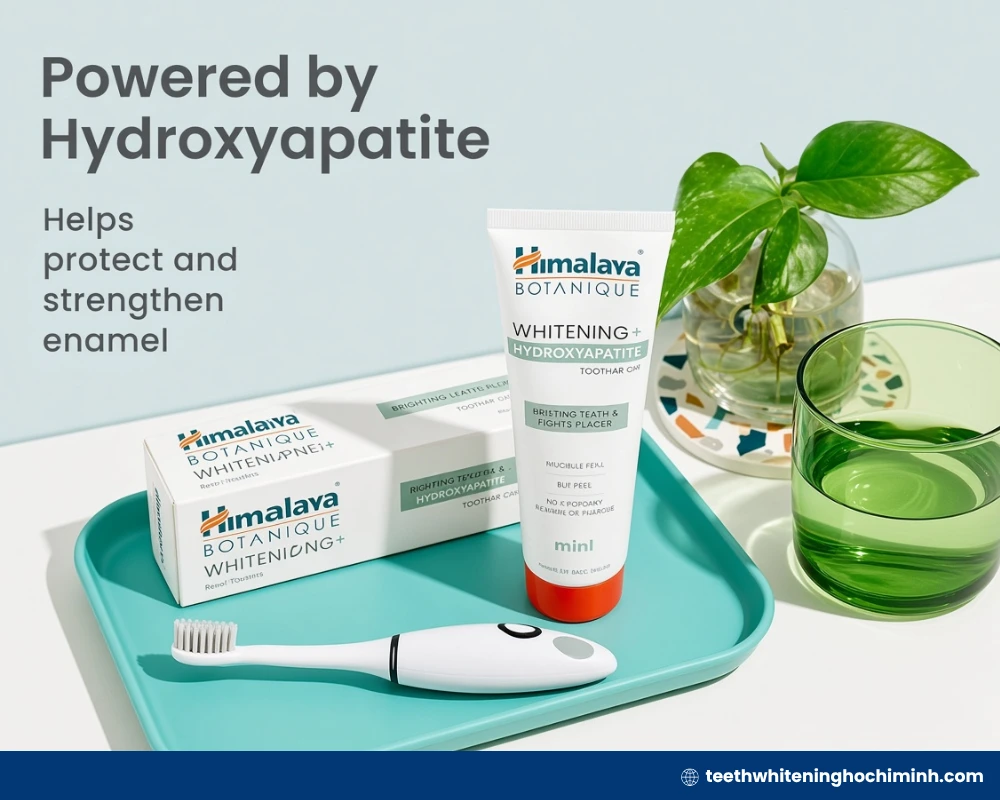
Himalaya teeth whitening toothpaste isn’t just one product, but a full range of four formulas built for different needs, from stain removal to plaque control and sensitivity care. The table below compares all four lines so you can find the right fit.
| Product line | Key ingredient | Best for | Fluoride |
| Botanique Whitening Complete Care | Fruit enzymes | Daily whitening | No |
| Whitening + Hydroxyapatite | Hydroxyapatite | Sensitive teeth | No |
| Whitening Antiplaque | Charcoal / turmeric | Plaque control | No |
| Bright White | Silica | Budget option | No |
Every line shares the same fluoride free, plant first philosophy, though the active ingredient shifts depending on your personal priority. Pick Antiplaque for plaque control, Hydroxyapatite for sensitive teeth, or Complete Care for everyday brightening.
How does Himalaya teeth whitening toothpaste work?
This toothpaste relies on natural enzymes instead of chemical bleach, using papain and bromelain from papaya and pineapple to gently break down surface stains from coffee, tea, or wine. This enzymatic action works with mild abrasives, so teeth brighten without the sensitivity peroxide often causes.
Key natural ingredients
The whitening effect comes down to a short list of proven natural ingredients rather than a long chemical label. Each one plays a specific role, from lifting stains to protecting enamel and easing sensitivity. Here’s what’s actually inside the tube.
| Ingredient | Function |
| Hydroxyapatite | Mimics tooth enamel to smooth the surface and reduce sensitivity |
| Neem extract | Traditional antibacterial ingredient that supports gum health |
| Pomegranate extract | Antioxidant-rich extract that helps fight plaque buildup |
| Xylitol | Natural sweetener that reduces bacteria linked to cavities |
| Potassium/zinc citrate | Helps calm nerve sensitivity and control tartar formation |
These natural ingredients work together to lift stains, protect enameland calm sensitivity without relying on harsh chemicals. Together they explain why Himalaya teeth whitening toothpaste feels gentle enough for regular daily long term use.
Fluoride free versus traditional formulas
Himalaya teeth whitening toothpaste takes an enzymatic, mineral-based approach, while most drugstore brands rely on fluoride and hydrogen peroxide for faster results. Fluoride strengthens enamel and fights cavities more aggressively, but it can increase sensitivity for some users. Himalaya suits people prioritizing a gentler, natural routine over rapid, dramatic whitening.
Himalaya teeth whitening toothpaste reviews
Review scores for this toothpaste average 4.6 to 4.8 stars, based on nearly 7,000 ratings on iHerb and over 130 ratings on Walmart. Most feedback centers on freshness and gentle cleaning, though whitening speed divides opinion. Here’s what pros and cons stand out most.
What customers like
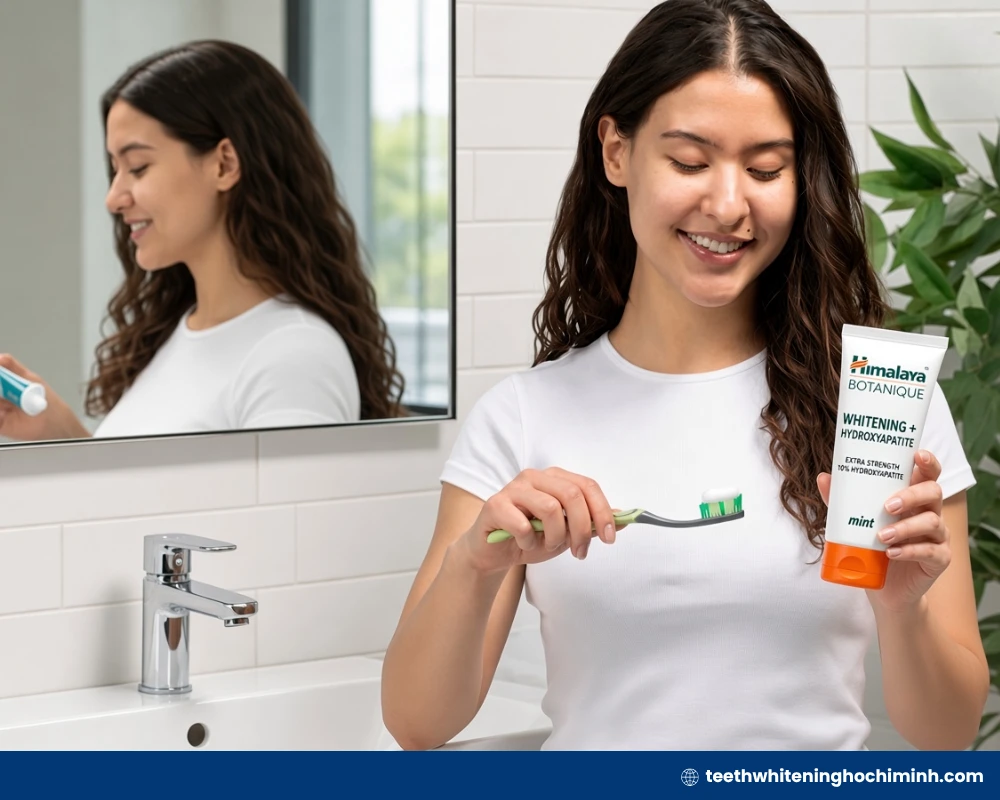
Positive reviews of this toothpaste consistently mention how the paste feels in daily use, not just how it looks in marketing photos. These comments echo across Walmart, iHerband Amazon listings. The patterns below show what reviewers praise most often.
- Leaves breath noticeably fresher for hours after brushing
- Gentle on gums, suitable for people with mild gum sensitivity
- Visible whitening reported within one to two weeks of daily use
- Praised for being fluoride-free without sacrificing a clean feeling
- Ingredient list seen as simple and trustworthy compared to mainstream brands
Common complaints
Not every review of himalaya teeth whitening toothpaste is glowingand a fair picture means covering the drawbacks too. Some patterns repeat often enough across platforms to be worth flagging before you buy. Below are the most common complaints reported by real users.
- Whitening feels slow or subtle for people with deeper, older stains
- Mint flavor takes a week or two to get used to for some
- Rarely stocked in physical stores, mostly available through online retailers
- Priced at $7 to $12 per tube, higher than $5 to $7 mainstream fluoride toothpaste
Himalaya teeth whitening toothpaste price comparison
Pricing for this toothpaste runs $4 to $12 per tube depending on the line, higher than $5 to $7 drugstore basics but lower than $10 to $18 premium brands. Online retailers offer the widest selectionand the table below breaks down typical costs by size.
| Product | Size | Price range |
| Botanique Whitening Complete Care | 150g | $7 – $8 |
| Whitening + Hydroxyapatite | 113g | $9 – $12 |
| Whitening Antiplaque | 113g | $7 – $8 |
| Bright White | 175g | $4 – $9 |
| 4-pack bundles (various lines) | Multipack | $22 – $25 |
Prices for this toothpaste fluctuate with seasonal promotions and multipack deals, so checking current listings before ordering is always worth the extra minute. Buying a 4-pack bundle usually saves a few dollars compared to purchasing single tubes one at a time.
Himalaya versus other whitening toothpaste brands
Choosing between Himalaya and other whitening toothpaste brands often comes down to comparing ingredients, priceand sensitivity focus side by side. The breakdowns below cover two common comparisons: mainstream sensitivity-focused brands and premium toothpaste positioned as a luxury upgrade.
Himalaya versus Colgate and Sensodyne
Colgate and Sensodyne sit on nearly every drugstore shelf, making them the default comparison for most shoppers. Neither markets itself primarily as a natural, fluoride-free option. Here’s how the three stack up on the factors that matter most.
| Criteria | Himalaya | Colgate | Sensodyne |
| Whitening method | Enzymes + mild abrasives | Peroxide/silica-based | Mild, sensitivity-first |
| Sensitivity focus | Good | Average | Excellent |
| Fluoride | No | Yes | Yes |
| Price | $7 – $12 | $5 – $7 | $6 – $8 |
| Ideal for | Natural, fluoride-free routine | Everyday whitening | Chronic sensitivity |
Sensodyne remains the safer pick for chronic sensitivity, while Colgate covers everyday budgets at the lowest price point. Himalaya teeth whitening toothpaste suits shoppers who want a natural, fluoride-free routine without sacrificing whitening power.
Himalaya versus Marvis and Opalescence
Marvis and Opalescence sit at a different price point, appealing to shoppers who see toothpaste as part of a broader oral care upgrade. Comparing positioning, not just ingredients, makes the differences clearer. The table below lines up all three.
| Factor | Himalaya | Marvis | Opalescence |
| Positioning | Natural, Ayurvedic | Premium, Italian luxury | Dental-grade whitening |
| Fluoride | No | Yes | Varies |
| Price | $7 – $12 | $10 – $16 | $10 – $18 |
| Best for | Affordable natural whitening | Elevated daily routine | Post-professional maintenance |
Marvis leans into everyday indulgence with its classic Italian styling, while Opalescence leans into clinical strength backed by strong dental grade formulas. Himalaya teeth whitening toothpaste sits between them as an affordable, natural middle ground.
How to use Himalaya toothpaste effectively
Getting real results from Himalaya’s whitening toothpaste depends more on consistency than how hard you brush. A simple, repeatable routine beats sporadic brushingand the three steps below keep expectations realistic while building the habit.
Recommended brushing routine
A consistent brushing routine makes the biggest difference in how fast you see whitening results, not just brushing harder or longer. Follow these three simple steps every time you brush for the best outcome.
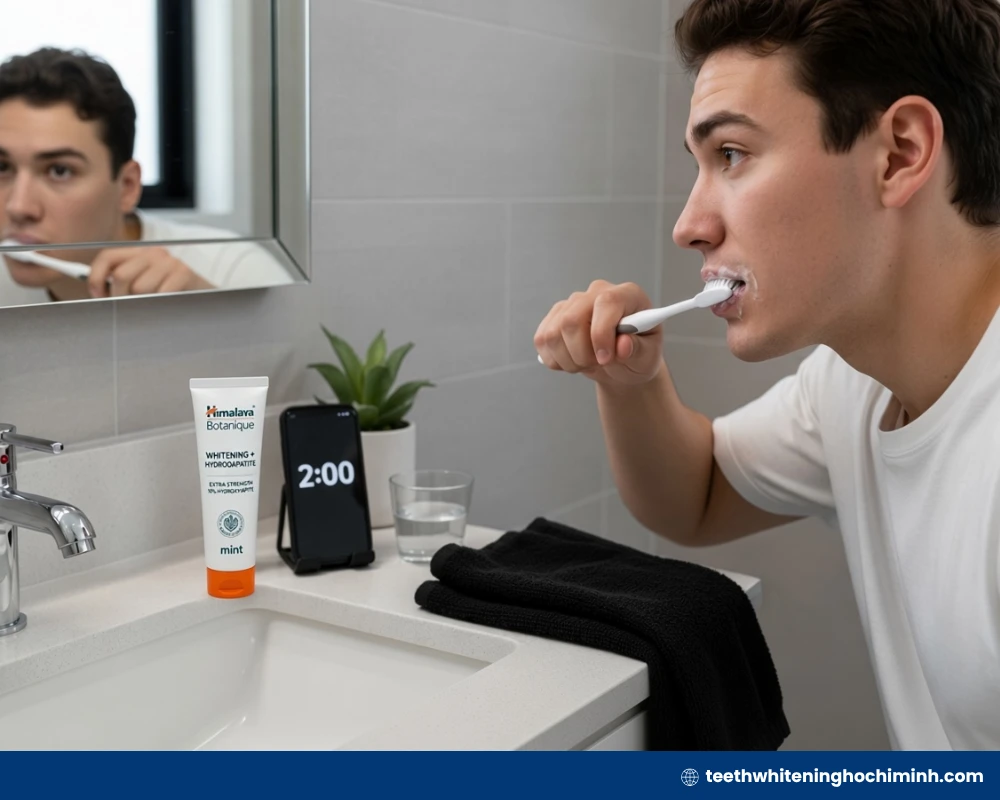
- Brush twice daily, morning and night, without skipping sessions so the enzymes and minerals get consistent contact time with your teeth.
- Spend a full two minutes per session, covering every surface, including along the gumline where stains build up fastest.
- Use gentle, circular motions rather than hard scrubbing, since forceful brushing wears down enamel without actually whitening any faster.
How long until teeth look whiter?
Most reviewers of himalaya teeth whitening toothpaste report noticing a difference after seven to fourteen days of twice-daily brushing, though results vary by individual. Lighter, more recent stains respond faster than years-old discolorationand deeper stains from wine, coffee, or tobacco may take a few extra weeks to fade.
Is Himalaya teeth whitening toothpaste safe for sensitive teeth?
Safety is a common concern for anyone with a history of sensitive teeth or gum irritation before trying something new. This toothpaste takes a milder approach than peroxide heavy formulas, though results still vary by mouth and habit.
Enamel safety without fluoride
Without fluoride, this toothpaste relies on hydroxyapatite and mild abrasives to support enamel instead of chemical hardening. Dentists generally agree fluoride offers stronger protection, so people prone to decay may want to weigh that trade off before switching. For everyday enamel care in low risk mouths, the formula performs well.
Sensitivity feedback from users
Sensitivity complaints are less common with this brand than with peroxide-based whitening products, though a small share of users still report mild, temporary discomfort. Reviewers who struggled generally found these tips helpful:
- Start with every-other-day use before switching to twice daily
- Pair brushing with a sensitivity-focused rinse during the first two weeks
- See a dentist if discomfort lasts longer than two to three weeks
Conclusion
Himalaya teeth whitening toothpaste offers a gentle, fluoride-free way to brighten your smile using natural enzymes instead of harsh chemicals. It won’t replace professional care for deep or stubborn stains, but it’s a solid daily pick for anyone prioritizing natural ingredients. Visit Teeth Whitening In Ho Chi Minh, a site dedicated to honest whitening reviews, to learn more.