For expats and international visitors living in Ho Chi Minh City, finding the right oral care product is rarely straightforward. Drugstore shelves here lean heavily toward local brands and many internationally trusted formulas are not always stocked. Knowing which teeth whitening toothpaste without fluoride actually delivers results, before buying online or packing from home, saves both money and disappointment.
This guide covers what fluoride-free whitening toothpaste actually does. Which ingredients matter most and which specific products dental reviewers consistently recommend heading into 2026.
What is teeth whitening toothpaste without fluoride?
Teeth whitening toothpaste without fluoride removes surface stains and brightens enamel using active whitening agents, minus the fluoride compound found in most conventional formulas. These products substitute nano-hydroxyapatite, baking soda, activated charcoal, xylitol, or hydrogen peroxide as the primary working ingredients.
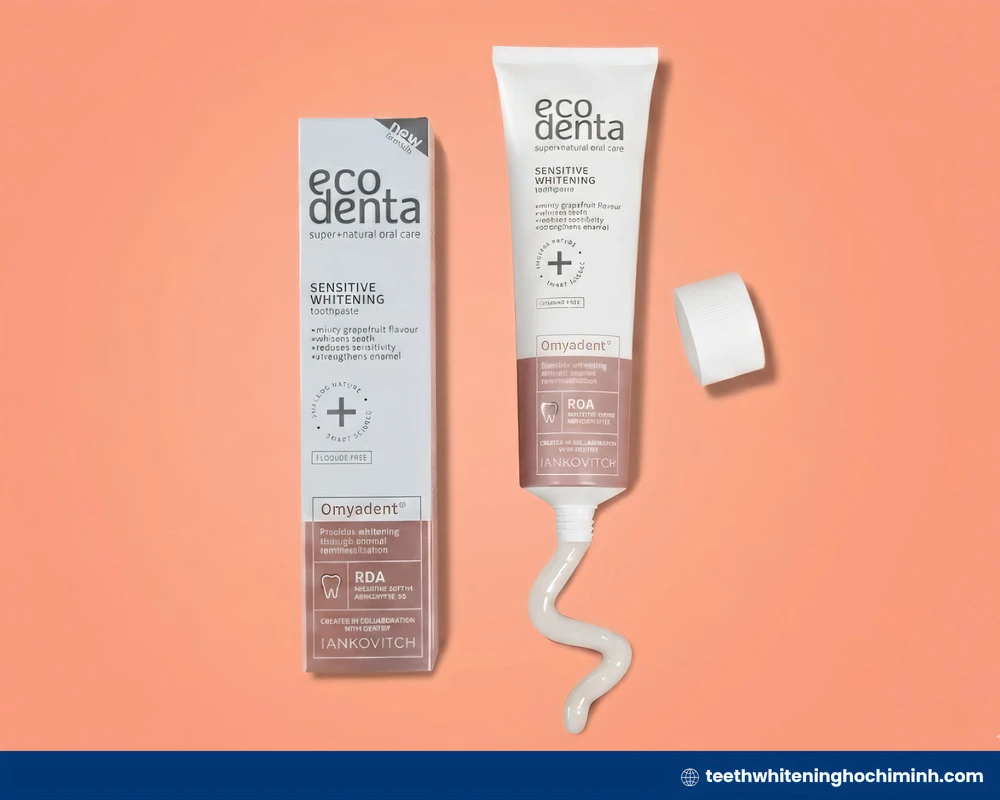
The category has grown considerably since 2020. Today’s stronger options go beyond simply skipping fluoride, they pair cosmetic whitening with ingredient science that has published research behind it.
Why do people choose fluoride-free whitening toothpaste?
Switching to teeth whitening toothpaste without fluoride is almost always a deliberate preference, not a safety requirement. The switch usually comes down to a few reasons:
- Sensitivity or intolerance to fluoride compounds
- Post-whitening care – many dental clinics in Ho Chi Minh City recommend fluoride-free formulas after Zoom or laser teeth whitening to reduce irritation
- Preference for minimal-ingredient formulas with independently verified ingredient lists
- Young children in the household – non-toxic fluoride alternatives are safer if toothpaste is accidentally swallowed
One note worth keeping in mind: fluoride-free whitening toothpaste is not always the right fit for everyone. People with frequent cavities, dry mouth, exposed roots, or a documented history of rapid enamel breakdown may find fluoride the more clinically protective choice.
Key ingredients that make teeth whitening toothpaste without fluoride work
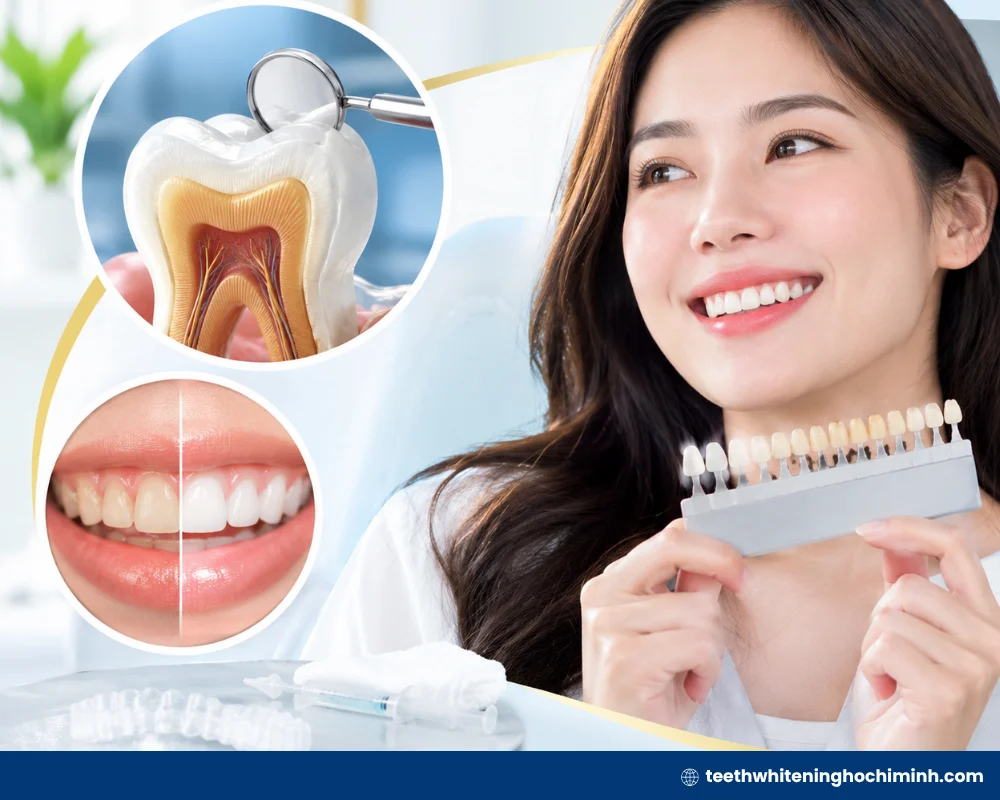
The effectiveness of any teeth whitening toothpaste without fluoride comes down almost entirely to what is actually in its formula. Some ingredients remineralize enamel. Others polish surface stains mechanically. A few do both.
| Ingredient | How it works | Best for |
| Nano-hydroxyapatite (nHAp) | Remineralizes enamel by filling micro-cracks with a mineral that mirrors natural tooth structure | Sensitivity, enamel support |
| Baking soda | Mild abrasive that polishes surface stains and neutralizes plaque acids | Everyday maintenance |
| Activated charcoal | Adsorbs surface stains through contact | Occasional cosmetic lift |
| Xylitol | Disrupts S. mutans bacteria, reducing cavity risk | Cavity-prone users |
| Hydrogen peroxide | Oxidizes deep stains for chemical bleaching | Deeper stain removal |
Nano-hydroxyapatite: has emerged as a fluoride alternative, remineralizing enamel through a biomimetic approach that mirrors the mineral composition of natural teeth. This makes it the most credible fluoride substitute currently available for people who want enamel protection alongside their whitening routine.
Baking soda: takes a different approach. It polishes mechanically rather than chemically. It clears surface stains from coffee and tea reliably and neutralizes acid buildup in the process. A practical everyday ingredient inside any fluoride-free whitening toothpaste formula.
Activated charcoal: is the most misunderstood ingredient in this space. It adsorbs surface stains by binding to them on contact. The catch is abrasivity, charcoal-based teeth whitening toothpaste without fluoride is better suited to two or three uses per week rather than twice-daily brushing. Daily use over time can wear enamel down rather than protect it.
Top-rated teeth whitening toothpaste without fluoride in 2026
Across independent reviews and dental community discussions, several brands consistently appear at the top of recommended lists for fluoride-free whitening toothpaste heading into 2026.
Boka nano hydroxyapatite toothpaste
Boka uses nano-hydroxyapatite alongside xylitol, green tea extract and aloe vera. The formula contains no SLS, no parabens and no fluoride. It is vegan and cruelty-free, which makes it a comfortable fit for users who want clean-label oral care without switching up their whitening routine.
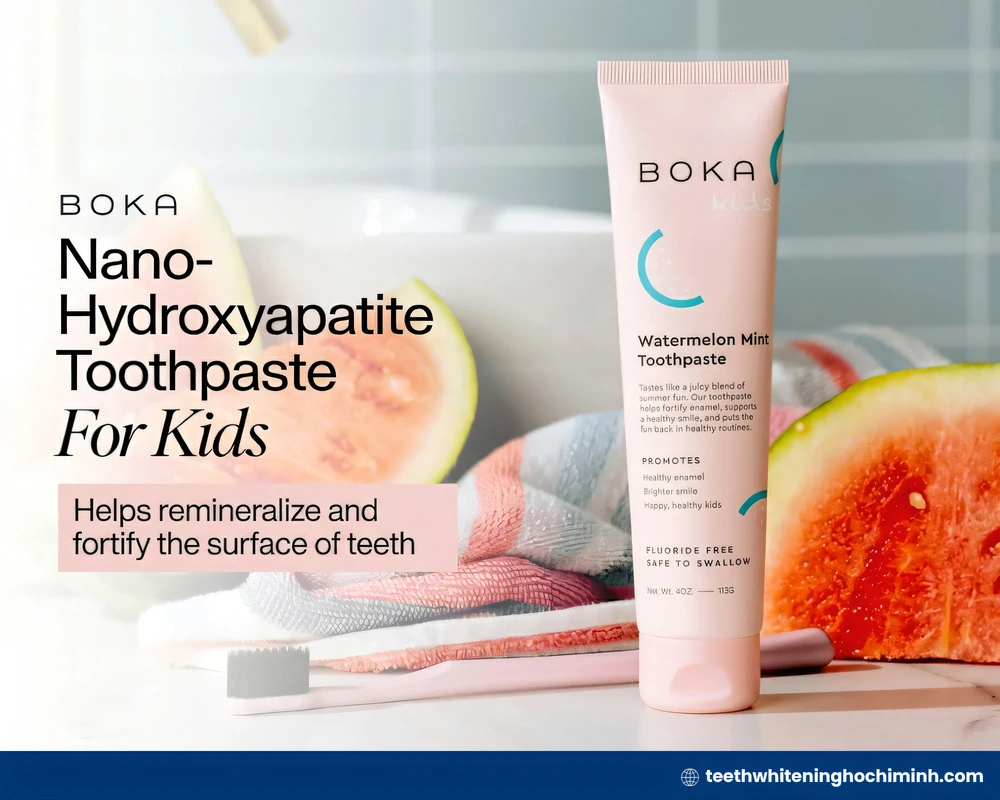
As a teeth whitening toothpaste without fluoride, Boka earns its top position through ingredient quality rather than marketing. The nHAp concentration is well-documented and the formulation has been reviewed in independent dental community discussions. That matters for expats who want published science behind a product, not just brand claims.
Best for: People switching away from fluoride who still want meaningful enamel protection.
Davids hydroxy sensitive + Whitening
Davids formulates with rod-shaped nano-hydroxyapatite. The particle geometry considered most effective for dentin tubule occlusion, alongside xylitol and coconut oil for additional antibacterial and stain-lifting support. As brushing works the formula into contact with enamel, nHAp particles are redeposited into microscopic cracks and exposed tubules.
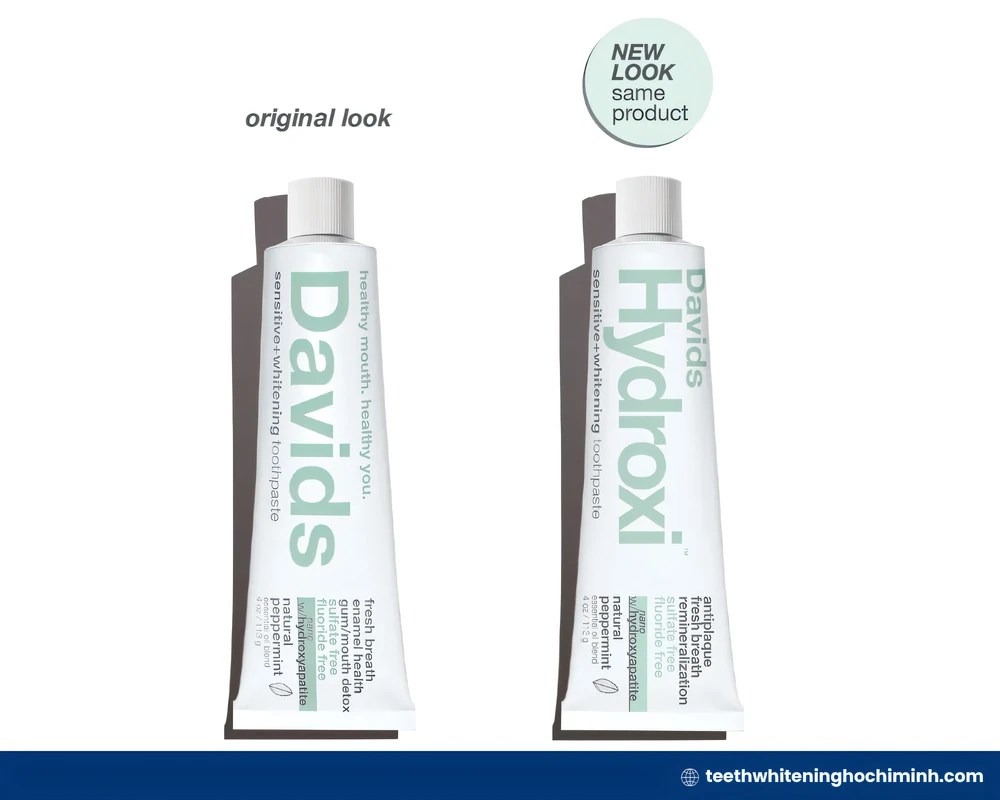
The formula holds EWG Verified status, meaning every ingredient has been independently screened for hormone disruption, carcinogenicity and reproductive safety concerns. It is free from sulfates, fluoride, artificial flavors, colors and preservatives. The 4 oz aluminum tube is also more economical per ounce than most competing teeth whitening toothpaste without fluoride products.
Best for: Post-whitening sensitivity, users who prioritize third-party ingredient safety verification.
Tom’s of maine fluoride-free antiplaque & Whitening
Tom’s of Maine relies on zinc citrate and plant-derived cleaning agents rather than nHAp. Baking soda and silica handle surface stain removal mechanically. The natural peppermint flavor is clean and the formula skips artificial preservatives entirely.
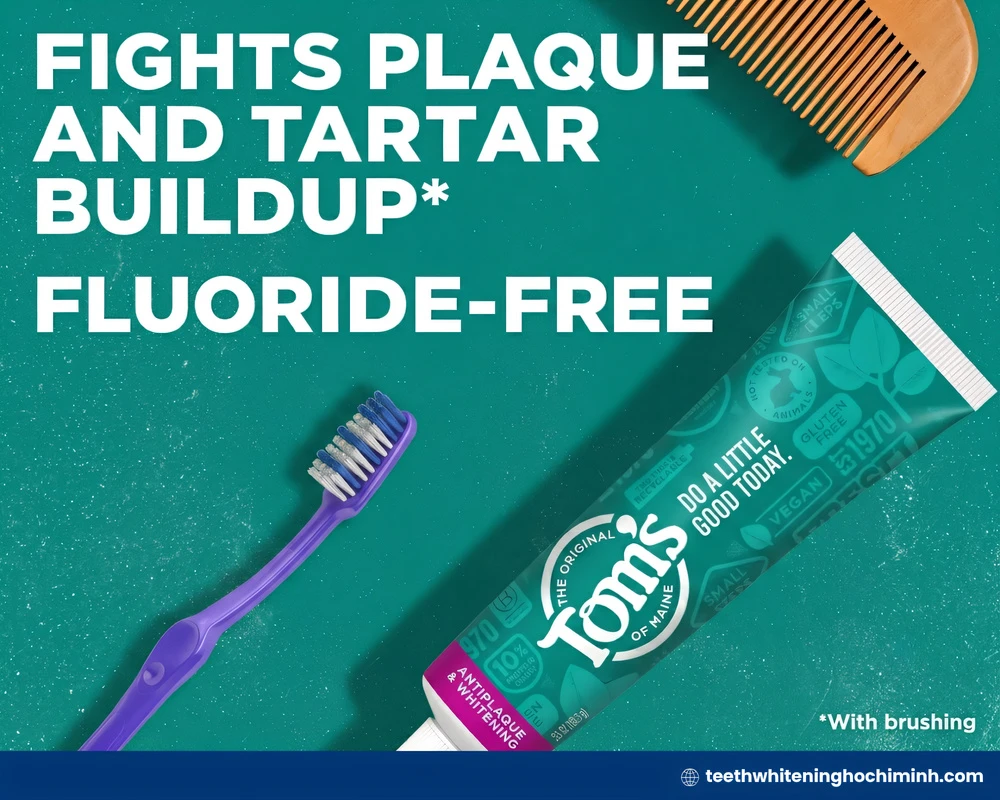
This fluoride-free whitening toothpaste does not offer the enamel remineralization that nHAp-based options provide. What it does offer is consistent availability on international e-commerce platforms. Ameaningful practical advantage for expats ordering from abroad who need reliable shipping routes to Vietnam.
Best for: Everyday surface stain maintenance, budget-conscious users who order online.
Hello antiplaque + Whitening fluoride-free
Hello produces a straightforward teeth whitening toothpaste without fluoride built around gentle abrasives and natural peppermint. The formula is SLS-free across the product range, which reduces the risk of additional gum or soft tissue irritation during daily use. It is widely available at major US retailers and ships internationally without difficulty.
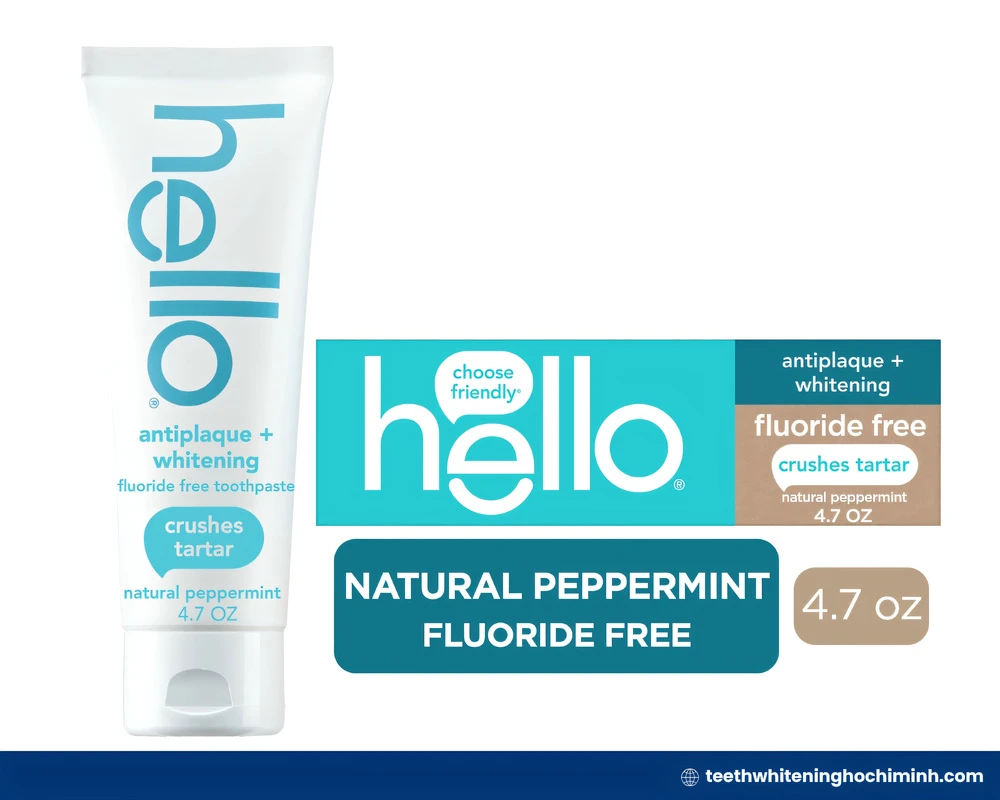
Results are gradual and cosmetic rather than structural. For anyone using it after a whitening session at a Ho Chi Minh City clinic, it helps maintain surface brightness without triggering additional sensitivity on already-treated enamel.
Best for: Budget users, mild sensitivity management post-whitening.
Arm & Hammer essentials fluoride-free
Arm & Hammer uses 100% natural baking soda as its primary cleaning and whitening base. The formula is free from fluoride, artificial sweeteners, dyes, SLS, preservatives and parabens. Baking soda works by neutralizing plaque acids and polishing surface stains at the same time. At standard concentrations, this is safe for twice-daily brushing.
This is not a remineralizing formula. It does not rebuild enamel or address sensitivity. Used consistently, it keeps enamel surfaces visibly cleaner between professional treatments – and that is where its value sits for most users.
Best for: Maintenance whitening between clinic visits, users who prefer baking soda over mineral-based formulas.
How is teeth whitening toothpaste without fluoride different from professional whitening?
These two are complementary tools, not interchangeable ones. Confusing them leads to either overspending on a product that cannot do the job, or underestimating what in-clinic treatment offers.
| Feature | Whitening toothpaste (fluoride-free) | Professional teeth whitening (Zoom/laser) |
| Stain type | Surface stains only | Surface and intrinsic stains |
| Visible results | Weeks to months | Often after one session |
| Enamel care | Depends on formula (nHAp = strongest) | Dentist-supervised |
| Cost | Low | Moderate to high |
| Use setting | Daily, at home | Clinic visit required |
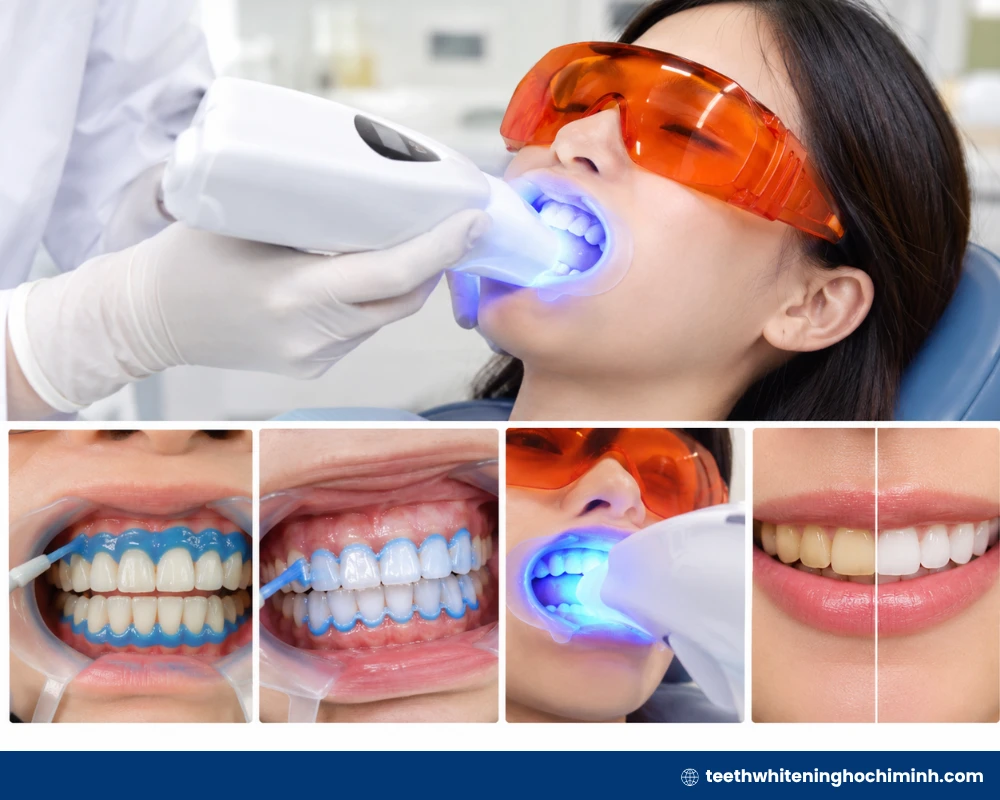
Teeth whitening toothpaste without fluoride works best as a maintenance layer. Applied consistently after a professional whitening session to extend results and prevent stains from rebuilding. Many clinics in Ho Chi Minh City that treat international patients specifically recommend a fluoride-free formula for post-treatment care, particularly for patients who experience enamel sensitivity following Zoom or LED procedures.
How long does it take to see results?
Most people notice cleaner-feeling teeth within the first week of use. Surface stains from coffee, tea and food tend to respond quickest to the mechanical and chemical action in these formulas.
For measurable changes like improved sensitivity reduction or enamel density, consistent use over two to three months is typically needed. Users switching specifically for remineralization benefits from nHAp may be able to have improvements measured at their next six-month dental checkup.
Discoloration from aging or past antibiotic use sits deeper in the tooth structure. That kind of staining requires professional treatment. Teeth whitening toothpaste without fluoride helps prevent new surface staining from accumulating on top, but it cannot address what is already intrinsic.
Is teeth whitening toothpaste without fluoride safe for daily use?
For most healthy adults, daily use of teeth whitening toothpaste without fluoride is considered safe. The key variable is abrasivity, different formulas behave very differently in this regard.
nHAp and xylitol-based formulas are among the gentlest options available for twice-daily brushing. The EU Scientific Committee on Consumer Safety has confirmed nHAp is safe at concentrations up to 29.5% and the ingredient carries no known toxicity concerns at standard toothpaste doses.
Baking soda formulas are also safe for daily use at standard concentrations. They clean mechanically with a low abrasion index and are well-tolerated by most enamel types.
Activated charcoal formulas are the exception. Daily use of charcoal-based teeth whitening toothpaste without fluoride over time risks gradual enamel wear. Two to three uses per week is a more protective approach for long-term users.
The best teeth whitening toothpaste without fluoride in 2026 is one with an active ingredient backed by published research, not just clean packaging. For enamel support, nano-hydroxyapatite holds that position most clearly. Used daily alongside regular professional check-ups, a quality fluoride-free whitening toothpaste protects and extends the investment made during in-clinic treatment.
This review was compiled by the editorial team at Teeth Whitening Ho Chi Minh, drawing on product ingredient data, independent user reviews and dental research published through mid-2026. No brand featured here has paid for placement.