UV teeth whitening has become one of the most searched cosmetic dental treatments among foreign residents in Ho Chi Minh City, largely because it promises visible results in a single visit. This article breaks down how the treatment works, what the clinical evidence says and realistic costs at local clinics. It also covers how to choose a safe provider, written specifically for expats who want an evidence-based overview before booking.
1. What is uv teeth whitening?
UV teeth whitening is an in-office bleaching method that pairs a peroxide-based gel with an ultraviolet or UV-spectrum light to speed up stain removal. Clinics across Ho Chi Minh City widely offer it for patients who want faster results than at-home kits provide.
Dentists have actually used light-activated bleaching for over two decades, so the technique itself isn’t a new trend. What’s newer is how many expats now search for uv teeth whitening specifically, usually because they want same-day results before returning to work or travel.
At-home strips and trays work differently. This is performed under professional supervision instead, with a licensed dentist controlling the light source, the gel concentration and the exposure time throughout the session.
2. How does uv teeth whitening actually work?
UV teeth whitening speeds up the chemical breakdown of the peroxide gel sitting on the tooth surface by adding light energy to the reaction. That faster reaction is what lifts surface and subsurface stains within a single appointment.
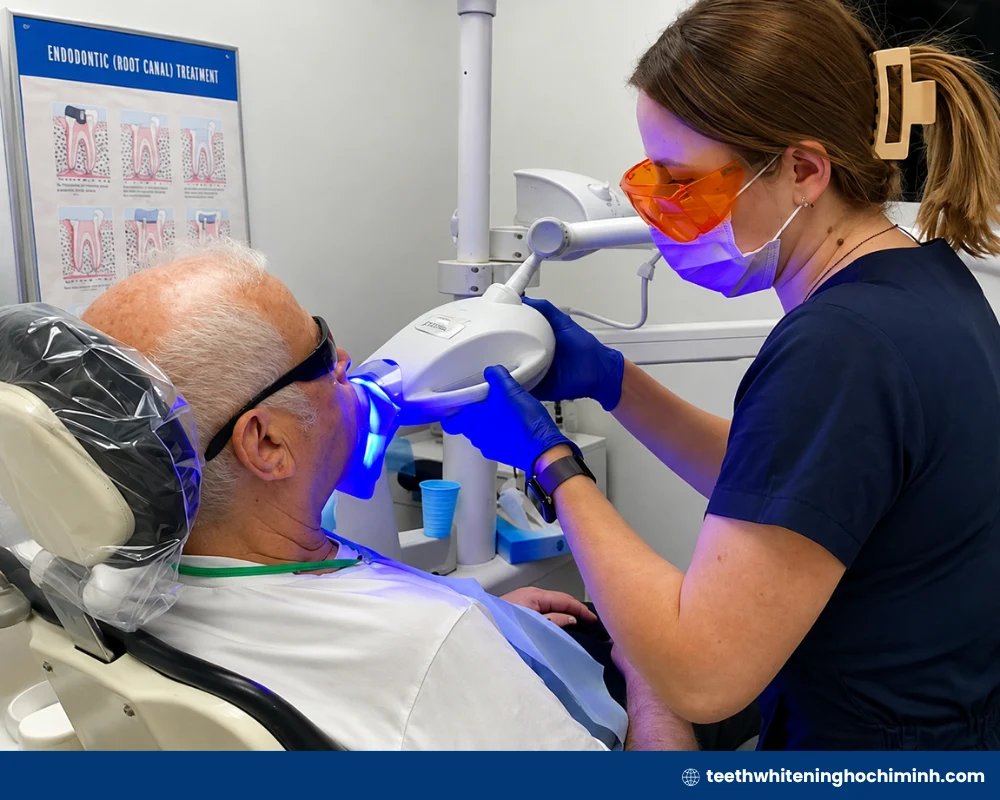
The dentist first cleans the teeth and applies a protective barrier over the gums. The whitening gel is then painted onto the enamel and a UV or blue-spectrum lamp sits close to the mouth for several timed intervals.
This is why some patients call the method teeth whitening ultraviolet light therapy, even though the light doesn’t whiten teeth on its own. It only activates the bleaching agent so the reaction happens faster. Most sessions in Ho Chi Minh City run 45 to 90 minutes, depending on how many light cycles the dentist uses and how dark the teeth are to begin with.
3. Ultraviolet teeth whitening vs blue LED light
Ultraviolet teeth whitening and blue LED whitening are both light-activated methods, but they sit at different wavelengths and carry different safety profiles. UV light is shorter and higher-energy, while blue LED light tends to be gentler on soft tissue.
| Feature | UV light whitening | Blue LED whitening |
| Wavelength | Ultraviolet spectrum | Blue visible spectrum |
| Heat generation | Higher | Lower |
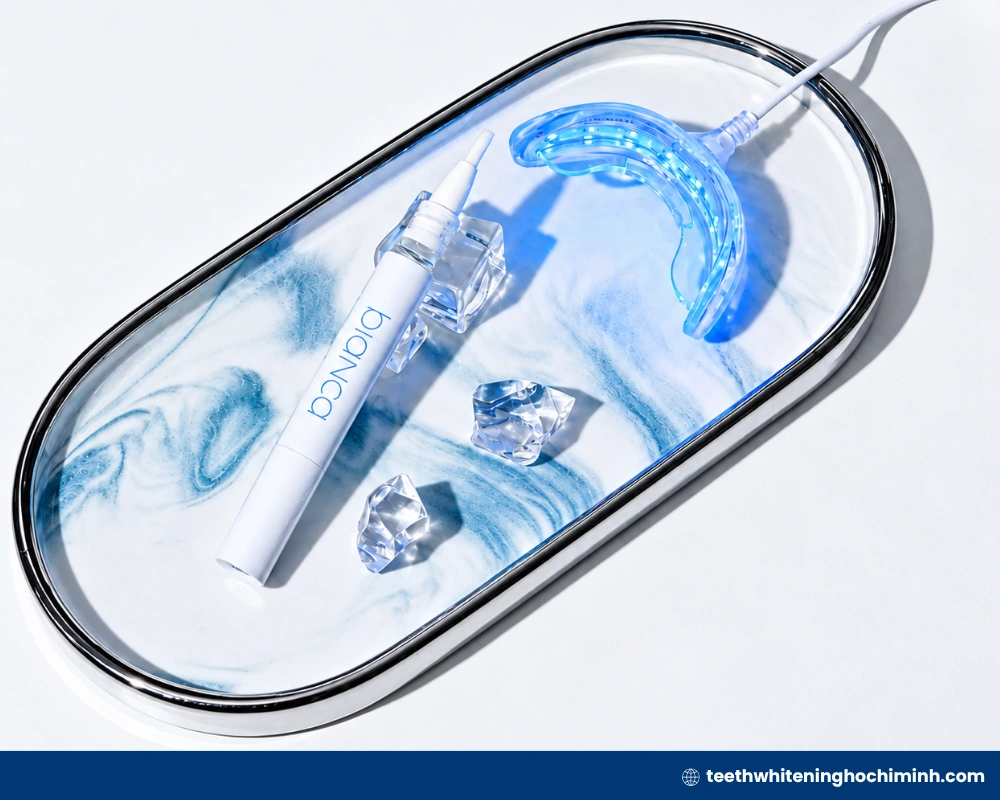
| Common setting | In-office only | In-office and some home kits |
| Regulatory status | Requires professional supervision | Often cleared for wider use |
| Typical session length | 45-90 minutes | 30-60 minutes |
Clinics in Vietnam use both technologies and the choice usually reflects the equipment a practice has invested in rather than any real difference in final shade. Anyone researching ultra violet teeth whitening should simply ask the dentist which spectrum the clinic uses, since price lists here sometimes blend “UV,” “LED” and “laser” loosely.
| Read more: Best LED teeth whitening in Ho Chi Minh- Pros and cons 2026
3. Is uv teeth whitening effective, according to dental research?
The clinical evidence on light-activated whitening is mixed rather than clearly positive. Some studies show a modest boost in immediate brightness. Others, including a number of independent clinical trials, find no meaningful long-term advantage over gel-only bleaching.
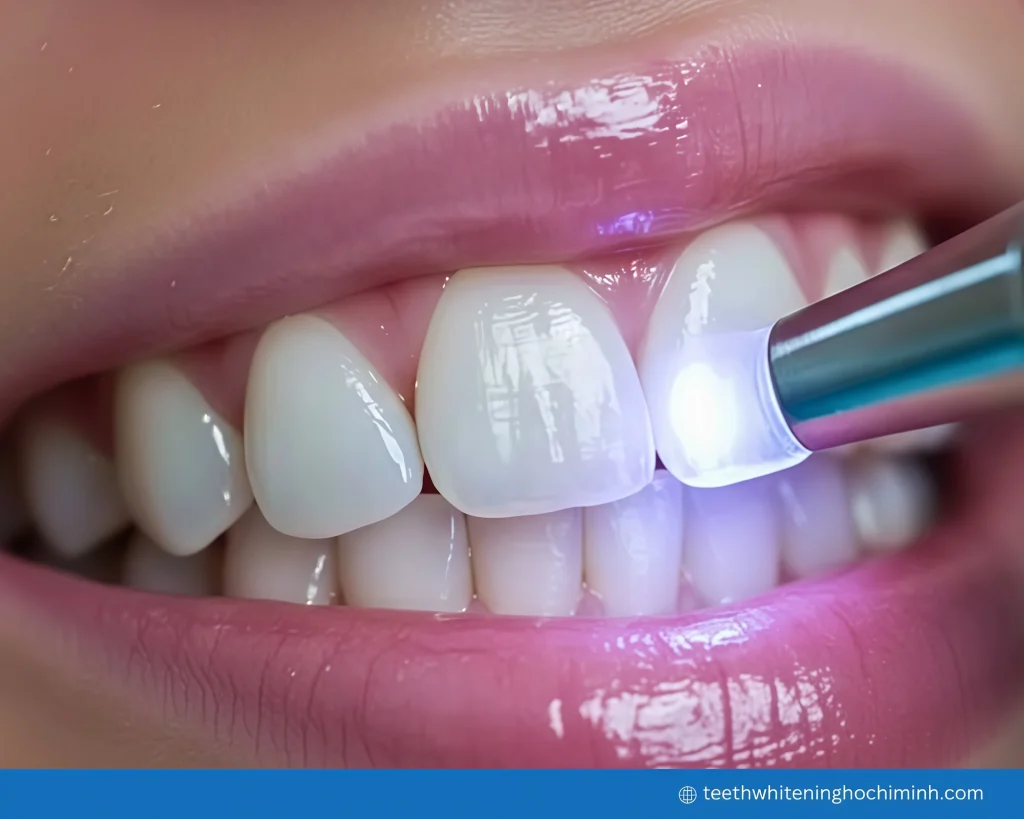
One point in favor: a study cited by Colgate’s oral health resource center, published in the Journal of Conservative Dentistry, found that light-activated bleaching produced a greater short-term shade change than bleaching without light. Part of that immediate effect likely comes down to dehydration, since UV and LED lamps generate heat that temporarily dries the tooth surface. Teeth look whiter right after treatment as a result, then some of that brightness fades back as the enamel rehydrates over the following days.
None of this means uv whitening fails to work. It means the improvement is real but sometimes oversold, with the gel formulation playing a bigger role in lasting results than the light itself.
4. Best uv teeth whitening options in Ho Chi Minh City
The best uv teeth whitening providers in Ho Chi Minh City are licensed dental clinics that use certified equipment and follow a documented safety protocol. Independent beauty salons offering the treatment without a dentist present should be avoided altogether.
4.1 What to expect from the best uv light teeth whitening clinics?
Reputable clinics offering the best uv light teeth whitening service follow a consistent structure before, during and after treatment. The list below reflects what a properly run appointment should include.
- A dental exam to rule out cavities, gum disease, or exposed nerves before whitening
- Shade matching using a standardized scale, recorded before and after
- Gum and lip protection applied before the gel and light are used
- Timed exposure intervals, usually 15-20 minutes per cycle, repeated two to four times
- A written aftercare sheet available in English for foreign patients
Skipping the dental exam or the shade documentation is a red flag. These steps are standard parts of best teeth whitening uv light protocols worldwide, not optional extras a clinic can drop to save time.
| Read more: Top 10 best teeth whitening clinics in Ho Chi Minh city Vietnam
4.2 Typical cost of uv teeth whitening in Ho Chi Minh City for expats
In-office uv teeth whitening in Ho Chi Minh City typically runs between 1.2 million and 5 million VND, roughly 50 to 200 USD. The exact price depends on the technology used, the clinic’s location, and how discolored the teeth are before treatment.
Central districts and neighborhoods popular with foreign residents, such as District 1, District 2 and District 7, tend to sit toward the higher end because of premises and staffing costs. Smaller neighborhood clinics can charge significantly less, though equipment quality varies more widely between them, so price alone isn’t a reliable quality signal.
5. What happens during a teeth whitening uv light session?
A typical teeth whitening uv light session in Ho Chi Minh City follows a short, structured sequence from consultation to final shade check.
- The dentist examines the teeth and confirms there is no untreated decay or gum inflammation.
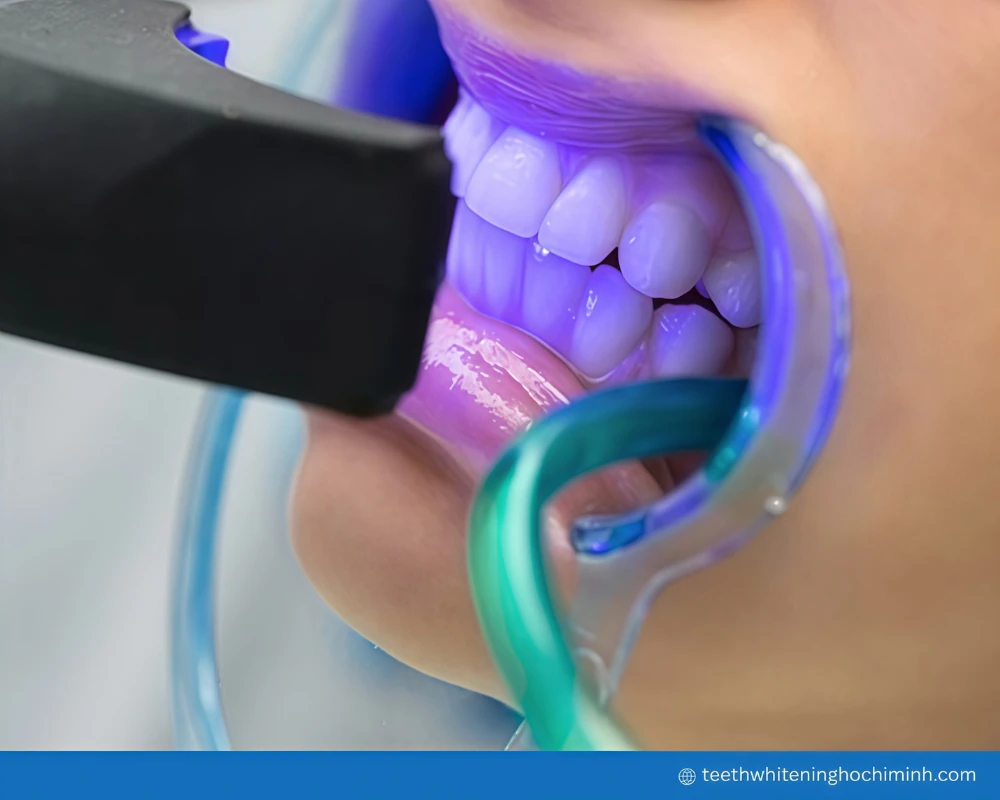
- A retractor and protective gel shield the lips and gums from light exposure.
- Whitening gel is applied in a thin, even layer across the front teeth.
- The UV or blue-spectrum lamp is positioned and activated for a set number of minutes.
- The gel is reapplied and the process repeats for two to four cycles.
- The final shade is recorded and compared against the starting shade.
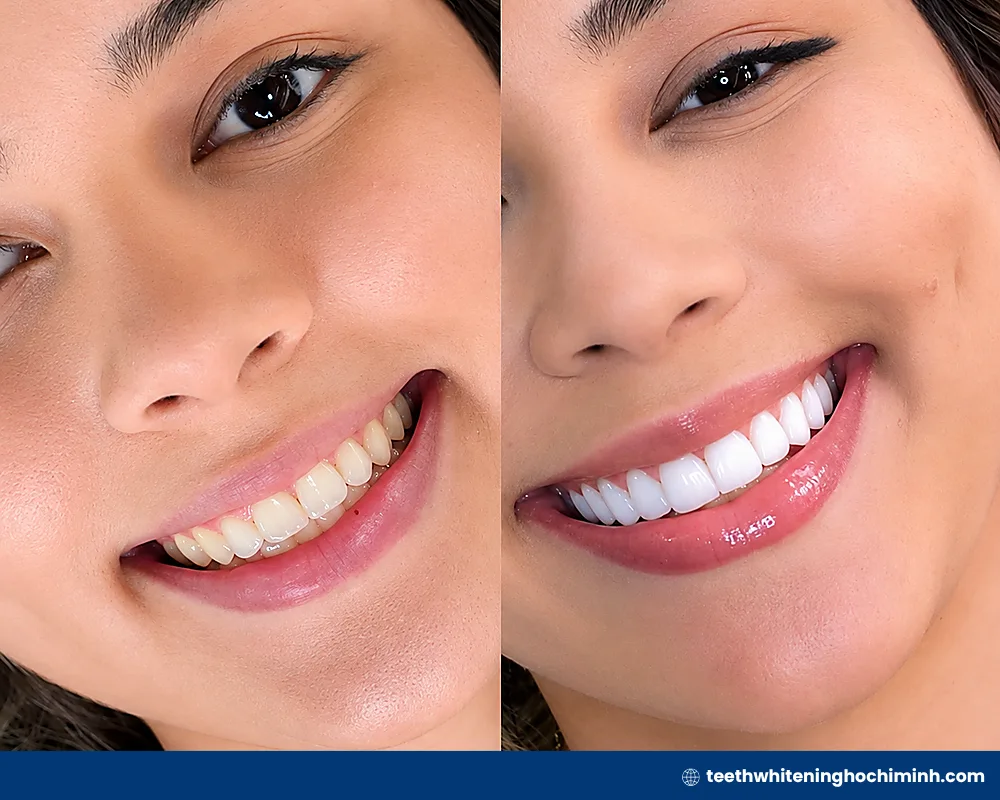
Patients usually see immediate brightening. How much change happens depends heavily on the original tooth color and what caused the staining in the first place, whether that’s coffee, tea, tobacco, or age.
6. Is uv teeth whitening safe?
UV teeth whitening is considered safe under the right conditions, meaning a trained dentist, properly regulated equipment and adequate soft-tissue protection. Skip professional supervision, though and the risks rise fast.
Short-term side effects are possible, including tooth sensitivity, mild gum irritation and temporary dehydration of the enamel. Most of these are minor and clear up within a day or two.
Repeated UV exposure also carries a theoretical risk to skin and eyes, which is why dentists in Vietnam are expected to use protective eyewear and shielding during every session. Patients traveling from abroad should confirm this protection is actually in place before booking an appointment, not just assume it.
7. Who should avoid ultra violet teeth whitening?
Ultra violet teeth whitening isn’t for everyone and a proper dental screening should always come before treatment. The groups below are the most common cases where dentists advise caution or delay.
- Pregnant or breastfeeding patients, as a precaution rather than a proven risk
- People with untreated cavities, exposed roots, or active gum disease
- Patients with very thin enamel or a history of severe tooth sensitivity
- Anyone with visible fillings, crowns, or veneers on front teeth, since these do not whiten and can create uneven color
Booking a short consultation ahead of uv teeth whitening in Ho Chi Minh City catches most of these issues early. That matters most for visiting patients on a tight schedule, since they often can’t come back for a second appointment if something gets flagged mid-treatment.
8. How to maintain results after uv teeth whitening?
Results from uv whitening typically last several months to over a year. Diet plays the biggest role in how long the brighter shade holds, especially in the first 48 hours.
Coffee, red wine and turmeric-based dishes are the main culprits, so it’s worth skipping them right after treatment while the enamel reseals. A straw for dark drinks and a water rinse after meals go a long way toward preserving the result.
A few daily habits matter just as much as the treatment itself. Brushing with a non-abrasive toothpaste protects the enamel, and routine dental cleanings every six months help the brighter shade last without wearing the teeth down over time.
9. Choosing uv teeth whitening in Ho Chi Minh City
Foreign patients researching uv teeth whitening in Ho Chi Minh City should look for a few specific things. English-speaking staff, transparent pricing and a dentist who can explain the gel concentration and light technology in plain terms all matter. Together, these make it far easier to compare providers before committing to a booking.
Whether a clinic documents before-and-after shade results is a practical way to judge its uv teeth whitening process, since photos alone don’t tell the full story. Independent reviews from other expats are also worth more than a clinic’s own marketing copy. Teeth Whitening Ho Chi Minh keeps this kind of comparison updated, tracking pricing and provider quality across the city so foreign residents have a reliable reference.