
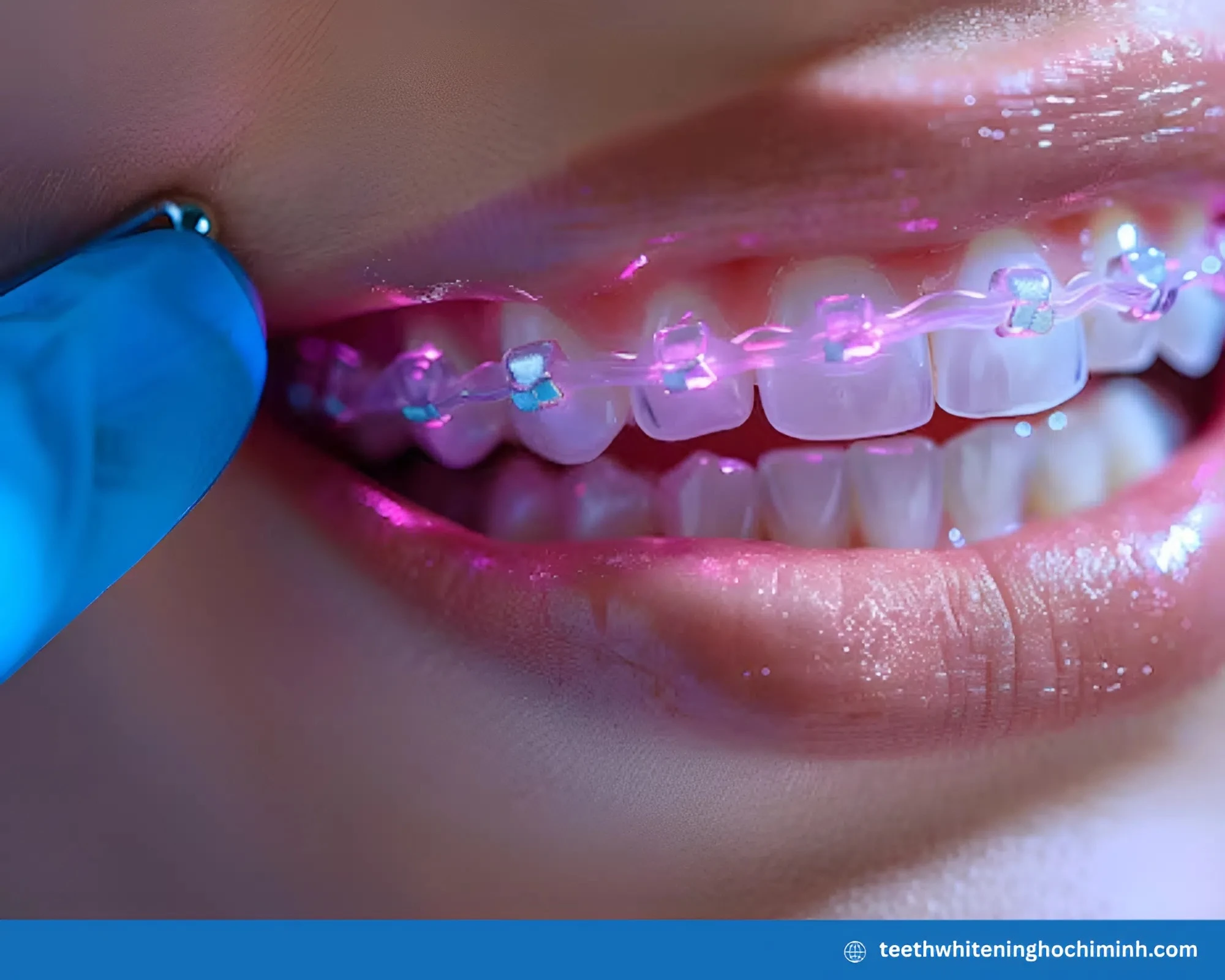
Teeth whitening with braces is technically possible but rarely recommended by orthodontists due to uneven results. Examine how brackets physically block bleaching agents and waste product. Understand why teeth whitening creates problematic outcomes and when timing whitening treatment produces optimal results instead.
Why teeth whitening with braces creates problems?
Metal or ceramic brackets bonded to tooth surfaces create covered areas that bleaching agents cannot reach. When someone attempts teeth whitening with braces, the exposed enamel lightens while sections beneath brackets remain their original shade. Once the orthodontist removes brackets, distinct darker squares appear-creating a checkerboard effect requiring additional whitening to correct.

Dr. Sarah Thompson, an orthodontist practicing for 15 years, notes this represents the most common complaint from patients who whitened during treatment. The American Association of Orthodontists published guidance in 2022 explicitly recommending patients wait until bracket removal before pursuing any whitening procedures.
Can you use teeth whitening with braces? Yes, but expect to waste 30-40% of bleaching gel on bracket surfaces where it provides zero benefit. Premium teeth whitening strips cost $45-65 per course. Professional in-office teeth whitening treatments run $80-200 in Ho Chi Minh City. Spending that amount to achieve partial, uneven results that require retreatment makes little financial sense.
Can i get teeth whitening with braces?
The consensus among orthodontic professionals is clear: postpone whitening until completing orthodontic treatment. Dr. James Chen, a cosmetic dentist in Ho Chi Minh City, explains that ethical practitioners refuse to perform professional whitening on patients with braces. Because they can’t deliver satisfactory results when brackets cover 20-30% of visible tooth surfaces.
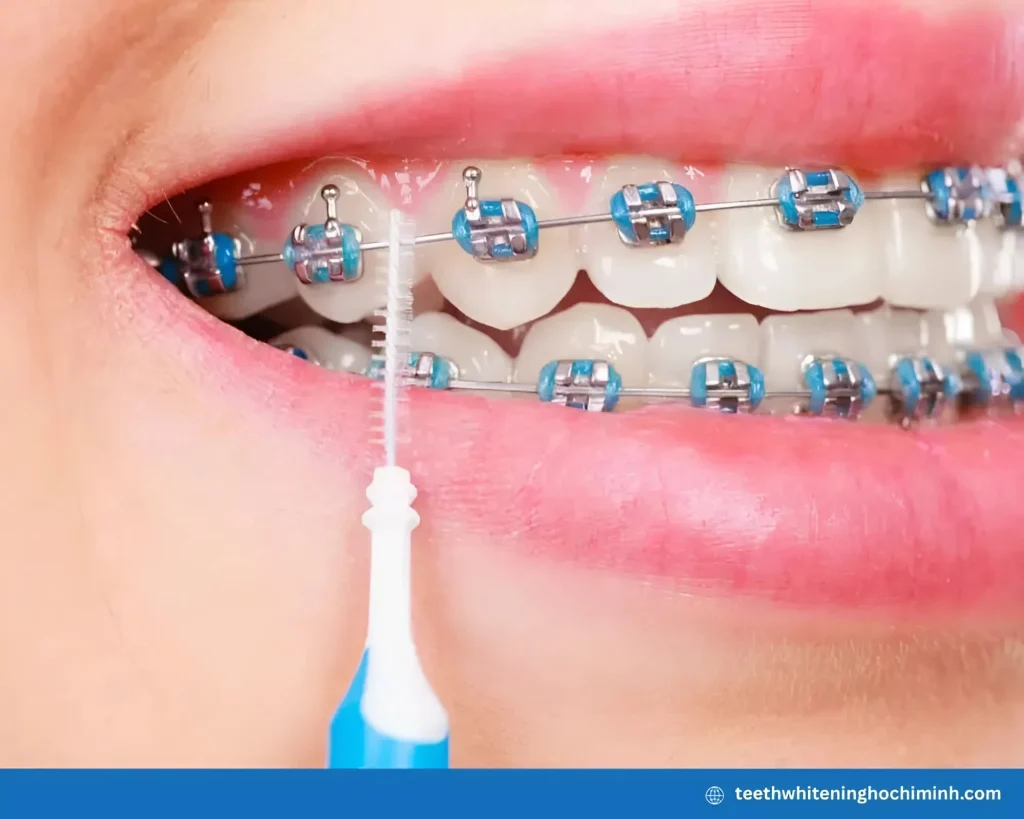
Braces already complicate oral hygiene significantly. Can you do teeth whitening with braces while maintaining proper cleaning? Technically yes, but hydrogen peroxide or carbamide peroxide gel trapped around brackets creates cleaning difficulties and can irritate gums if not thoroughly rinsed.
Research in the Journal of Clinical Orthodontics found patients attempting concurrent whitening showed: increased plaque accumulation and gingival inflammation compared to control groups focusing solely on standard oral hygiene during orthodontic treatment.
At home teeth whitening with braces
Teeth whitening strips for braces
Can i use teeth whitening with braces in strip form? The adhesive strips physically cannot conform properly around brackets and wires. They lift away from tooth surfaces, reducing effectiveness on exposed enamel while completely missing covered areas.
Crest, Colgate and other major manufacturers include warnings on packaging that products are not intended for use with braces. The adhesive technology designed for smooth enamel surfaces simply doesn’t work around orthodontic hardware.
| Read more: Can you use teeth whitening strips with braces? 7 top facts
Photon-activated whitening devices
Can you use led teeth whitening with braces or specialized systems? These products face the same fundamental problem – brackets create physical barriers preventing peroxide contact with covered enamel.
Can you use snow teeth whitening with braces specifically? Snow’s system uses LED mouthpieces and whitening serum. While the serum might lighten exposed areas slightly, the LED light cannot penetrate metal brackets to activate bleaching agents beneath them. The result: uneven whitening with visible demarcation lines once brackets come off.
Whitening toothpaste during orthodontics
One exception exists: whitening toothpaste containing mild abrasives and low-concentration peroxide. These products remove surface stains rather than changing intrinsic tooth color. Can i do teeth whitening with braces if it’s just toothpaste? Yes and it’s actually beneficial.
Whitening toothpastes help prevent staining during orthodontic treatment when cleaning is more challenging. Brands like Sensodyne Whitening, Colgate teeth whitening toothpaste and Crest 3D White in toothpaste formulations pose no risks and provide modest stain prevention benefits.
Natural teeth whitening with braces
Natural tmethods often include oil pulling, baking soda, activated charcoal and hydrogen peroxide rinses. Most provide minimal benefit and some carry risks.
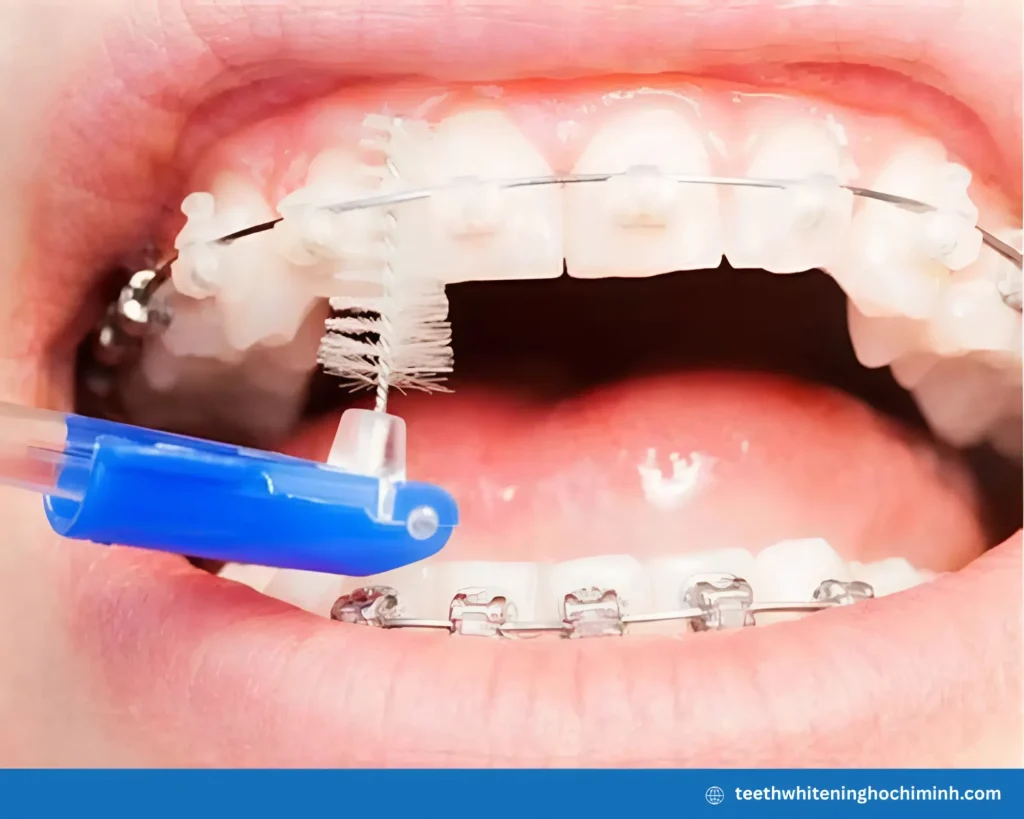
Oil pulling with coconut oil improves oral health through bacterial reduction but doesn’t chemically alter tooth color. It’s safe during orthodontic treatment but expecting whitening effects leads to disappointment.
Baking soda acts as mild abrasive removing surface stains. Mixed into regular toothpaste, it provides modest benefit. However, excessive use can damage enamel and irritate gums – particularly problematic when braces already stress oral tissues.
| You may also be interested in: 7 ways to use baking soda and toothpaste for teeth whitening
Activated charcoal removes surface discoloration through abrasion but doesn’t whiten intrinsically. Charcoal particles can lodge around brackets and wires, creating hygiene problems.
Hydrogen peroxide teeth whitening with braces
Can u use teeth whitening with braces using diluted hydrogen peroxide rinses? Dentists sometimes recommend 1.5-3% hydrogen peroxide solutions as antimicrobial mouth rinses during orthodontics. At these concentrations, peroxide provides cleaning benefits without significant whitening effects.
Higher concentrations (6-10%) found in whitening products still face the bracket barrier problem. More importantly, concentrated solutions can irritate gums and soft tissues already stressed by orthodontic appliances.
Addressing teeth whitening with braces stains
The better question isn’t “can you get teeth whitening with braces” but “how do you prevent staining during treatment?” Several strategies minimize discoloration:
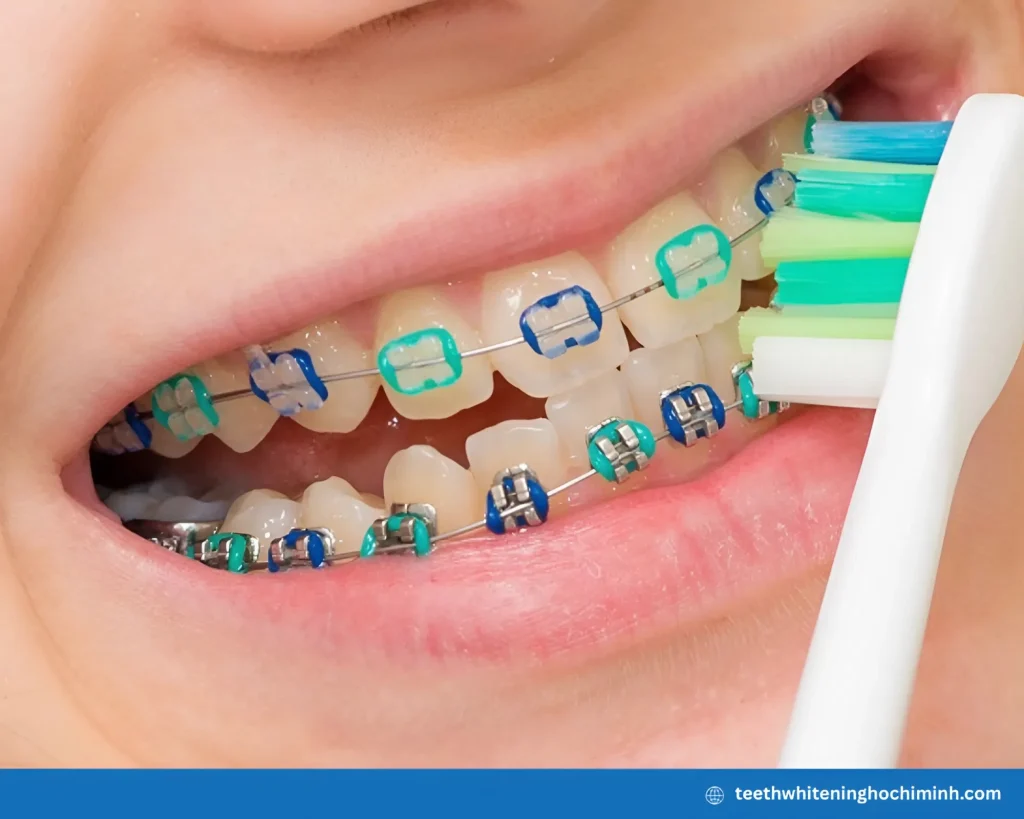
Dietary modifications: Reduce coffee, tea, red wine consumption. Use straws when drinking staining beverages and rinse mouth immediately after.
Rigorous hygiene: Brush after every meal using proper technique around brackets. Use water flossers to remove trapped food particles.
Regular professional cleanings: Visit dental hygienists every 3-4 months during treatment for thorough cleanings reaching areas home care misses.
Fluoride treatments: Professional fluoride applications strengthen enamel and resist staining while protecting against decalcification.
These prevention strategies prove more effective than attempting to whiten around brackets. They maintain natural tooth color without complications.
FAQs
Can I use teeth whitening with braces at home?
Not advisable – strips won’t adhere around brackets, LED systems can’t penetrate hardware and peroxide products waste 30-40% on metal surfaces while creating uneven results.
How do I prevent stains with braces?
Rigorous oral hygiene, dietary modifications, regular professional cleanings every 3-4 months and whitening toothpaste prevent discoloration more effectively than attempting to whiten during treatment.
When can I whiten teeth after braces removal?
Wait 2-4 weeks after bracket removal for gum healing and enamel remineralization, then consult dentists for professional whitening achieving uniform 4-7 shade improvements.
What’s the cost of whitening during versus after braces?
Whitening during treatment plus corrections costs $200-300+; waiting for single complete treatment after braces costs $80-150 with superior uniform results.
Conclusion
The question “can you do teeth whitening with braces” has a clear answer: while physically possible, it’s inadvisable due to uneven results, product waste and increased costs. Orthodontic brackets prevent bleaching agents from reaching 20-30% of tooth surfaces, resulting in checkerboard patterns once hardware is removed.
Dental professionals universally recommend postponing whitening until completing orthodontic treatment. This approach delivers uniform results and costs significantly less than attempting whitening during treatment followed by correction sessions.
Patients concerned about appearance during orthodontic treatment should focus on prevention: rigorous hygiene, dietary modifications, regular professional cleanings and whitening toothpaste. These strategies maintain natural tooth color without complications of premature bleaching attempts.
Medical disclaimer: This information provides educational guidance based on orthodontic standards and published research. It doesn’t substitute professional dental consultation. Patients should discuss timing of whitening procedures with their orthodontists and dentists.

![[Top answered 2026] Can you use teeth whitening with braces?](https://teethwhiteninghochiminh.com/wp-content/uploads/2026/08/philips-zoom-at-home-teeth-whitening-reviews.webp)
![[Top answered 2026] Can you use teeth whitening with braces?](https://teethwhiteninghochiminh.com/wp-content/uploads/2026/08/zoom-professional-teeth-whitening-system.webp)
![[Top answered 2026] Can you use teeth whitening with braces?](https://teethwhiteninghochiminh.com/wp-content/uploads/2026/08/top-5-rated-at-home-teeth-whitening-kits.webp)