
Is teeth whitening toothpaste safe for daily use? Yes, when the formula carries an RDA score below 200 and contains fluoride. Most mainstream options on the market today fall within that safe range. Problems typically arise from brushing technique or product misuse rather than the toothpaste itself.
Many expats and visitors in Ho Chi Minh City ask is teeth whitening toothpaste safe to use alongside other dental treatments. The short answer is yes – with the right product and the right technique.
How teeth whitening toothpaste work?
Before diving into whether is teeth whitening toothpaste safe, it helps to understand what it actually does inside the mouth. Whitening toothpaste removes stains through two main pathways: physical abrasion and chemical action.
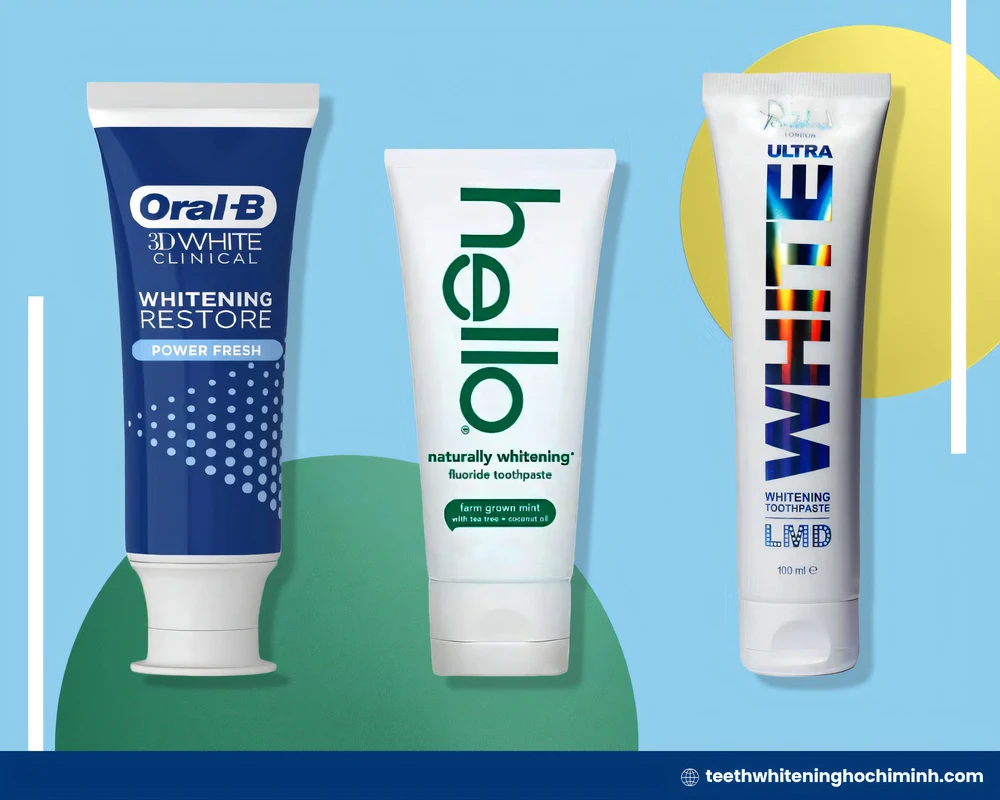
The abrasive pathway uses fine particles, usually hydrated silica or calcium carbonate, to gently buff surface stains from coffee, tea and tobacco off the outer enamel. The chemical pathway uses low concentrations of hydrogen peroxide or carbamide peroxide to break down stain molecules within the tooth surface.
The key distinction is contact time. Even toothpaste that contains peroxide only stays on the tooth for roughly two minutes. That is not long enough to bleach deeply the way an in-office treatment does. Whitening toothpaste is primarily a stain management tool, not a dramatic shade-change solution.
Is teeth whitening toothpaste safe when used twice a day?
Teeth whitening toothpaste is safe for twice-daily brushing provided the product has a low RDA score and is used with a soft-bristled brush. The RDA (Relative Dentin Abrasivity) score is the industry benchmark for measuring how abrasive a toothpaste is against tooth structure. The American Dental Association considers any toothpaste with an RDA below 250 safe for regular use.
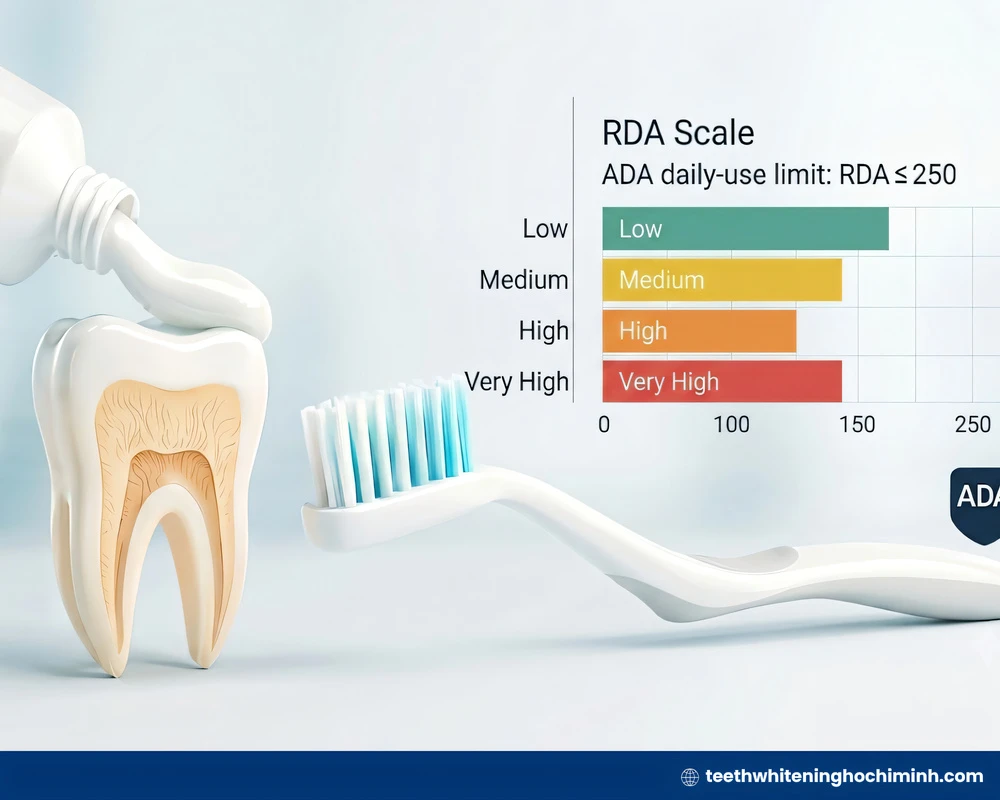
Where things go wrong is usually brushing pressure. Hard scrubbing amplifies the abrasive effect of any toothpaste, including whitening formulas. A soft-bristled brush with light, circular motions keeps the RDA working as intended.
The real question is not is teeth whitening toothpaste safe as a category. It is whether the specific product and technique are appropriate for the individual using it.
Breaking down the ingredients and what each one does
To fully answer is teeth whitening toothpaste safe, the ingredient list is the most reliable place to start. Teeth whitening toothpaste ingredients safety becomes clearer when each component is examined individually.
| Ingredient | Function | Safety notes |
| Hydrated silica | Abrasive – removes surface stains | Safe at low RDA; widely used across standard toothpastes |
| Hydrogen peroxide (1-2%) | Chemical whitening of extrinsic stains | Safe at low concentrations; higher levels need dentist supervision |
| Sodium fluoride | Strengthens enamel, prevents cavities | Standard in most fluoride toothpastes; protective |
| Potassium nitrate | Reduces tooth sensitivity | Used in sensitivity-relief formulas; clinically proven effective |
| Carbamide peroxide | Breaks down into hydrogen peroxide in the mouth | Gentle alternative to direct hydrogen peroxide |
| Blue covarine | Optical brightener – makes teeth appear whiter instantly | Cosmetic effect only; not a bleaching agent |
| Sodium lauryl sulfate (SLS) | Foaming agent | Can irritate soft tissue in some users; SLS-free options available |
The main teeth whitening toothpaste ingredients safety concern in the literature centres on the combination of a high-abrasive formula, low pH and frequent use. A 2023 Seoul National University study published in BMC Oral Health found that: whitening toothpastes containing both hydrogen peroxide and citric acid at low pH levels carried a higher risk of dentin abrasion.
That research helps clarify is teeth whitening toothpaste safe across different formula types – the answer varies depending on what is actually in the tube, not just the whitening claim on the packaging.
Are teeth whitening toothpastes safe for sensitive teeth?
Is teeth whitening toothpaste safe for people with existing sensitivity? Yes – but the formula matters significantly more than it does for healthy enamel.
Potassium nitrate at 5% concentration is an active desensitising ingredient with strong clinical support. It works by calming nerve signals inside the tooth rather than blocking the dentinal tubules. Fluoride adds further protection by supporting remineralisation of the enamel surface.
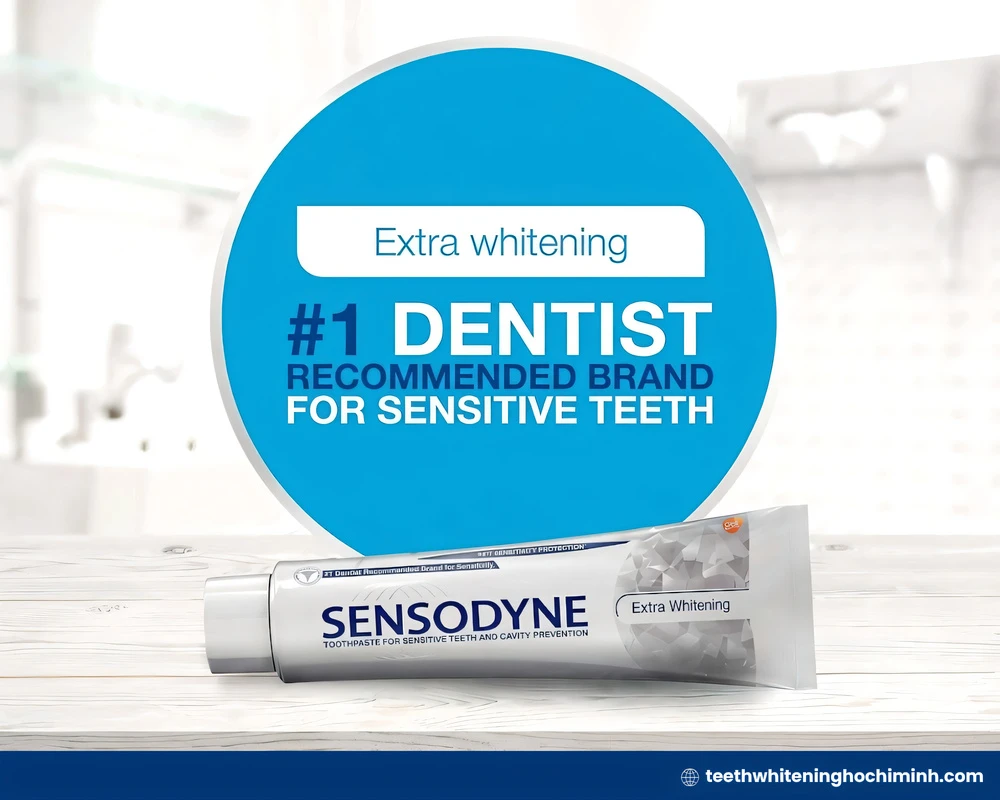
Sensitive-specific formulas such as Opalescence Sensitivity Relief or Sensodyne Extra Whitening are formulated with this combination in mind. They are explicitly designed for daily use without the enamel erosion risk that higher-abrasion whitening pastes can carry.
Anyone who notices increased sensitivity after switching to a whitening toothpaste should check whether the product contains citric acid or has a low pH, as those are the factors most commonly associated with sensitivity flare-ups.
Is it safe to use teeth whitening toothpaste everyday? What dentists say
When patients ask is teeth whitening toothpaste safe, most dentists point to technique as the deciding factor rather than the product category itself. The clinical consensus is straightforward:
- Choose a product carrying the ADA Seal of Acceptance or equivalent certification
- Look for an RDA score below 200 if the brand publishes it
- Use a soft-bristled brush and avoid pressing hard against the gum line
- If sensitivity develops within two weeks, switch to a sensitivity-relief formula
- Do not assume that brushing longer or harder speeds up whitening – it does not
For patients already undergoing professional whitening treatment in Ho Chi Minh City, many dentists recommend using a low-abrasion whitening toothpaste between sessions to maintain results. Teeth whitening toothpaste safety in this context is well-established – it complements rather than conflicts with clinical treatment.
The safest teeth whitening toothpaste formulas for long-term use
The safest teeth whitening toothpaste for long-term daily use combines a low RDA score, neutral pH, fluoride and potassium nitrate if sensitivity is a factor. For anyone still wondering is teeth whitening toothpaste safe over months of consistent use, these are the formula markers that matter most.
Characteristics of the safest options:
- RDA below 150 – gentle enough for everyday abrasion without enamel loss over time
- Fluoride (sodium fluoride or stannous fluoride) – actively protects enamel and prevents demineralisation
- Neutral pH (6.5-7.5) – avoids the erosion risk associated with acidic formulas
- Potassium nitrate 5% – reduces sensitivity for users who are prone to it
- No citric acid – especially important for people with already-thin enamel
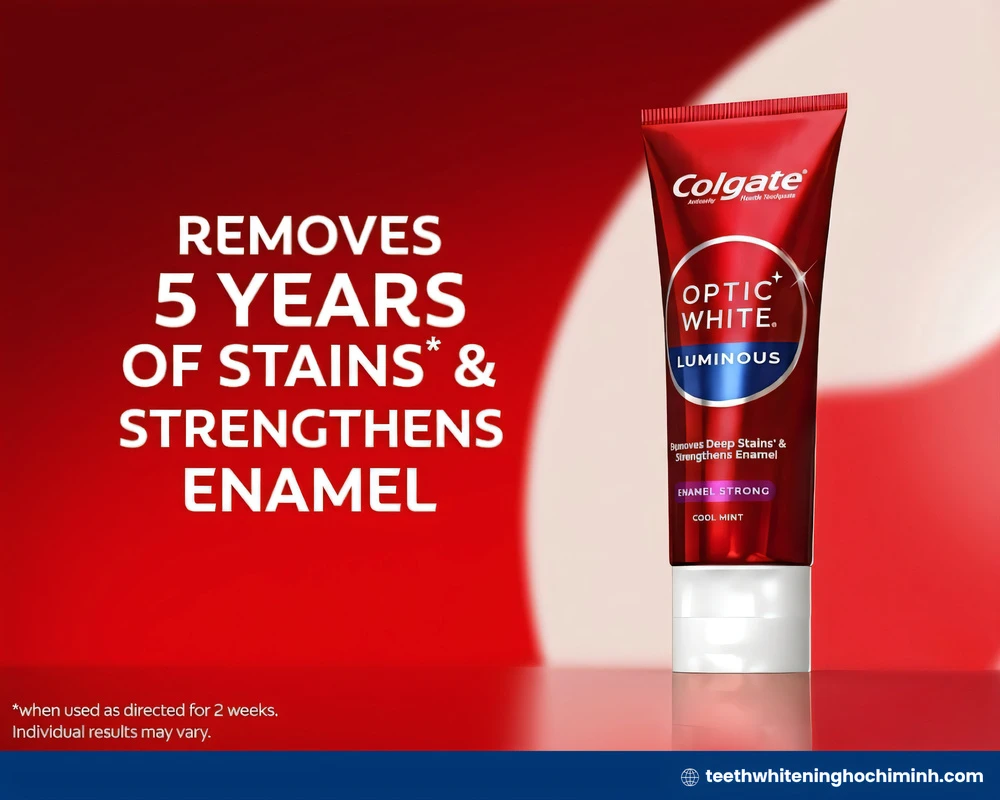
Products that meet all of these criteria include Opalescence teeth whitening toothpaste (original and sensitivity-relief), Sensodyne Extra Whitening and Colgate Optic White Enamel White. All three appear on the best teeth whitening toothpaste lists reviewed on Teeth Whitening Ho Chi Minh.
| Read more: Top 10 Colgate teeth whitening toothpaste reviews in 2026
Who should be cautious about teeth whitening toothpaste safety?
Whitening toothpaste is not universally appropriate for every oral health situation. Teeth whitening toothpaste safety looks different depending on the individual’s baseline oral health.
Enamel erosion or thin enamel – any abrasive product carries more risk when the protective layer is already compromised. Is teeth whitening toothpaste safe for eroded enamel? Not without a dentist’s sign-off first.
Exposed dentin or gum recession – dentin is softer than enamel and wears faster. Whitening toothpaste is not intended for use directly on exposed root surfaces.
Children under 12 – formulas designed for adults carry higher fluoride or peroxide concentrations that are not appropriate for younger teeth.
Recent restorations – whitening toothpaste does not lighten crowns, veneers, or bonding material. Using it aggressively around restorations can create shade mismatches over time.
What teeth whitening toothpaste can and cannot do
Teeth whitening toothpaste works for surface stain removal. It does not work for intrinsic discolouration or genetic tooth colour.
The mechanism is well established. Abrasive particles and low-concentration peroxide both remove extrinsic staining from coffee, tea, red wine and tobacco. Clinical data from Opalescence shows a measurable shade improvement of up to two shades in two weeks with daily use. That confirms teeth whitening toothpaste is safe and effective within its intended scope – provided expectations are realistic.
A separate question is teeth whitening toothpaste safe enough to replace professional treatment entirely. The answer is no. What whitening toothpaste cannot do is change the underlying colour of the dentine, which is where intrinsic discolouration lives. For that, professional whitening treatments such as Zoom, laser, or take-home trays are the only clinically proven options.
| Recommended reading: Best rated professional in office teeth whitening Ho Chi Minh 2026
Teeth whitening toothpaste safety at a glance
| Scenario | Safe for daily use? |
| Healthy enamel, soft brush | Yes |
| Sensitive teeth, low-RDA formula | Yes |
| Sensitive teeth, high-abrasion formula | Caution – switch to sensitivity relief |
| Thin or eroded enamel | Check with dentist first |
| Exposed root surfaces | Not recommended |
| Children under 12 | Use age-appropriate formula |
| During professional whitening treatment | Generally yes – check with treating dentist |
The bottom line
Is teeth whitening toothpaste safe for most adults? Yes – when the product is chosen carefully and used correctly. The ingredients that matter most are fluoride for enamel protection, a low RDA score to avoid over-abrasion and potassium nitrate if sensitivity is a concern.
Is teeth whitening toothpaste safe long term? For most healthy adults, yes. Whether is teeth whitening toothpaste safe ultimately comes down less to the category and more to the specific formula, brushing habits and individual oral health situation.
Teeth whitening toothpaste safety is well-documented in clinical literature – and for the vast majority of users, daily use is both practical and appropriate. For anyone in Ho Chi Minh City weighing home whitening options against a professional in-clinic treatment, Teeth Whitening Ho Chi Minh provides independent reviews to help make that call.

![[Answered 2026] Is teeth whitening toothpaste safe for daily use?](https://teethwhiteninghochiminh.com/wp-content/uploads/2026/08/philips-zoom-at-home-teeth-whitening-reviews.webp)
![[Answered 2026] Is teeth whitening toothpaste safe for daily use?](https://teethwhiteninghochiminh.com/wp-content/uploads/2026/08/zoom-professional-teeth-whitening-system.webp)
![[Answered 2026] Is teeth whitening toothpaste safe for daily use?](https://teethwhiteninghochiminh.com/wp-content/uploads/2026/08/top-5-rated-at-home-teeth-whitening-kits.webp)