Philips Zoom teeth whitening trays are among the most widely used professional take-home whitening systems available through dental clinics today. This review covers how the trays work, a side-by-side look at DayWhite and NiteWhite formulas, step-by-step tray instructions. And what real users report after completing a full treatment course – useful reading for anyone considering Zoom whitening at a clinic in Ho Chi Minh City.
What are Zoom teeth whitening trays and how do they work?
Zoom teeth whitening trays are custom-fitted mouth trays prescribed by a dentist and used at home with a professional-grade whitening gel. They form part of the Philips Zoom take-home system, designed to deliver gradual but clinically significant results over one to two weeks.
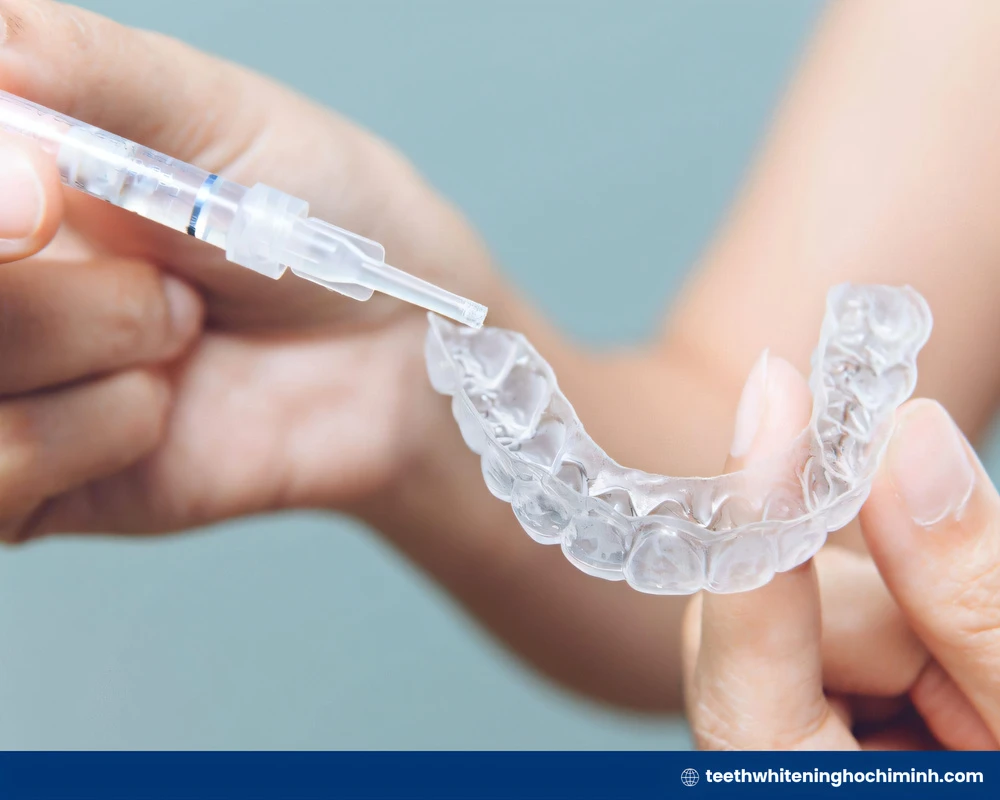
The trays are made from dental impressions taken at a clinic. Because they are shaped precisely to each patient’s teeth, the gel distributes evenly across every surface. This is what separates Philips Zoom trays from generic boil-and-bite alternatives – the fit is tighter, gel contact is more consistent and gum exposure is minimized.
The whitening agent inside the gel, either hydrogen peroxide or carbamide peroxide depending on the formula – releases oxygen molecules that penetrate enamel and break apart stain compounds. Results from zoom teeth whitening trays appear gradually compared to in-office treatment, but are equally effective by the end of the full course.
DayWhite vs NiteWhite: Which Zoom tray formula is right for you?
Philips Zoom offers two take-home tray formulas, each designed for a different wear schedule. The right choice depends on stain depth, sensitivity history and how much daily wear time is realistic.
| DayWhite | NiteWhite | |
| Active agent | Hydrogen peroxide | Carbamide peroxide |
| Wear time | 30-90 minutes daily | 2-6 hours or overnight |
| Best for | Mild to moderate stains, short wear preference | Darker stains, longer wear tolerance |
| Available strengths | 6%, 9.5%, 14% | 10%, 16%, 22% |
| Typical results | Within 2 weeks | Within 1-2 weeks |
Hydrogen peroxide is highly potent for short periods of 30 to 60 minutes, making it suitable for patients who prefer minimal daily wear time. Carbamide peroxide breaks down more slowly, releasing active peroxide over 5 to 6 hours, better suited for darker stains that need prolonged contact with the whitening agent.
A dentist selects the appropriate formula and concentration based on each patient’s baseline shade, sensitivity history and lifestyle. Patients should not self-select strength without professional guidance.
How to use Zoom teeth whitening trays at home
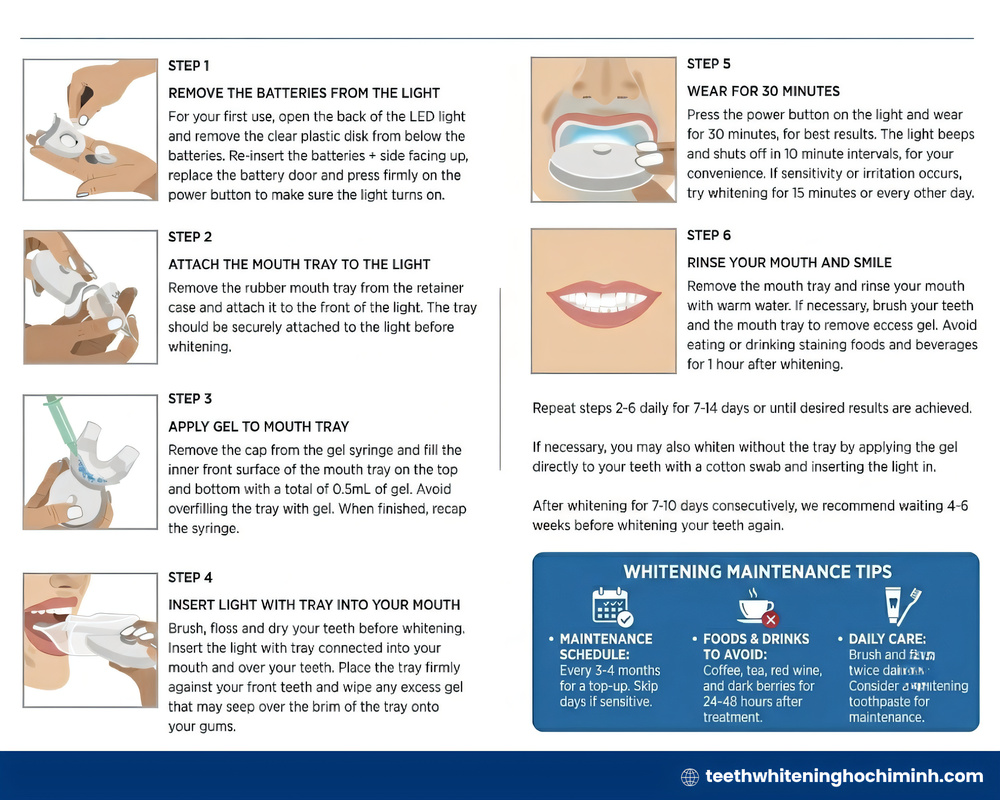
Correct technique directly affects both results and comfort. Using zoom teeth whitening trays incorrectly, overloading with gel, wearing them on wet trays, or skipping aftercare. Reduces effectiveness and increases the chance of sensitivity.
Step 1 – Prepare the mouth
Brush and floss before each session. Whitening on clean teeth consistently produces better results. Make sure the tray is completely dry before loading – excess moisture dilutes the gel.
Step 2 – Load the tray
Place a small teardrop-sized amount of gel into each tooth compartment of the tray. Use less for smaller teeth and slightly more for larger ones. Overloading is a common mistake. Too much gel can cause temporary burning or heightened sensitivity, a small dot per tooth compartment is sufficient.
Step 3 – Insert and wear
Seat the tray fully over the teeth without pushing the gel out during insertion. Some bubbling inside the tray during wear is normal and indicates the whitening process is active. Do not eat, drink, or smoke while wearing zoom teeth whitening trays.
Step 4 – Remove and clean
After whitening, remove the tray and rinse it with cold water only. Hot water can warp the tray material. Use a soft toothbrush without toothpaste to clear any remaining gel if needed, then store in the provided case in a cool, dry place.
Step 5 – Post-session care
Rinse the mouth with lukewarm water and brush gently. For the first 48 hours after each session, avoid staining foods and drinks – coffee, tea, red wine and dark sauces are the main culprits.
Zoom teeth whitening tray wear times by formula
Wear duration depends on the specific product and concentration. Exceeding the recommended time does not accelerate results – it raises sensitivity risk without added whitening benefit.
| Formula | Concentration | Recommended wear time |
| NiteWhite | 10% CP | Overnight or 2-4 hours daily |
| NiteWhite | 16% CP | Overnight or 2-4 hours daily |
| NiteWhite | 22% CP | 1-2 hours nightly |
| DayWhite | 6% HP | 30 minutes, twice daily |
| DayWhite | 9.5% / 14% HP | As directed by dentist |
Optimum results across most formulas are typically achieved within two weeks. For NiteWhite 22%, wearing the trays for 1 to 2 hours each evening is sufficient to complete the course.
Zoom teeth whitening vs trays: At-home or In-office?
This is one of the most common questions from patients considering the Philips Zoom system. Both approaches use the same underlying chemistry but differ significantly in speed, strength and practical fit.
In-office Zoom (WhiteSpeed)
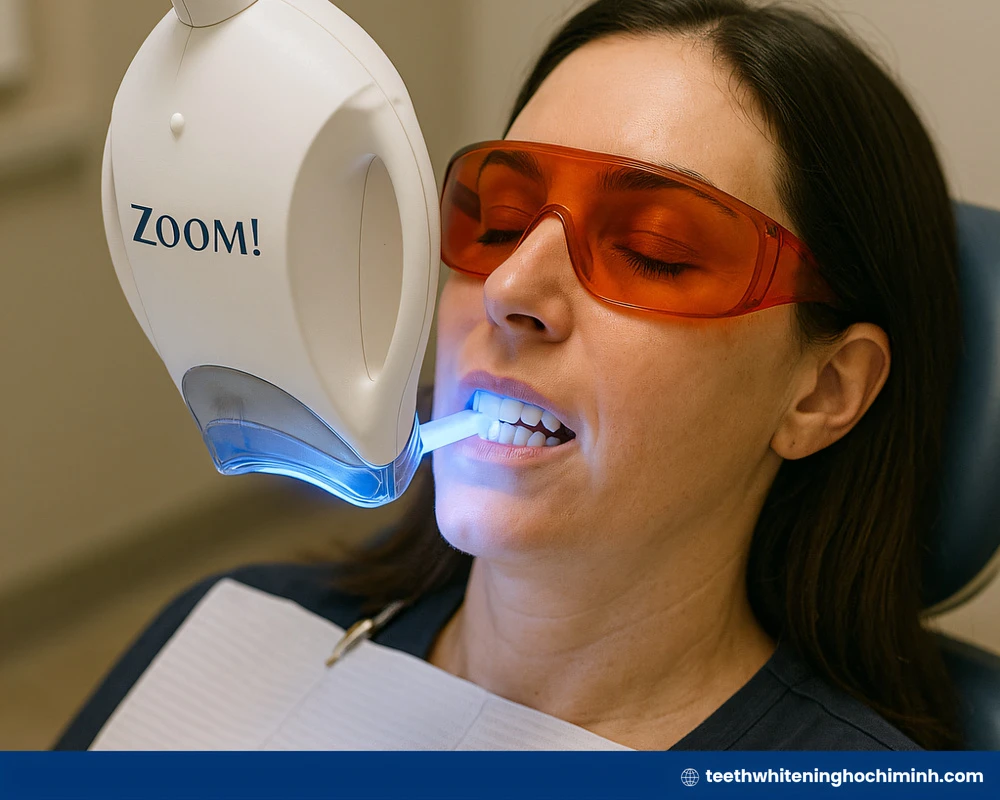
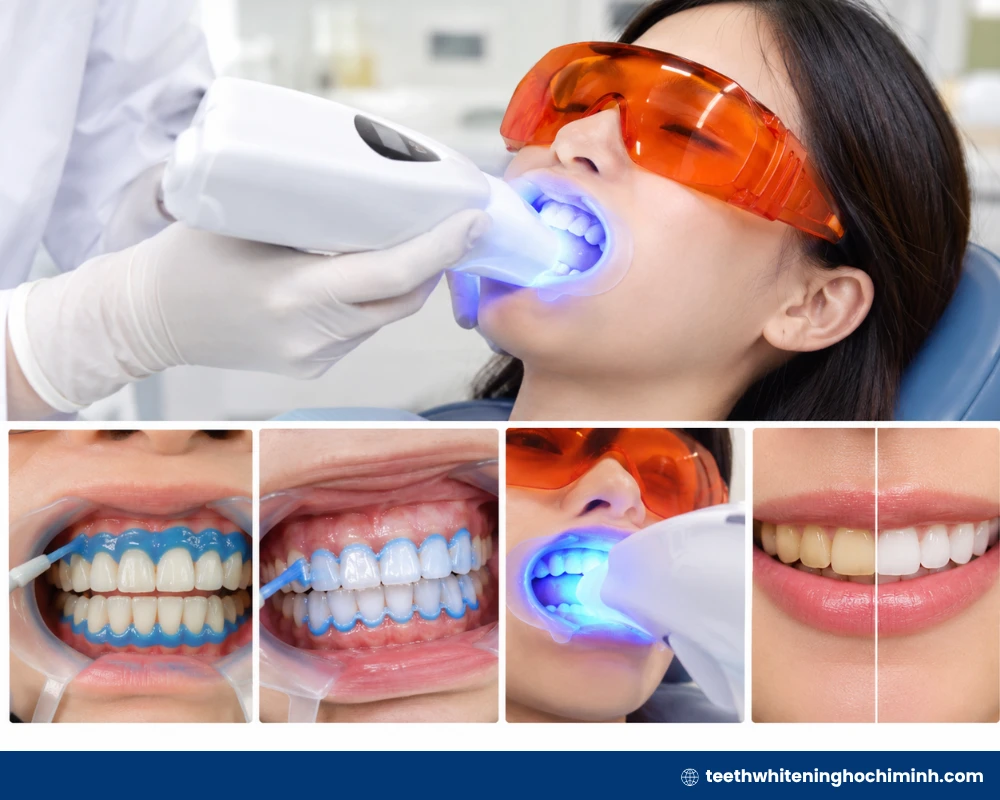
The in-office WhiteSpeed session can deliver results up to eight shades whiter in a single visit lasting under one hour. A dental professional applies a high-concentration hydrogen peroxide gel activated by an LED lamp. Gums and lips are shielded throughout. This option suits patients who want immediate results before a specific event or have limited time for a multi-week home course.
Zoom teeth whitening trays at home
Take-home zoom teeth whitening trays use lower gel concentrations but produce comparable final results when used consistently over the prescribed period. The main advantage is convenience – patients can whiten while sleeping, working, or relaxing at home, without additional clinic appointments.
Which suits expats and visitors better?
Neither option is objectively superior. In-office Zoom is faster and professionally supervised. At-home zoom teeth whitening trays are more practical for those managing a flexible schedule around travel or work. Many patients use both – in-office treatment for the initial shade lift, then take-home trays every few months for maintenance.
Philips zoom teeth whitening trays reviews from real users
Patient feedback on zoom teeth whitening trays consistently highlights three themes: visible results within the first week, manageable sensitivity when instructions are followed carefully and frustration when the product is misused.
What users report positively
- Noticeable shade improvement typically appears within 5 to 7 days
- Custom fit makes zoom teeth whitening trays more comfortable than strip-based alternatives
- The ACP (amorphous calcium phosphate) ingredient in the gel is noted by patients as significantly reducing tooth sensitivity compared to other professional whitening systems
- NiteWhite overnight results are frequently described as gradual but consistent across the full two-week course
Common criticisms
- Sensitivity is the most frequently reported side effect, particularly with higher-concentration formulas
- Some users note results fade faster than expected when diet is not adjusted after treatment
- The trays require a clinic visit to fabricate, adding an initial step not required by OTC alternatives
Managing sensitivity
Patients experiencing sensitivity are advised to use Sensodyne toothpaste during the whitening course and ensure the tray is fully dry before each session to avoid diluting the gel. Reducing wear time or alternating days also works well for those with higher baseline sensitivity.
Are Zoom teeth whitening trays worth it for expats in Vietnam?
For foreign visitors and expats in Ho Chi Minh City, zoom teeth whitening trays offer a practical middle ground between a quick clinic visit and long-term at-home maintenance. Clinics in Vietnam that carry the Philips Zoom system typically include a set of custom take-home trays as part of the in-office treatment package.
Before leaving the clinic, patients receive customized whitening trays and a take-home kit included in the overall treatment price. This means patients leave with both the immediate shade improvement from the in-office session and the tools to maintain results independently – practical for those traveling through or relocating.
Key precautions for Zoom teeth whitening tray users
Zoom teeth whitening trays are not suitable for everyone. Patients should review the following before starting treatment.
- Age – Not for use in patients under 18
- Pregnancy – Whitening is not recommended during pregnancy or breastfeeding
- Existing restorations – Crowns, veneers and composite fillings do not respond to peroxide whitening; shade mismatches may appear after treatment on surrounding natural teeth
- Untreated decay or gum disease – These must be resolved before whitening begins
- Sensitivity history – Patients with hypersensitive teeth should discuss concentration options with a dentist before starting
- Duration limit – Consult a dentist before using the product for more than two weeks. Gel effectiveness reduces once a syringe has been open for more than one month.
Overall assessment
Philips Zoom teeth whitening trays are a clinically sound, dentist-prescribed option for patients seeking professional-grade results outside the clinic. The custom fit, dual-formula system and ACP-based sensitivity protection make them among the more practical take-home whitening solutions available through dental clinics.
Results depend heavily on following the zoom teeth whitening tray instructions precisely – correct gel volume, dry trays, appropriate wear times and post-treatment dietary adjustments. Patients who skip any of these steps consistently report both weaker results and higher sensitivity.
For expats and visitors using dental services in Ho Chi Minh City, the combination of in-office Zoom and take-home trays offers strong value. Immediate shade improvement at the clinic, followed by independent maintenance at a fraction of Western market pricing, makes this one of the more cost-effective professional whitening options available in the region.