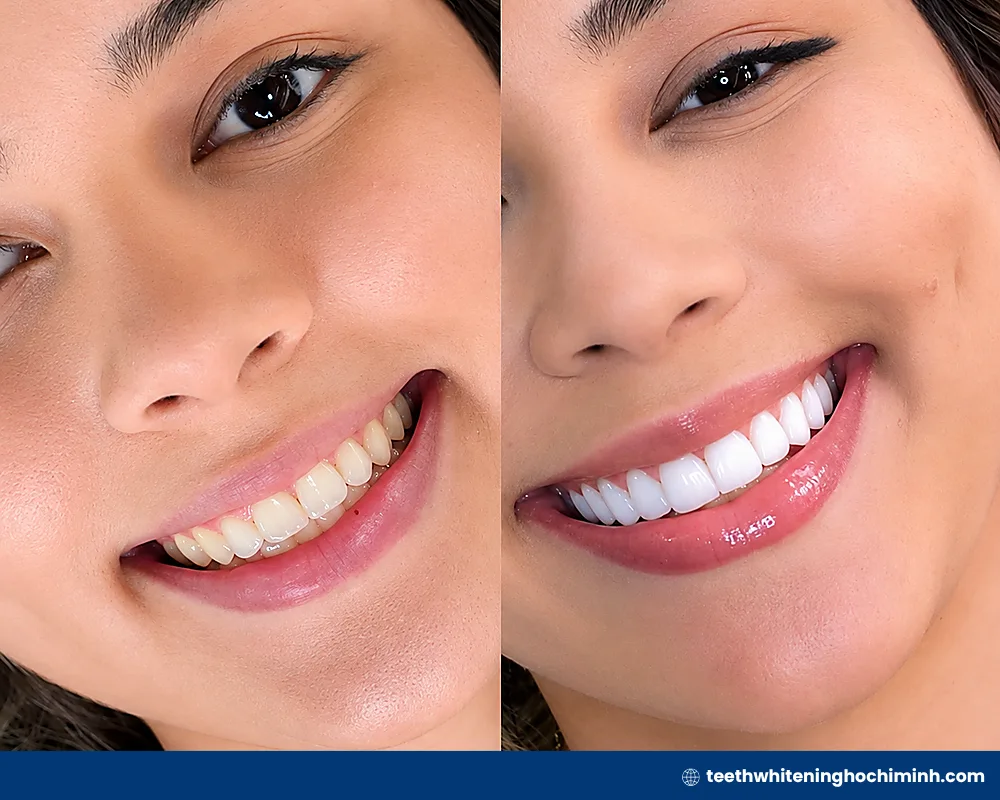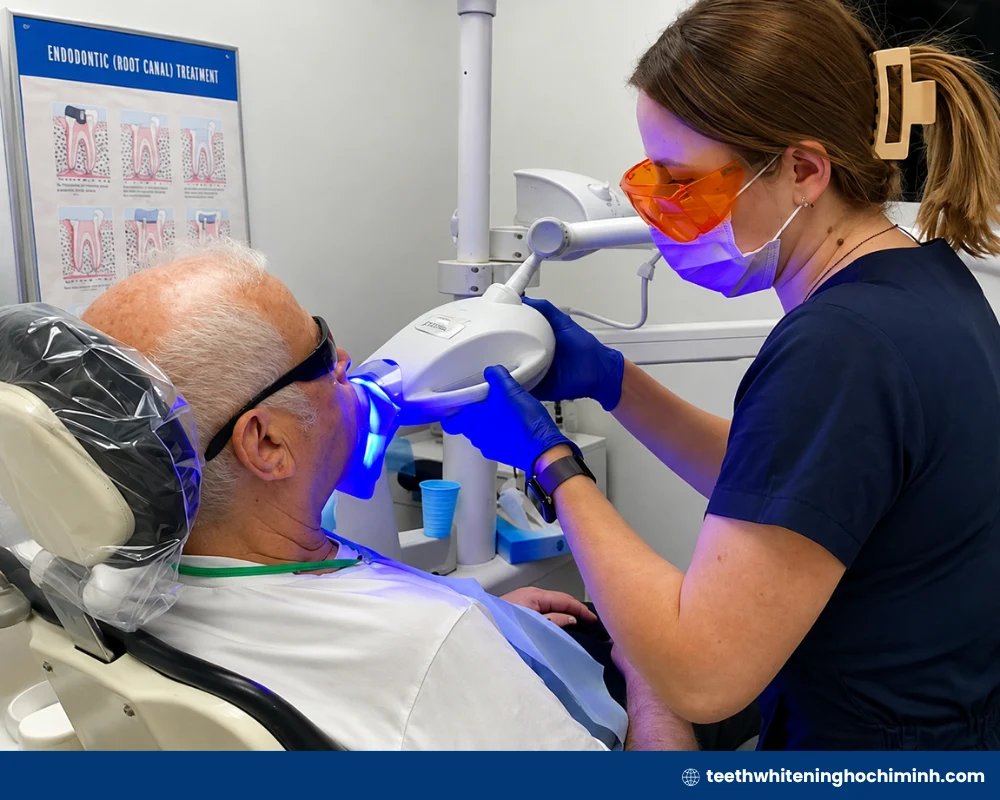
Natural teeth whitening products range from mineral-based toothpaste to enzyme strips and gentle polishing powders. Some are backed by real clinical research. Others are mostly marketing dressed up as “natural”. This guide ranks the five best all natural teeth whitening products by evidence and safety, not by social media popularity. Foreign residents and visitors in Vietnam can use it to choose natural teeth whitening products that protect enamel instead of damaging it.
What are natural teeth whitening products?
Natural teeth whitening products are formulas that brighten teeth using plant, mineral, or enzyme-based ingredients instead of peroxide bleaching agents. They work by lifting surface stains or supporting enamel health, not by changing the tooth’s underlying color the way in-office bleaching does. Results tend to be slower and milder than professional treatments.
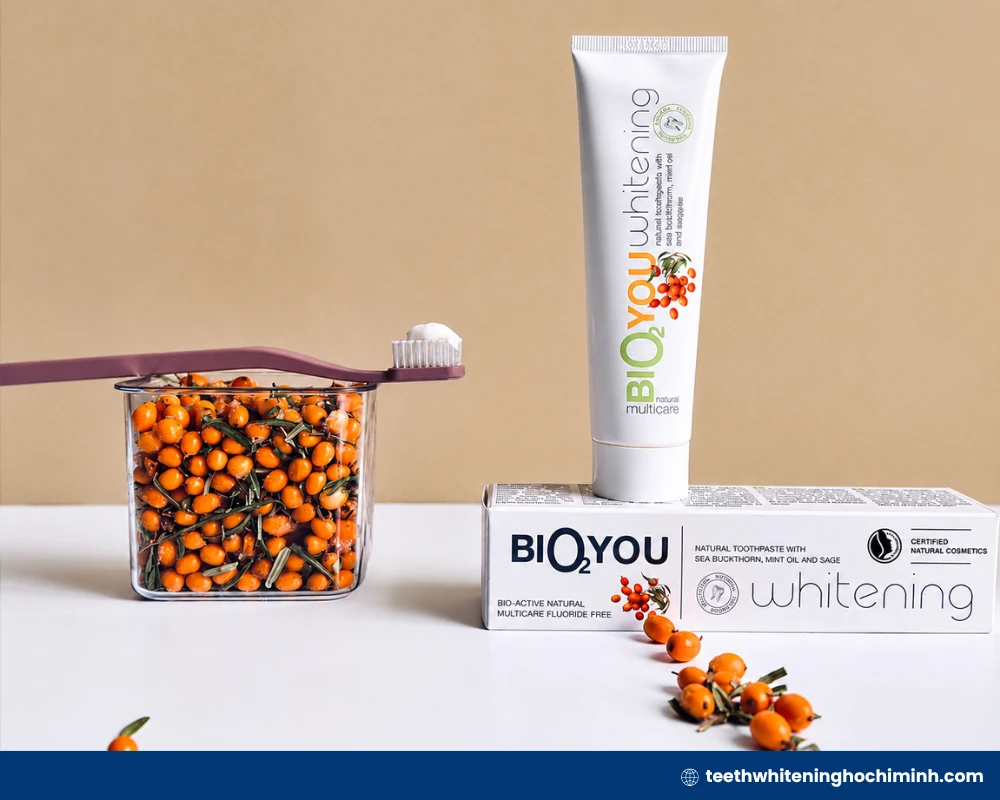
These products generally split into a handful of categories:
- Whitening toothpaste (mineral or enzyme-based)
- Peroxide-free whitening strips
- Fine-particle polishing powders
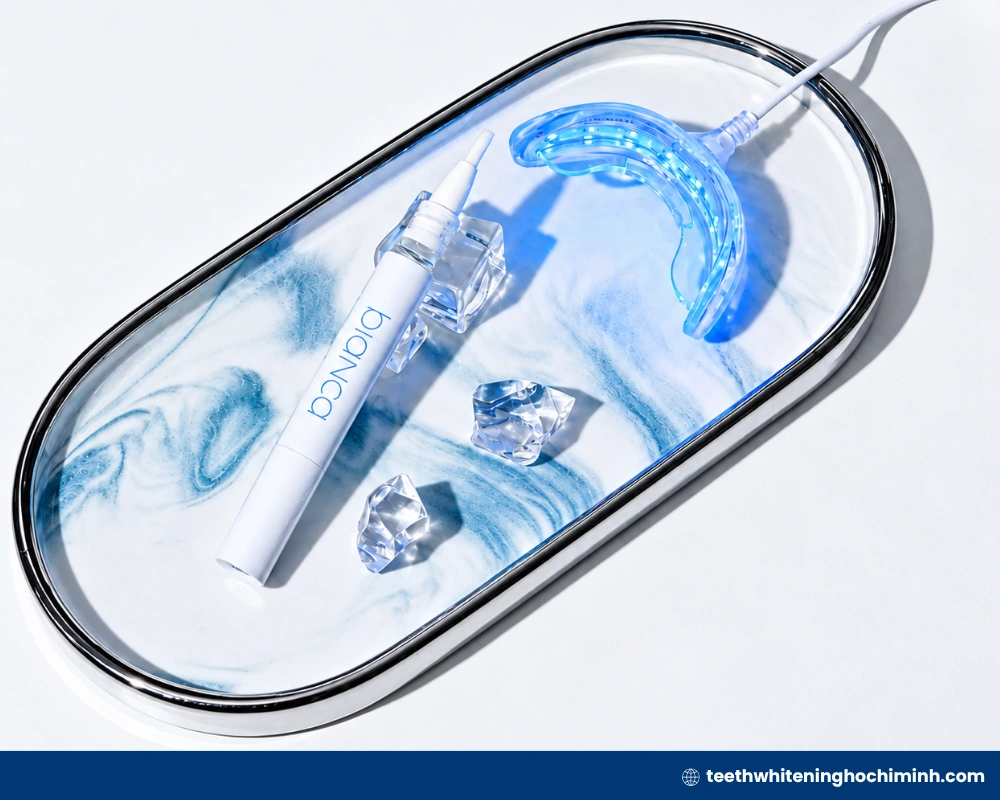
- Gel pens for spot touch-ups
- Oil pulling and other supporting habits
How to choose the best natural teeth whitening products
The best natural teeth whitening products match the ingredient to the problem.A formula that works well for surface coffee stains may do nothing for teeth darkened from the inside.
A formula gentle enough for sensitive teeth may also whiten more slowly than a stronger one. In practice, the best all natural teeth whitening products tend to share two traits: a mild, low-abrasion action and published research behind the main ingredient.
Which ingredients have real evidence behind them?
Hydroxyapatite has the strongest research support among natural whitening ingredients, followed by low-abrasion polishing agents used in moderation. Enzyme-based formulas are considered low-risk but are less studied. Several popular “natural” ingredients, including activated charcoal and oil pulling, have weak or no evidence for whitening specifically.
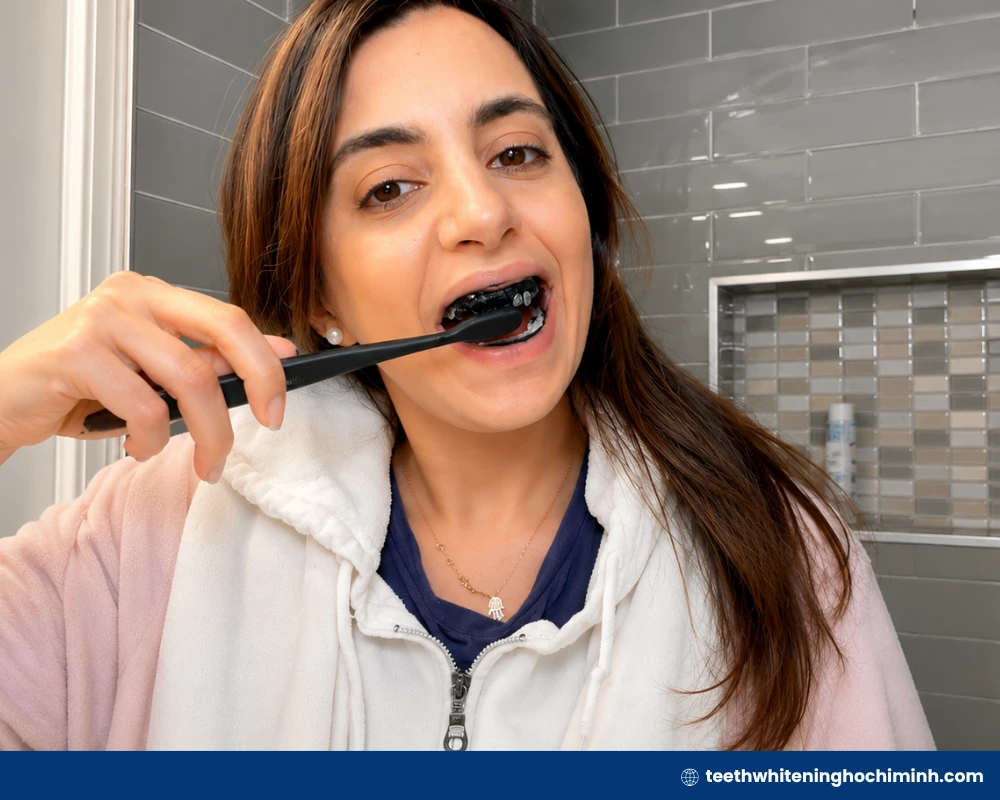
Here is how the main ingredients used in natural teeth whitening products stack up:
| Ingredient | Evidence Level | Use It? |
| Hydroxyapatite (HAp) | Strong (remineralizes enamel, cuts sensitivity) | Yes, daily |
| Low-RDA baking soda | Strong (ADA Seal on several products) | Yes, in moderation |
| Fruit enzymes (papain, bromelain) | Moderate (plausible, less studied) | Yes, low risk |
| Activated charcoal | Weak (no ADA Seal, higher abrasion) | Occasional only |
| Coconut oil pulling | Weak for whitening (low-certainty for gums) | Side habit only |
| Lemon juice, vinegar | Weak (erosion risk) | Avoid |
Why the ADA seal of acceptance matters
The ADA Seal of Acceptance signals that an independent dental body reviewed a product’s safety and efficacy claims. It is not the manufacturer’s own marketing. Checking for this seal, or an equivalent recognized dental certification, is one of the fastest ways to filter out products with weak or unverified claims before buying.
Which natural teeth whitening products fit your teeth?
The right pick among natural teeth whitening products depends on sensitivity, gum condition, and whether teeth are stained on the surface or from within. Sensitive teeth generally do best with hydroxyapatite formulas. Heavy surface staining responds better to a combination approach rather than a single product.
| Condition | Best Fit | Skip |
| Sensitive teeth | HAp toothpaste or strips | Charcoal, frequent baking soda |
| Sore gums | Enzyme gel, sparingly | Acidic rinses |
| Braces/aligners | Whitening toothpaste | Strips until braces are off |
| Heavy stains | Strips + daily toothpaste | One product alone |
| Tight budget | Daily HAp/enzyme toothpaste | Gel pens as main routine |
Top 5 best all natural teeth whitening products – Updated 10/2026
The five picks below cover the main all natural teeth whitening products worth considering in 2026, ranked by evidence strength and daily safety, from the most research-backed option down to the mildest supporting habit. Each entry covers what it’s actually good for and how fast it works.
Hydroxyapatite toothpaste
The strongest-evidenced option among natural teeth whitening products, and the easiest to use daily. It replaces a product already in the routine, remineralizes enamel, and gradually polishes away light surface stains. Results build slowly, usually over four to eight weeks of consistent brushing.
Peroxide-free whitening strips
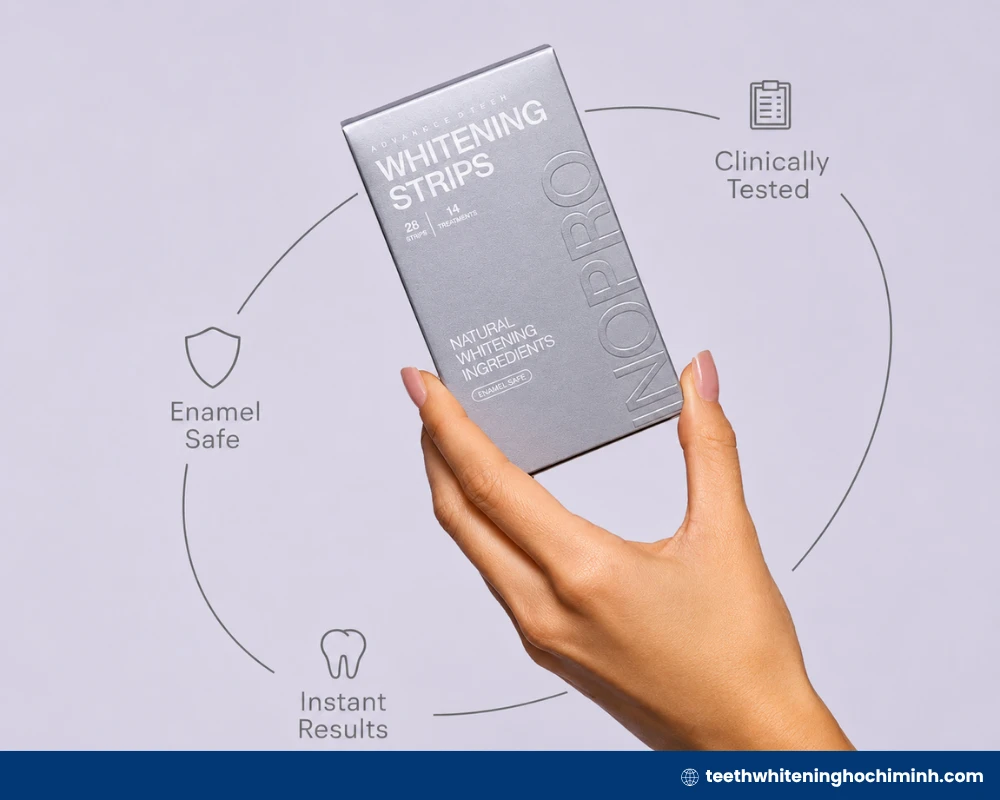
The fastest visible results among natural teeth whitening products. Teeth Whitening strips built on enzymes or hydroxyapatite typically show change within one to four weeks and suit first-time users well. Hydroxyapatite versions are the better pick for anyone with existing sensitivity.
Low-abrasion polishing powder
Effective for surface stains, but frequency decides whether these natural teeth whitening products help or harm. Used two or three times a week, a fine, low-abrasion powder causes far less wear than the same powder used daily. Charcoal-based powders sit in this category too, but carry the most caution given their weaker evidence and higher abrasion.
Whitening gel pens
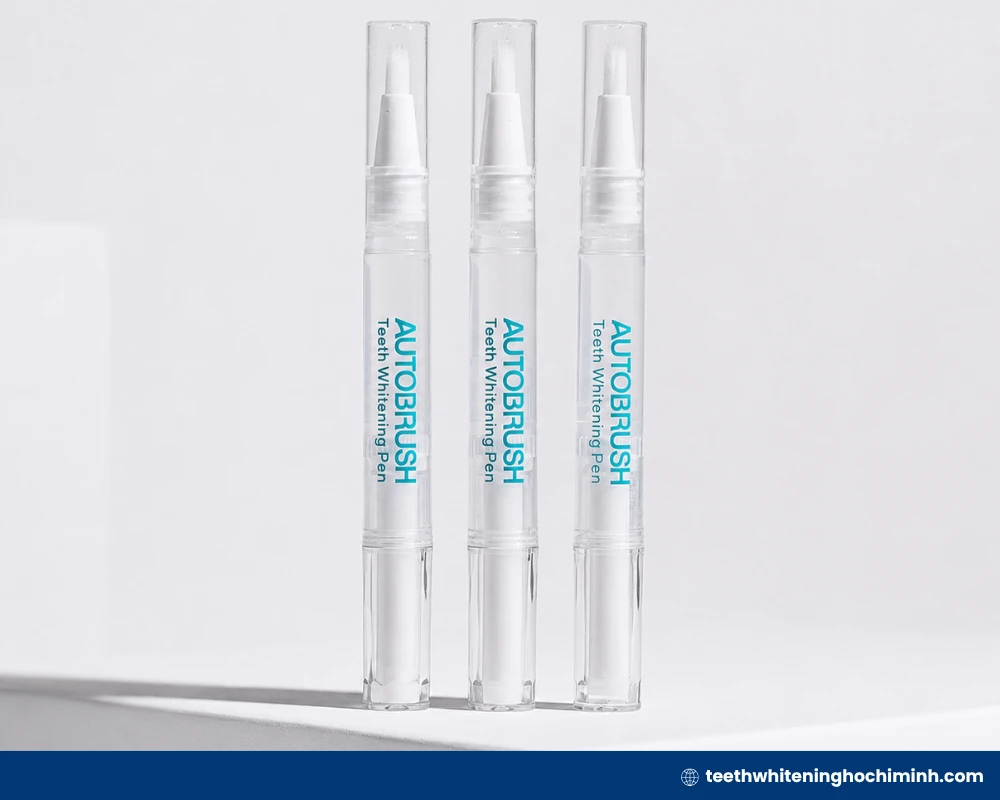
Best for a quick touch-up, not deep whitening. A thin layer on dry teeth can freshen a smile before a meeting, a flight, or a photo, but the effect is short-lived compared with strips or toothpaste used consistently over weeks.
Coconut oil pulling
A supporting habit, not a whitening treatment on its own. Swishing oil for ten to fifteen minutes may modestly support gum health, based on low-certainty evidence, but it will not lighten tooth color by itself.
Do DIY natural whitening methods actually work?
Some DIY methods have a real, if limited, effect compared with dedicated natural teeth whitening products. Others carry more risk than benefit and are better left out of a regular routine. Frequency is usually the deciding factor between a helpful habit and a damaging one.
Baking soda
Baking soda is a genuine, low-abrasion stain remover with decades of research behind it. Brushed on more than a few times a week, though, it starts to wear down enamel and raise sensitivity. Once or twice weekly is the range most dentists consider reasonable.
| Read more: Best baking soda for teeth whitening results and reviews 10/2026
Activated charcoal
Charcoal’s viral appeal comes from dramatic before-and-after photos, not from strong clinical backing. Reviews consistently find it more abrasive and less effective for whitening than alternatives like hydroxyapatite or low-RDA polishing agents. Anyone still drawn to it should treat it as an occasional product rather than a daily habit.
Coconut oil pulling
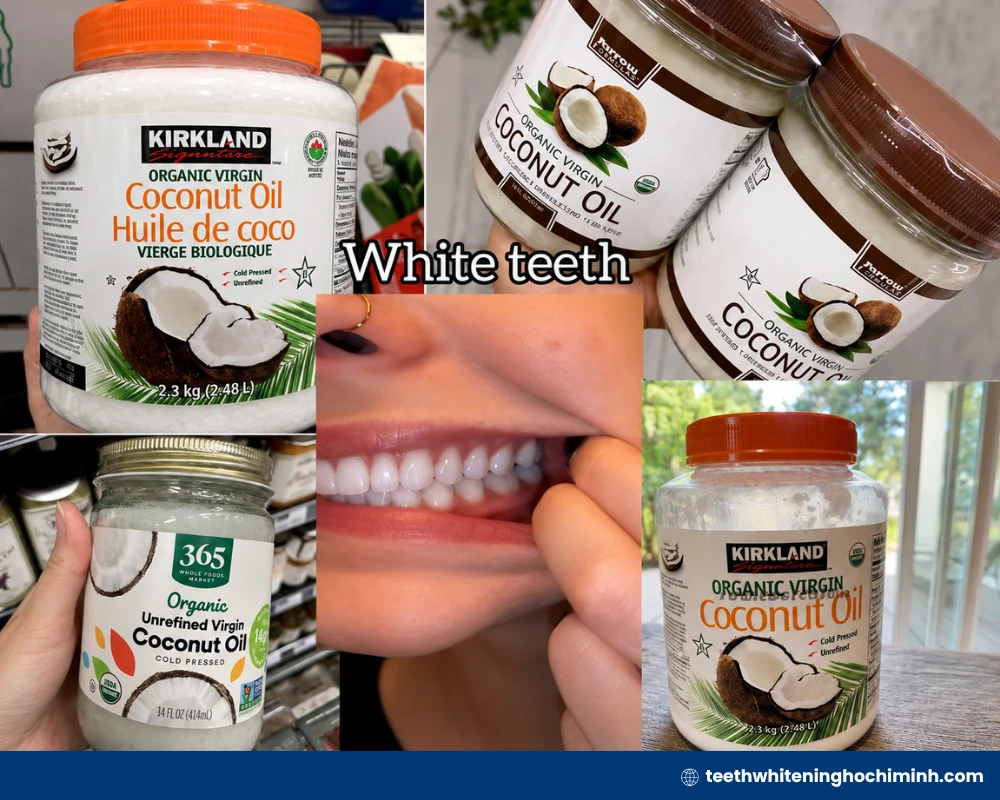
Ten to fifteen minutes of swishing may offer a modest reduction in oral bacteria linked to plaque, according to low-certainty systematic reviews. It is a reasonable side habit for general oral hygiene. It is not, however, a substitute for dedicated natural teeth whitening products.
Lemon juice and other acidic remedies
Citric acid briefly brightens enamel on contact, which explains why lemon and strawberry pastes keep resurfacing online. That same acid softens enamel with repeated exposure, raising the long-term risk of erosion. Most dental professionals advise against this method for anything beyond a rare, one-off use.
How to use natural teeth whitening products safely
Correct use determines whether natural teeth whitening products improve a smile or damage it. Overuse, not the ingredient itself, causes most whitening-related sensitivity.
By product type:
- Whitening strips: apply to clean, dry teeth for 15 to 30 minutes, then avoid deeply colored foods and drinks for an hour afterward.
- Whitening toothpaste: brush for two minutes, twice a day, with a soft-bristled brush.
- Polishing powder: limit use to two or three times per week with a soft, damp brush.
- Gel pens: apply a thin layer to dry teeth and let it sit for 20 to 30 minutes before eating or drinking.
Habits that commonly wear down enamel:
- Using a product more often than its label recommends
- Layering strips, powder, and gel into the same routine at once
- Brushing immediately after an acidic rinse, while enamel is still softened
- Continuing a routine despite ongoing sensitivity or gum irritation
Habits that help results last:
- Limiting coffee, tea, red wine, and dark sauces, or using a straw for staining drinks
- Rinsing with water after colored foods or drinks
- Brush and floss every day to keep plaque in check
- Booking a professional cleaning roughly every six months
When should you see a dentist instead of DIY whitening?
Sensitivity that lasts more than a day or two, visible gum irritation, or stains that resist several weeks of consistent home care are signs to stop self-treating. A dentist can also confirm whether discoloration is intrinsic, meaning it sits inside the tooth rather than on the surface. No natural teeth whitening products, or any other topical formula, resolve intrinsic staining on their own.
Conclusion
Of the best all natural teeth whitening products covered here, hydroxyapatite toothpaste and peroxide-free strips rank highest for a reason: real evidence behind them, and low daily risk. Viral options like loose charcoal powder and acidic rinses tend to promise more than the evidence supports. This is the same evidence-first approach the team at Teeth Whitening Ho Chi Minh uses when advising patients on natural versus professional options.
This guide draws on peer-reviewed dental research and official professional guidance current as of 10/2026, including:
- American Dental Association (ADA) – MouthHealthy, “Oil Pulling”
- Limeback H, Meyer F, Enax J. Tooth whitening with hydroxyapatite: a systematic review. Dentistry Journal, 2023.
- Chatzidimitriou K, et al. The role of hydroxyapatite-based, fluoride-free toothpastes on the prevention and remineralization of initial caries lesions: a systematic review and meta-analysis. Journal of Dentistry, 2025.
- Effectiveness and abrasiveness of activated charcoal as a whitening agent: a systematic review of in vitro studies. PubMed, 2022.
- In Vitro Evaluation of Tooth Enamel Abrasion and Roughness Using Toothpaste with and without Activated Charcoal: An SEM Analysis. PMC, 2025.
- Jong C, et al. The effect of oil pulling in comparison with chlorhexidine and other mouthwash interventions in promoting oral health: a systematic review and meta-analysis. International Journal of Dental Hygiene, 2024.
- Woolley J, Gibbons T, Patel K, Sacco R. The effect of oil pulling with coconut oil to improve dental hygiene and oral health: a systematic review. Heliyon, 2020.
This article is intended for general education and does not replace an in-person dental evaluation. Persistent sensitivity, gum irritation, or stains that don’t respond to home care should be assessed by a licensed dentist.