Baking soda remains one of the most talked-about ingredients in teeth whitening. This is especially true among people comparing home remedies with professional treatments available in Ho Chi Minh City. This guide breaks down what baking soda for teeth whitening actually does. It also covers which products perform best and when it makes more sense to book a professional whitening service instead.
What is baking soda teeth whitening?
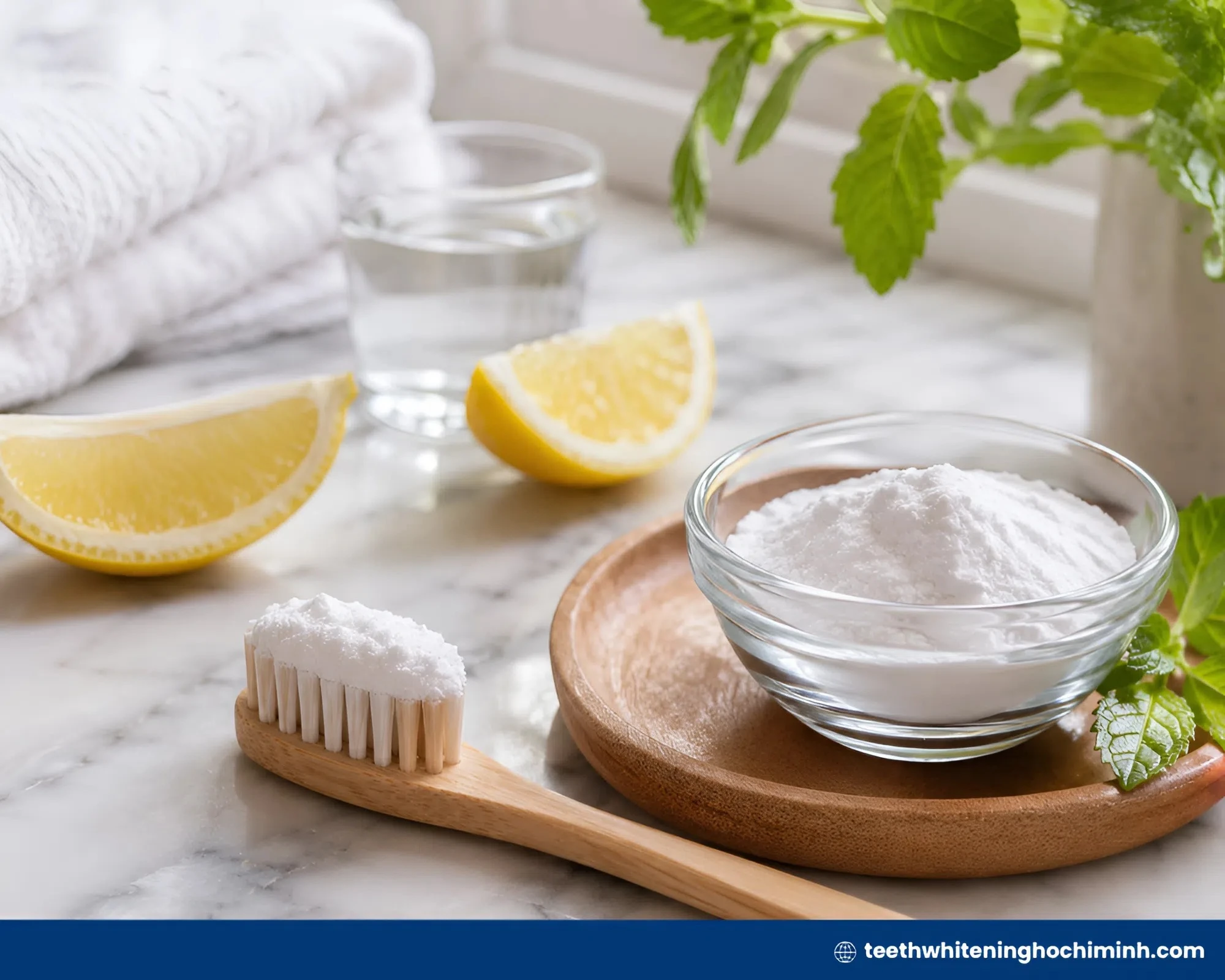
Baking soda for teeth whitening is a stain-removal method. It uses sodium bicarbonate’s mild abrasive texture to scrub away surface discoloration. It does not bleach teeth chemically on its own. Instead, it polishes the enamel surface to remove stains left behind by coffee, tea, red wine and smoking.
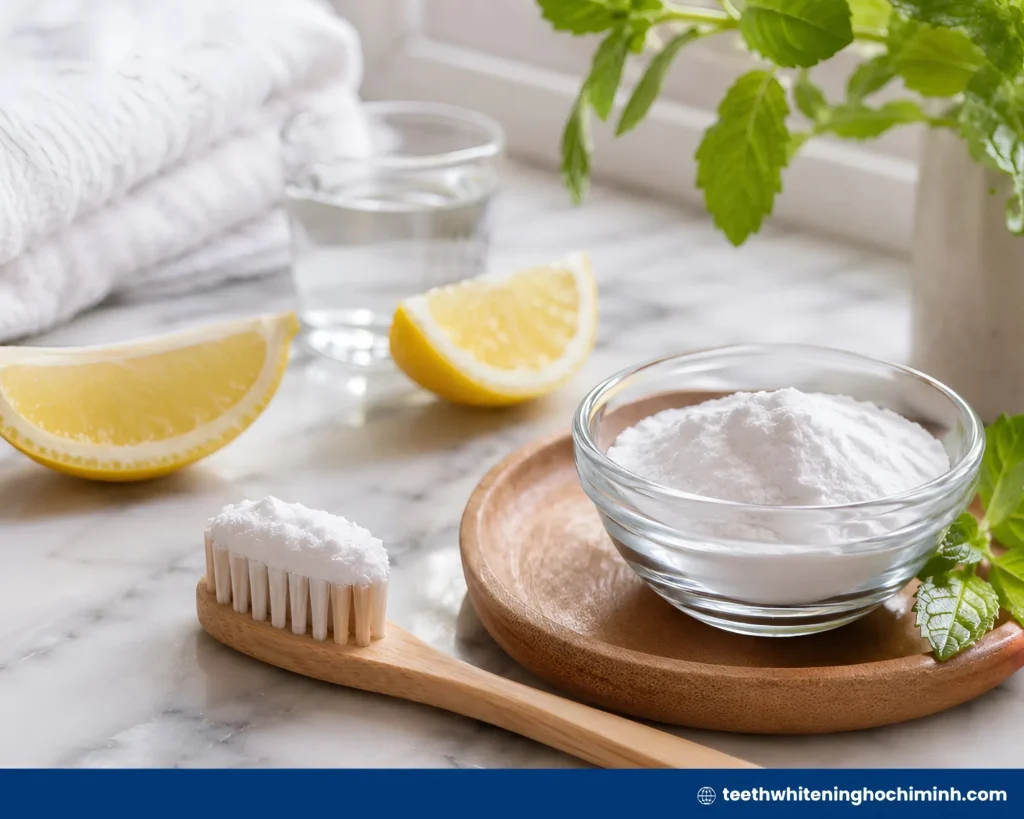
Many people confuse this process with true whitening. True whitening involves peroxide compounds that penetrate the enamel. These compounds break down stain molecules at a deeper level. Baking soda and teeth whitening are related, but baking soda alone works on the surface only.
Is baking soda good for teeth whitening?
Baking soda is good for teeth whitening when used correctly and in moderation. It is genuinely effective at lifting light surface stains. Dental researchers have documented this benefit for decades.
A widely cited 2017 review published in the Journal of the American Dental Association found that toothpastes containing baking soda removed plaque and surface stains more effectively than toothpastes without it. Baking soda is good for teeth whitening specifically for extrinsic stains.
These are stains sitting on top of the enamel rather than discoloration set into the tooth structure. Deeper, yellowish discoloration usually requires a peroxide-based product or an in-clinic treatment.
How does baking soda for teeth whitening work?
Baking soda for teeth whitening works through two separate mechanisms rather than one.
Mild abrasion removes surface stains
Sodium bicarbonate has a gritty texture with a low Relative Dentin Abrasivity, or RDA, value. This mild abrasiveness lifts stain particles from the enamel surface. It does not cut into the tooth structure, as long as it is used in the right concentration.
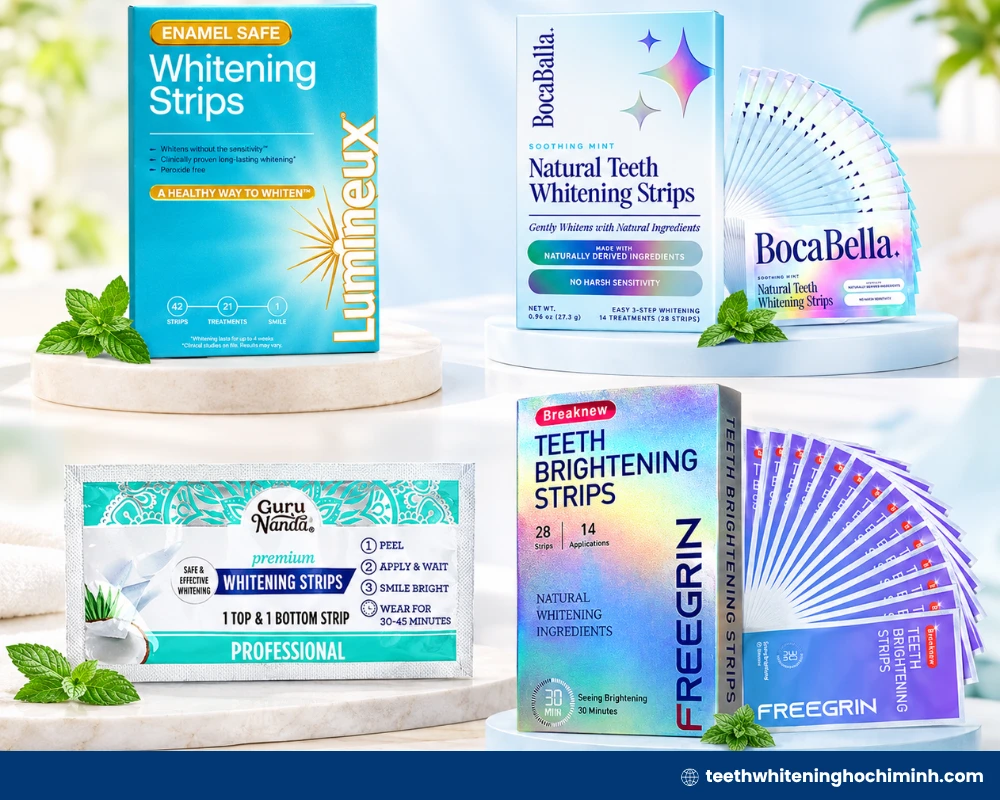
Some commercial products pair baking soda with hydrogen peroxide, including brands like Arm & Hammer, Colgate and Crest. This combines gentle abrasion with mild chemical bleaching.
| Read more: Top 10 Colgate teeth whitening toothpaste reviews in 2026
Alkaline pH neutralizes acid
Baking soda also carries an alkaline pH. This neutralizes the acids produced by bacteria and by acidic foods and drinks. This function protects enamel from erosion between brushings. It is a separate benefit from the whitening effect itself.
Baking soda for teeth whitening before and after
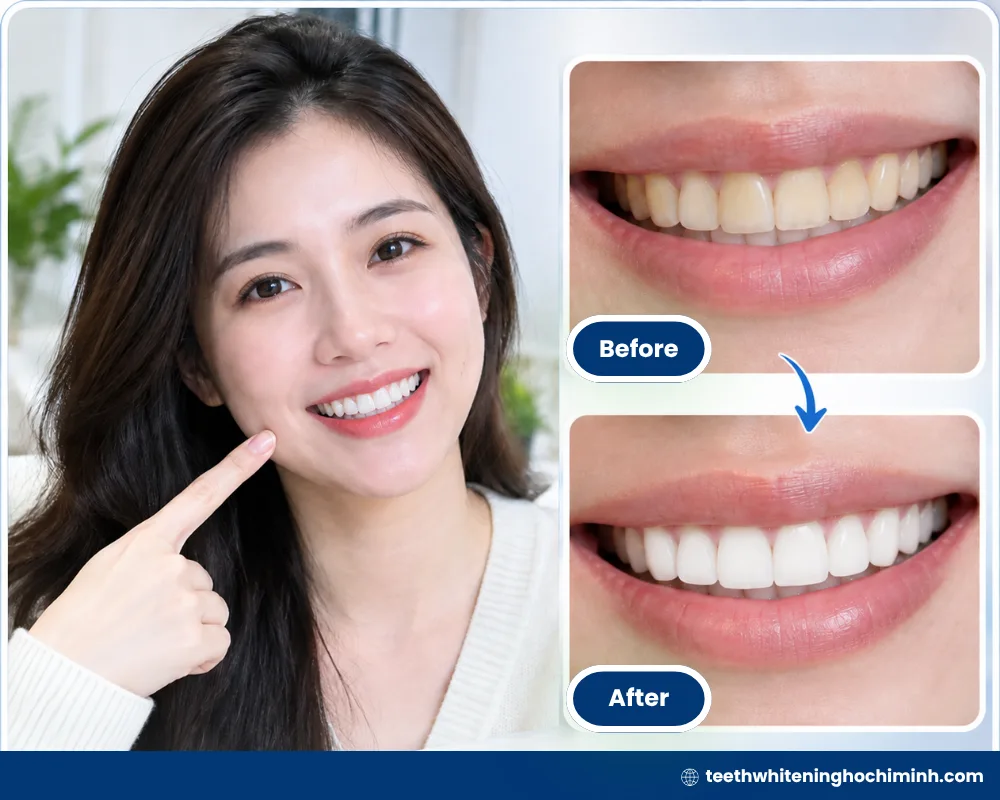
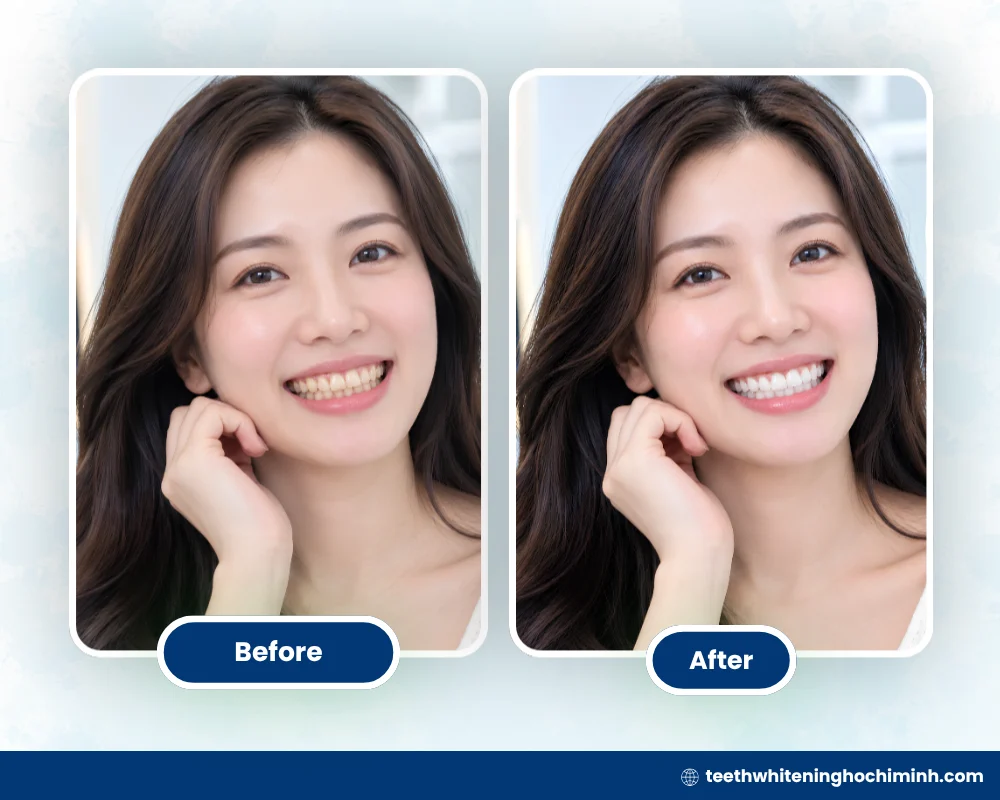
People searching for baking soda for teeth whitening before and after comparisons often expect a dramatic transformation similar to professional teeth whitening. Realistic expectations look different depending on the type of staining involved.
- Coffee and tea drinkers: noticeable brightening after two to four weeks of consistent, moderate use, usually visible in photos taken under natural light
- Smokers: minimal change unless the product also contains peroxide
- People with intrinsic (deep-set) discoloration: little to no visible difference from baking soda alone
Best baking soda for teeth whitening products in 09/2026
Finding the best baking soda for teeth whitening in 2026 means comparing formulation, abrasiveness and whether peroxide is included.
| Product | Formula | Key Feature | Best For |
| Arm & Hammer Advance White | Baking soda only | Low RDA, gentle daily polish | Sensitive enamel, budget users |
| Colgate Baking Soda and Peroxide Whitening Toothpaste | Baking soda + hydrogen peroxide | Foaming oxygen action for deeper stain lift | Coffee and tea drinkers |
| Crest Baking Soda & Peroxide Whitening Toothpaste | Baking soda + hydrogen peroxide | Balanced mint formula, wide availability | Daily use with fresh breath focus |
Each of these formulas keeps the RDA within the American Dental Association’s safety threshold of 250. Most baking soda toothpastes measure well below that number.
Baking soda for teeth whitening reviews from dental sources
Baking soda for teeth whitening reviews from dental publications tend to agree on a few consistent points. Reviewers note that baking soda toothpastes perform well against coffee and tea stains. They fall short of peroxide-only or professional treatments for deeper discoloration.
Independent product reviews echo this pattern. Consumers using peroxide-and-baking-soda combination toothpastes frequently report a fresh, clean feeling immediately after brushing.
Gradual whitening tends to follow over several weeks, rather than an instant change. Reviewers with sensitive teeth generally recommend starting with a baking-soda-only formula before moving to a peroxide combination.
Baking soda for teeth whitening side effects
Baking soda for teeth whitening side effects are usually mild when the product is used as directed. They are still worth understanding before starting a routine.
Tooth sensitivity
The side effect people encounter most often is temporary tooth sensitivity. It happens particularly to people who already have thin enamel or exposed dentin. This is more likely with peroxide-combination formulas than with baking-soda-only pastes.
Enamel wear from overuse
Brushing with straight baking soda paste multiple times a day for an extended period can wear down enamel faster than intended. This happens because of repeated mechanical abrasion. Gum irritation can also occur if the paste is applied too aggressively. These risks are lower with commercial toothpastes than with homemade baking soda pastes, since manufacturers formulate the abrasiveness within tested, dentist-reviewed limits.
Is baking soda for teeth whitening safe?
Baking soda for teeth whitening is safe for most adults when used a few times per week. It should not fully replace regular fluoride toothpaste.
Dentists generally advise against using straight baking soda paste as a full-time substitute. It typically lacks fluoride and offers no cavity protection on its own. Combining it with a standard fluoride toothpaste routine is the safer long-term approach. Choosing a commercial baking soda and peroxide formula that already includes fluoride works just as well.
| Read more: 7 ways to use baking soda and toothpaste for teeth whitening
How often should you use baking soda for teeth whitening?
Baking soda teeth whitening how often it should be used depends on the formulation and the person’s enamel sensitivity. As a general guideline, two to three times per week is a reasonable starting point when using baking soda for teeth whitening as a standalone paste.
Commercial baking soda and peroxide toothpastes are typically formulated for daily use. Manufacturers calibrate the abrasiveness and peroxide concentration for regular brushing. Anyone noticing increased sensitivity while using baking soda for teeth whitening should scale back frequency immediately and consult a dentist if discomfort continues.
Baking soda uses for teeth whitening at home
Baking soda uses for teeth whitening at home range from a simple paste to a slightly stronger peroxide combination. The right method depends on how much stain removal someone needs.
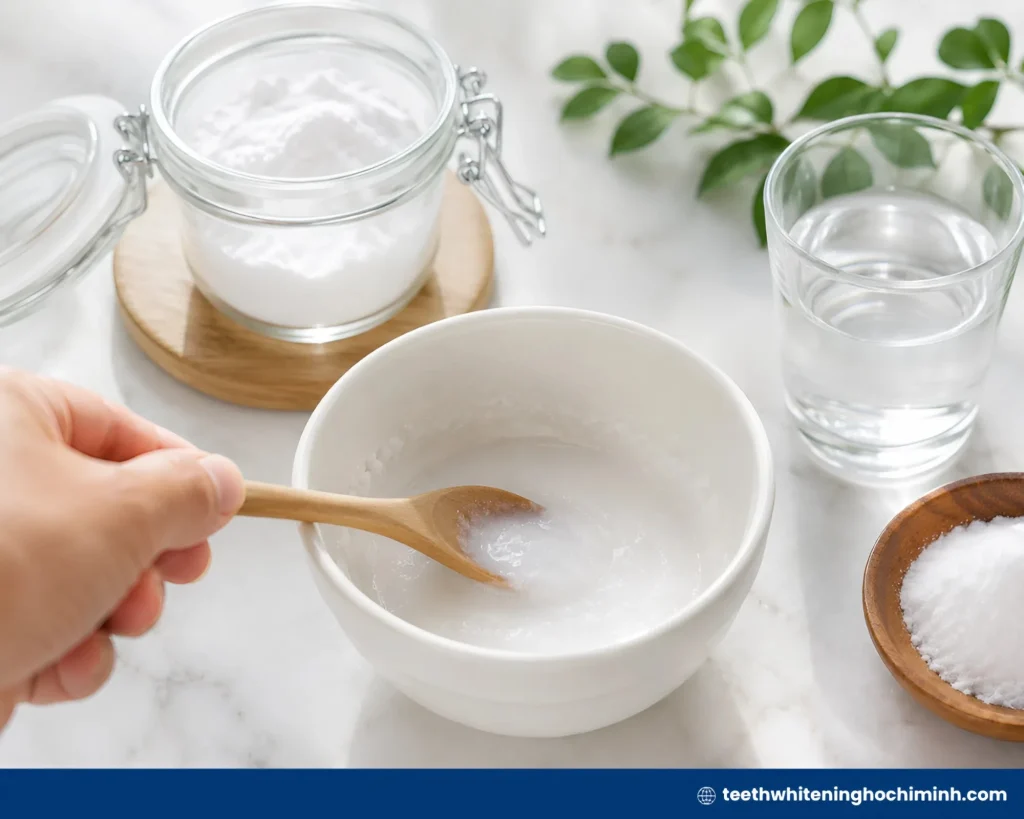
Simple baking soda paste method
- Combine baking soda with a small amount of water until a thick paste forms
- Brush gently for one to two minutes, avoiding excessive pressure
- Rinse thoroughly, then follow with a regular fluoride toothpaste session later in the day
This basic use of baking soda on teeth whitening is the most common starting point. Many people try it before committing to a commercial toothpaste.
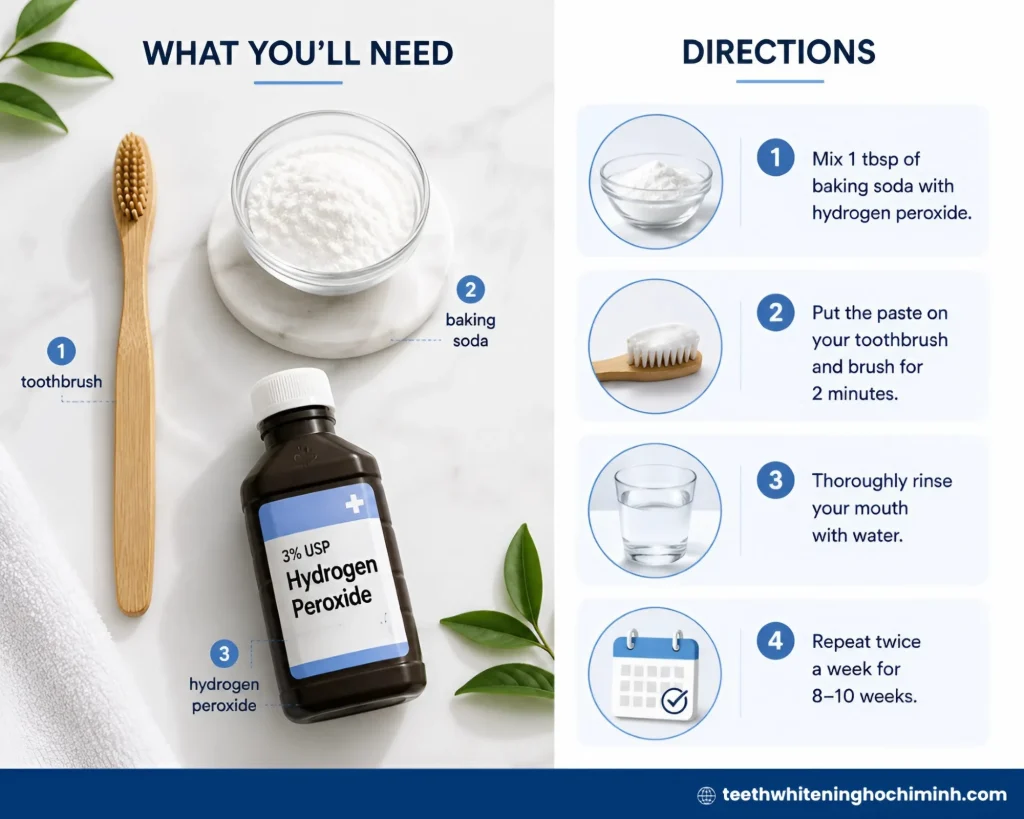
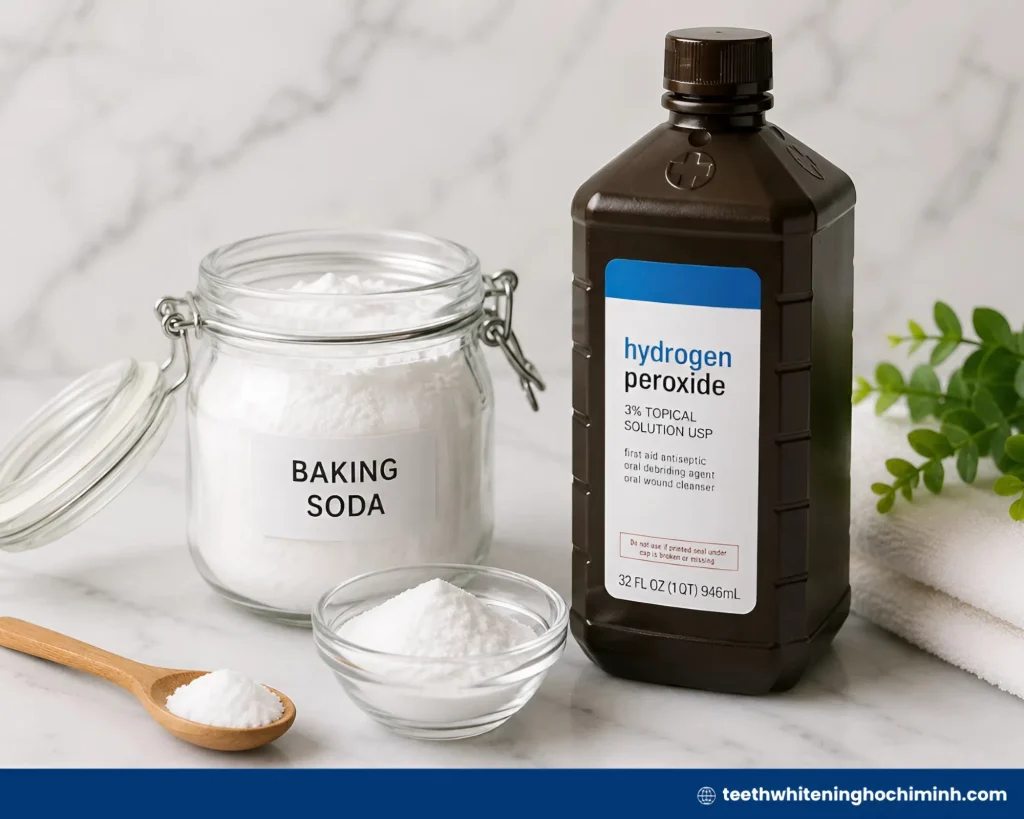
Baking soda and hydrogen peroxide paste
- Combine baking soda with a small amount of 3% hydrogen peroxide
- Apply for no more than one to two minutes
- Limit this method to two or three times per week
This stronger baking soda use teeth whitening method should not replace regular brushing. It works best as an occasional treatment rather than a daily habit.
Baking soda teeth whitening results, what to expect?
Baking soda teeth whitening results vary depending on three main factors: starting stain level, frequency of use, and diet. Realistic expectations prevent disappointment and reduce the temptation to overuse the product.
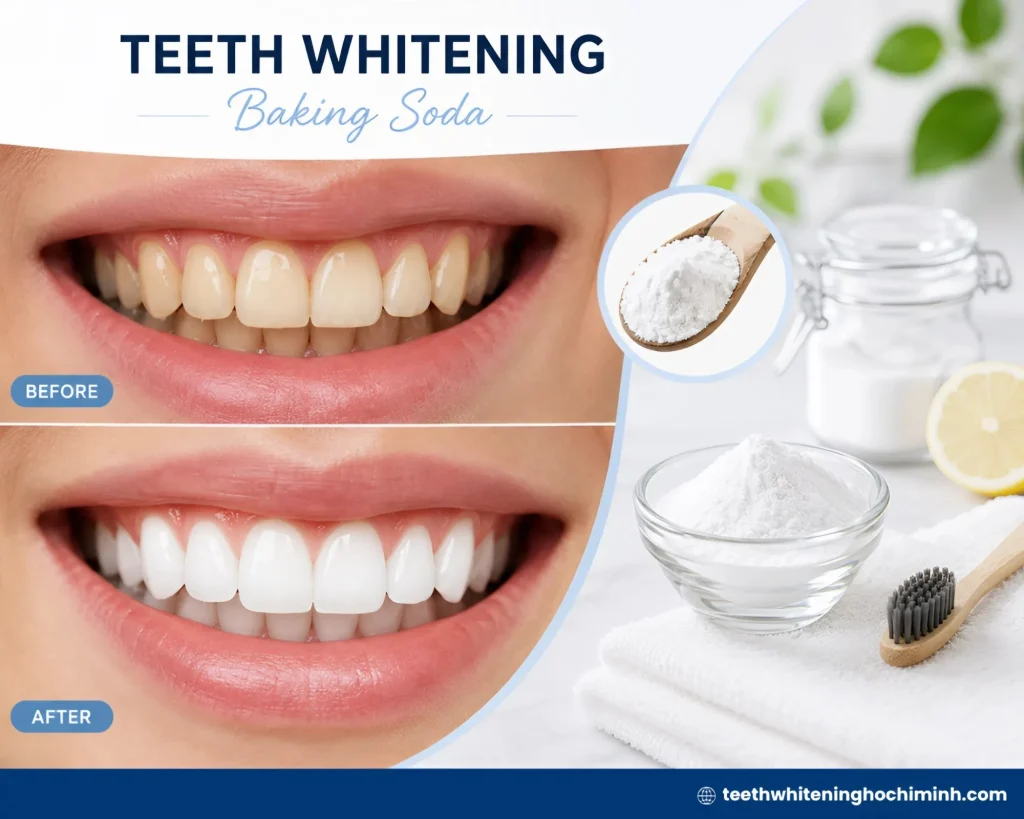
These results tend to follow three common patterns:
- Light coffee or tea stains: visible improvement within two to three weeks
- Long-term smokers or naturally darker enamel: smaller changes, often requiring a professional whitening treatment for a noticeably lighter shade
- Heavy or aggressive brushing: does not speed up results and instead raises the risk of enamel wear
Consistency matters more than intensity when it comes to baking soda teeth whitening results. Scrubbing harder or brushing more often will not speed up the process, and it only increases the risk of enamel wear over time.
Use of baking soda in teeth whitening routines compared to professional options
The use of baking soda in teeth whitening routines works best as a maintenance step. It is not usually a standalone solution for anyone wanting a significantly whiter smile. This is especially relevant for expats living in or visiting Ho Chi Minh City. Professional whitening options like Zoom whitening, LED-assisted treatments and dentist-supervised peroxide gels are widely available there.
A common, dentist-supported approach combines both methods. Baking soda toothpaste or a baking soda and peroxide combination handles day-to-day surface stain control. A professional in-clinic treatment addresses deeper, more stubborn discoloration in a single visit.
Conclusion
Baking soda for teeth whitening earns its reputation as an effective, low-cost tool for managing surface stains. It works particularly well on stains from coffee, tea and everyday food and drink. It is not a substitute for professional whitening when the goal is a dramatic shade change.
For anyone in Ho Chi Minh City weighing at-home options against clinic treatments, a dentist consultation remains the most reliable way to confirm which stains will respond to baking soda. Resources like Teeth Whitening Ho Chi Minh can help narrow down which clinics and treatments fit that need, while a dentist consultation.
References
- American Dental Association – Relative Dentin Abrasivity (RDA) safety guidelines for toothpaste
- Stain removal and whitening by baking soda dentifrice, JADA Supplement, November 2017
- Valkenburg C, et al. The efficacy of baking soda dentifrice in controlling plaque and gingivitis: A systematic review, International Journal of Dental Hygiene, 2019
- NewMouth – Baking Soda Toothpaste: Best Products & How It Works