
This in-depth guide by Teeth Whitening Ho Chi Minh covers PAP teeth whitening from the ground up – the science, the formats, and the real reason so many people are ditching peroxide. Whether this is the first time coming across PAP teeth whitening or a return visit to dig deeper into how it compares, here’s what’s worth knowing before making a decision.
What is pap teeth whitening?
PAP teeth whitening uses phthalimidoperoxycaproic acid (PAP) – a synthetic organic peroxy acid – as the active whitening agent instead of hydrogen peroxide. Originally developed as a bleaching activator in industrial detergents, PAP was later found to oxidize tooth stains effectively while causing significantly less damage to enamel compared to traditional peroxide formulas.
The upgraded version, PAP+, builds on this by adding two key supporting ingredients:
| Ingredient | Role |
| Phthalimidoperoxycaproic Acid (PAP) | Helps dissolve and eliminate external stains |
| Nano-Hydroxyapatite | Remineralizes enamel, prevents mineral loss |
| Potassium Citrate | Reduces nerve sensitivity in the tooth |
This three-part combination is what makes the PAP formula for teeth whitening both effective and noticeably gentler than older methods – a meaningful distinction for anyone who has experienced post-whitening discomfort before.
How the pap formula works (the science, simply explained)
When PAP+ teeth whitening strips or gel is applied to the tooth surface, PAP penetrates the enamel and oxidizes chromogens – the colored molecules responsible for staining from coffee, tea, wine, and certain foods. Unlike hydrogen peroxide, it does this without releasing free radicals.
Free radicals are the primary cause of post-whitening sensitivity. They interact with proteins inside the dentinal tubules – the microscopic channels that lead toward the tooth nerve – triggering the sharp, painful sensation many people associate with whitening treatments. Because the PAP+ formula bypasses that reaction entirely, users typically experience 0% sensitivity during and after treatment.
A peer-reviewed study published in PMC (2021) confirmed that PAP+ gel:
- Does not erode enamel
- Does not reduce enamel microhardness
- Outperformed 6% hydrogen peroxide on polyphenol-based stains (coffee, red wine, tea)
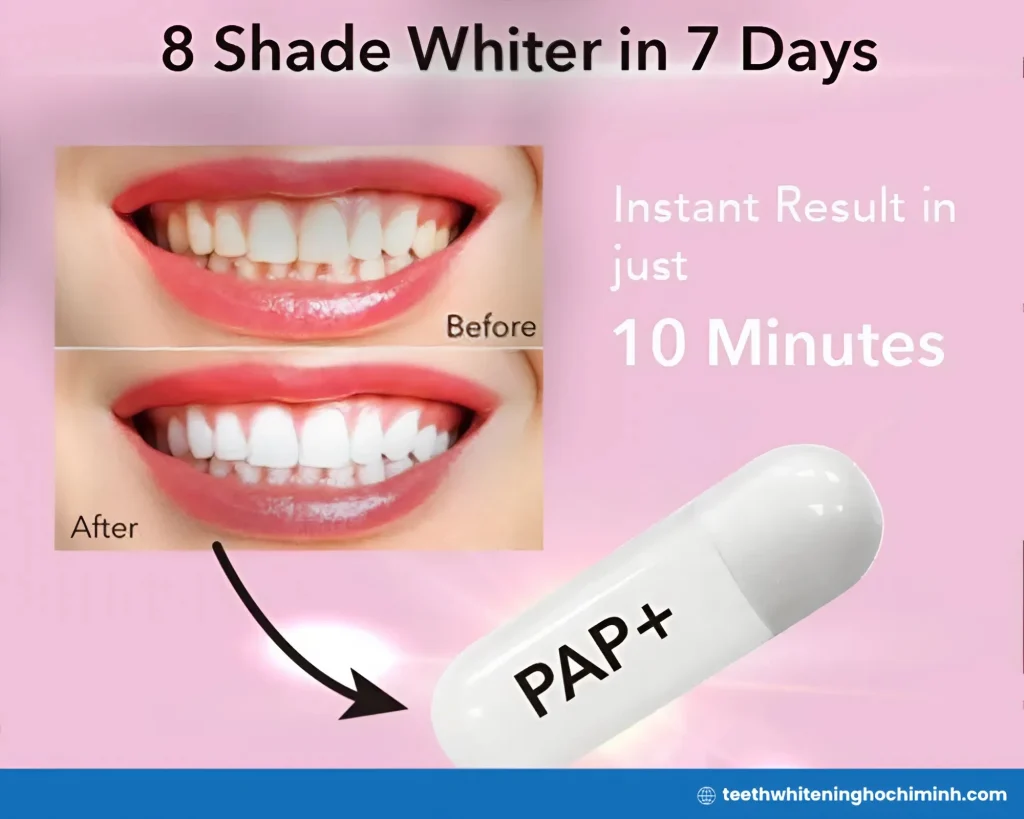
- Improved tooth shade by approximately 8 VITA Bleachedguide shades in six 10-minute sessions
A separate clinical trial comparing the gel format against a 35% carbamide peroxide formula found comparable whitening outcomes – with significantly lower patient-reported sensitivity scores. This positions PAP+ teeth whitening not as a compromise, but as a genuine clinical-grade alternative for at-home use.
Pap teeth whitening strips: What to expect?
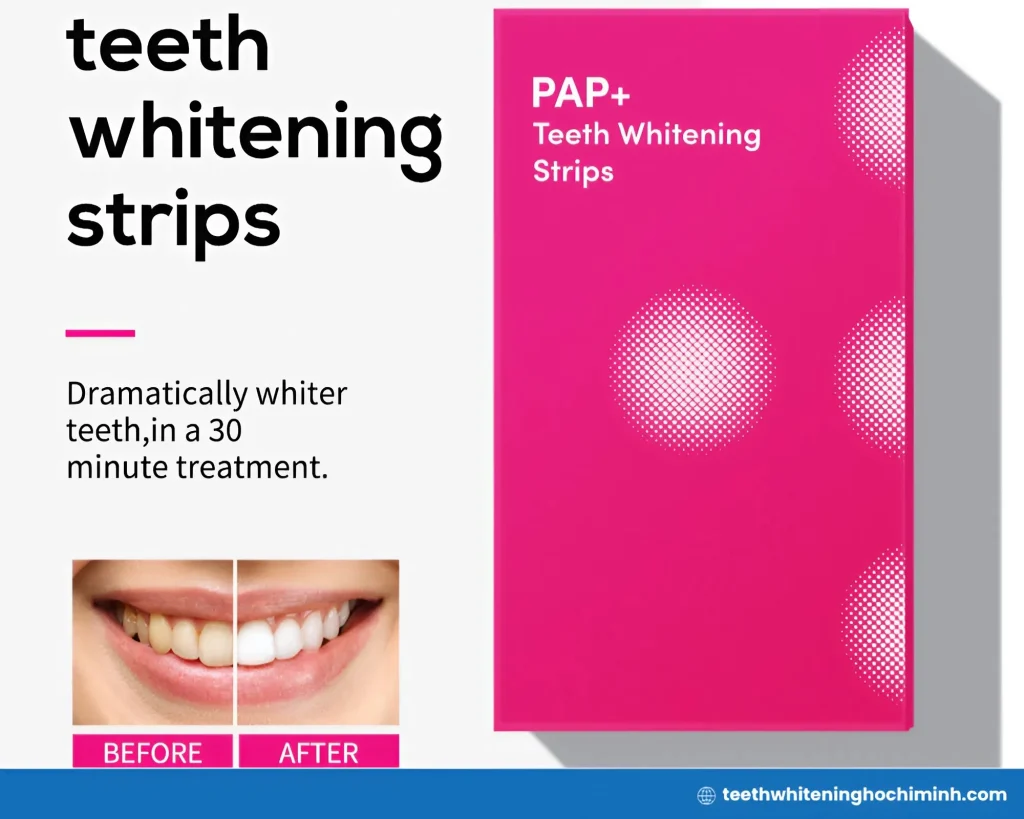
PAP teeth whitening strips are among the most practical formats available. The 28-strip kit (14 upper + 14 lower) covers a full two-week whitening cycle with one application per day. Strips are thin, flexible, and pre-coated with the PAP+ gel – no trays, no syringes, and no mixing required.
Standard usage routine:
- Apply strips to clean, dry teeth (upper and lower arches)
- Leave on for 30 minutes
- Repeat once daily for 14 days
Visible improvement is often observed within 3 to 5 days of use. The full 14-day course with PAP strips teeth whitening is designed to deliver a consistently brighter result without the sensitivity spikes that typically follow peroxide-based strip use.
Tips for best results:
- Avoid dark-colored food and drinks (coffee, red wine, berries) for 30–60 minutes after each session
- Brush teeth before applying strips – not after, as enamel is temporarily more porous post-whitening
- Stick to once daily – overuse does not speed up results and may cause gum irritation
Consistent use is more important than higher intensity. The formula is built to work gradually and safely over the full two-week period – skipping sessions will reduce the cumulative effect.
Pap+ vs. hydrogen peroxide: A direct comparison
Understanding the switch from conventional whitening to teeth whitening PAP+ comes down to a few measurable differences:
| Feature | PAP+ | Hydrogen Peroxide |
| Sensitivity | 0% (no free radicals) | Common side effect |
| Enamel safety | Preserves & remineralizes | Can reduce microhardness |
| Stain removal | Effective on polyphenols | Effective, broader range |
| Gum irritation | Minimal | Possible with prolonged use |
| Peroxide-free | Yes | No |
| At-home suitability | Safe for daily use | Concentration-dependent |
For people with sensitive teeth or those who want a gentler approach without sacrificing results, PAP for teeth whitening is a clinically supported option backed by multiple independent studies.
Pap teeth whitening kit: What’s included?
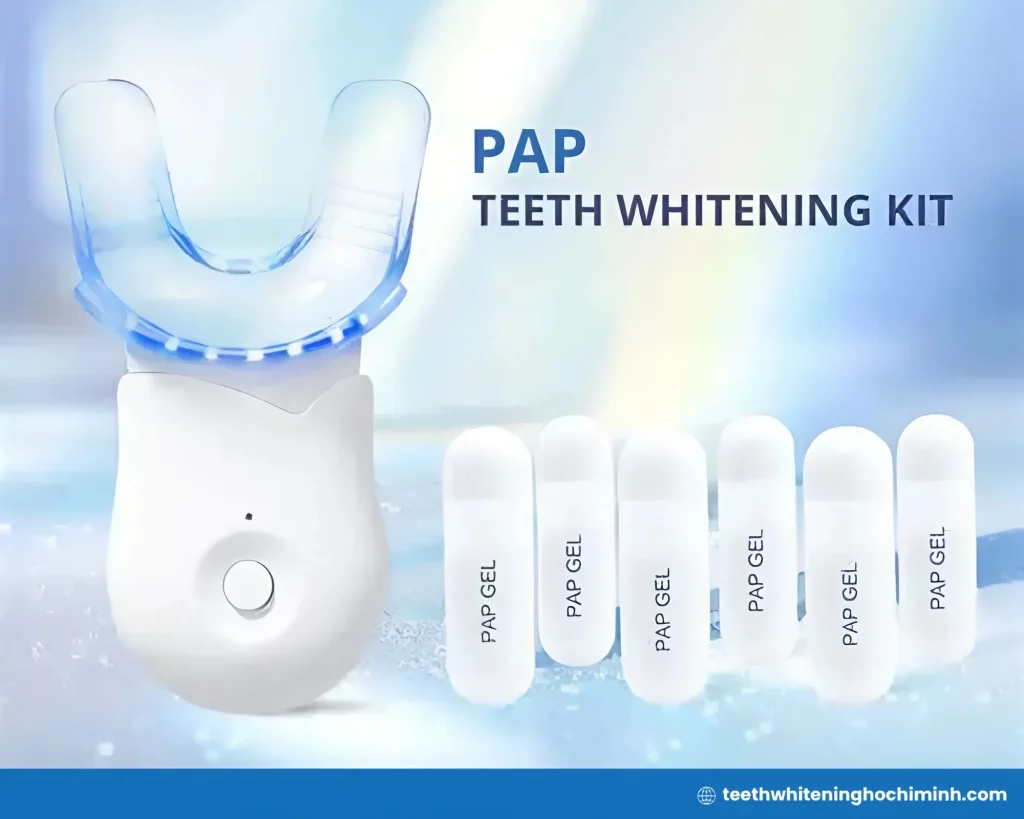
A standard PAP teeth whitening kit typically contains:
- 28 whitening strips (PAP+ formula) – 14 upper, 14 lower
- Hydroxyapatite-infused gel layer for enamel remineralization
- Potassium citrate for nerve sensitivity protection
- No bleaching trays, LED devices, or manual mixing involved
Some expanded formats – such as the Be White Teeth Whitening Super Kit PAP+ – also bundle whitening powder or additional gel boosters for a more intensive whitening system, suited to users targeting faster or more significant shade improvement.
Pap teeth whitening gel and powder options
Beyond strips, PAP teeth whitening gel is commonly used in tray-based systems where more coverage or precise application is needed. The gel sits flush against the full tooth surface, making it particularly useful for uneven or deeper staining. For users who prefer a hybrid approach, combining a PAP teeth whitening strip cycle with periodic gel top-ups is a practical maintenance strategy.
PAP powder teeth whitening – widely associated with brands like HiSmile – works differently. Applied with a brush or fingertip, teeth whitening PAP powder functions best as a between-cycle maintenance product rather than a primary treatment. The HiSmile PAP+ whitening powder is marketed specifically as a teeth whitening powder without sensitivity, making it accessible even to users with highly reactive teeth who have struggled with other formats.
Both gel and powder formats share the same core advantage as strips: the absence of peroxide means the whitening process does not irritate the nerve pathways that cause sensitivity.
Is pap teeth whitening safe? What the research shows
Based on current clinical evidence, PAP teeth whitening is safe for enamel and soft tissue when used as directed.
Core results identified through independent analysis:
- PAP does not generate reactive oxygen species (ROS) or free radicals
- PAP+ gel showed zero nanoscale enamel roughness in laboratory testing
- No significant cytotoxic effects were recorded at standard whitening concentrations
- Suitable for most adults, including those with mild-to-moderate pre-existing sensitivity
That said, “safe” does not mean “without limits.” Even the gentlest whitening formula can cause problems if misused. Following the product instructions – daily frequency, application duration, and storage conditions – is essential for good outcomes.
Certain individuals should proceed with caution:
- Pregnant women are advised to postpone any whitening treatment as a general precaution, not due to specific evidence against PAP, but because research on cosmetic dental treatments during pregnancy is limited
- Those with active cavities or gum disease should address those conditions with a dentist before starting any at-home whitening program
- Applying strips over open lesions or inflamed gum tissue may cause irritation even with a sensitivity-free formula
For the vast majority of healthy adults, a standard PAP+ kit used over 14 days carries minimal risk and delivers a measurable improvement in tooth shade.
Popular pap+ brands: How they compare?
The PAP+ whitening market has grown significantly since HiSmile pioneered the formula. Several brands now offer products using the same core technology, but with meaningful differences in format, concentration transparency, and pricing.
| Brand | Format | PAP Concentration | Key Differentiator |
| HiSmile | Strips, pen, powder, toothpaste | Not disclosed | First to market with PAP+; widest format range |
| Be White | Kit (strips + powder) | Not disclosed | Bundled super kit format; popular for intensive cycles |
| Moon | Strips, pen | Not disclosed | Lifestyle branding; widely available in retail |
| Lumineux | Strips, toothpaste | Not disclosed | Certified non-toxic; natural ingredient focus |
Frequently asked questions
What is PAP teeth whitening?
It uses phthalimidoperoxycaproic acid – a peroxide-free compound – to oxidize tooth stains without generating free radicals, resulting in little to no sensitivity.
How does PAP+ differ from standard PAP?
PAP+ adds nano-hydroxyapatite and potassium citrate, which remineralize enamel and reduce nerve sensitivity – making it more protective than PAP alone.
Are PAP teeth whitening strips safe for sensitive teeth?
Yes. Because PAP releases no free radicals, it is considered safe for sensitive teeth and is a commonly recommended alternative to peroxide strips.
How many shades whiter can PAP+ achieve?
Clinical studies show up to 8 VITA shades improvement in six 10-minute sessions; some trials report up to 10 shades in 7 days with consistent use.
How long does a PAP teeth whitening kit last?
A 28-strip kit covers a 14-day treatment cycle. Results typically last 12–24 months depending on diet and oral hygiene habits.
Where can PAP+ whitening products be found?
PAP+ strips, gels, and kits are available through specialist whitening retailers and select dental product suppliers online.
How much does it cost?
At-home PAP+ strips and kits generally range from $20–$60 USD depending on brand, format, and kit size.
Is PAP teeth whitening FDA-approved?
The FDA does not formally approve cosmetic whitening products, but reputable PAP+ products can be FDA-registered and should meet standard over-the-counter safety requirements.
For those seeking a sensitivity-free whitening solution backed by clinical research, the shift toward PAP teeth whitening makes practical sense – whether the goal is a brighter smile before an event, gradual long-term improvement, or a gentler alternative to peroxide that no longer causes discomfort. Explore the full range of PAP teeth whitening strips, gel, and kit options at Teeth Whitening Ho Chi Minh.
