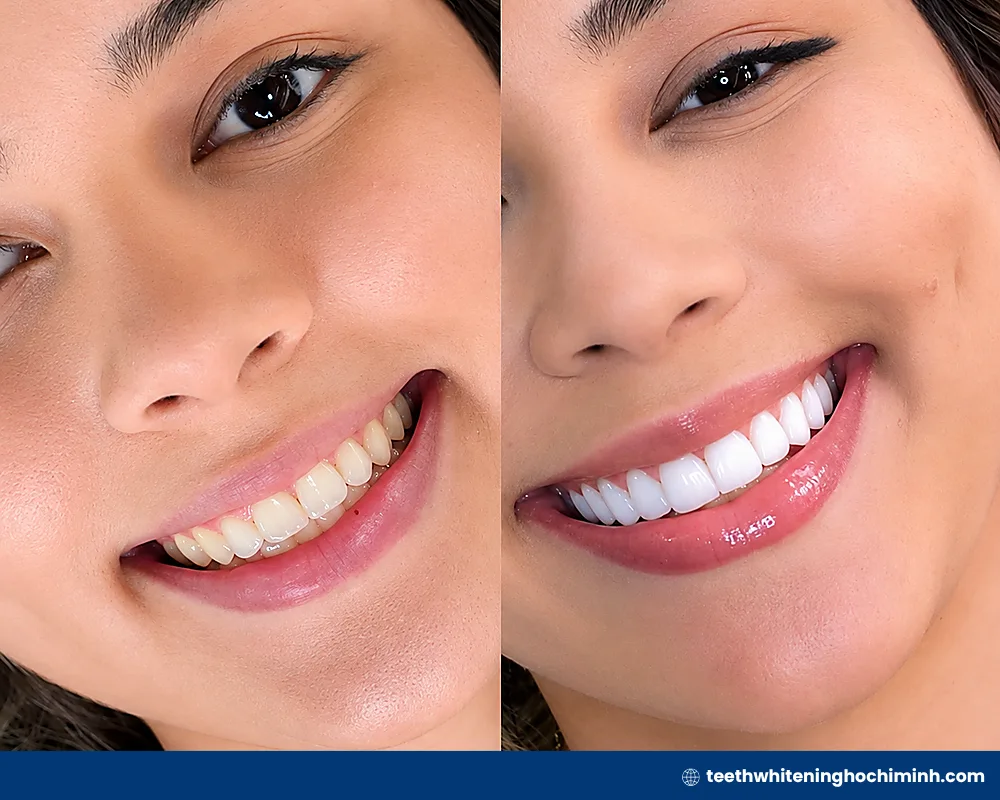
Coffee stains, red wine, and daily habits build up on tooth enamel over time. Many people search for natural teeth whitening at home options before booking a clinic visit, hoping to brighten their smile without chemical strips or in-office bleaching. This guide separates the remedies backed by some evidence from the ones dentists actively warn against, so results stay realistic and enamel stays protected.
Do natural teeth whitening at home remedies actually work?
Most natural teeth whitening at home remedies remove light surface stains rather than change the actual color of the tooth. They work best on stains from coffee, tea, or smoking. They cannot lighten the dentin layer underneath, which is what professional bleaching targets.
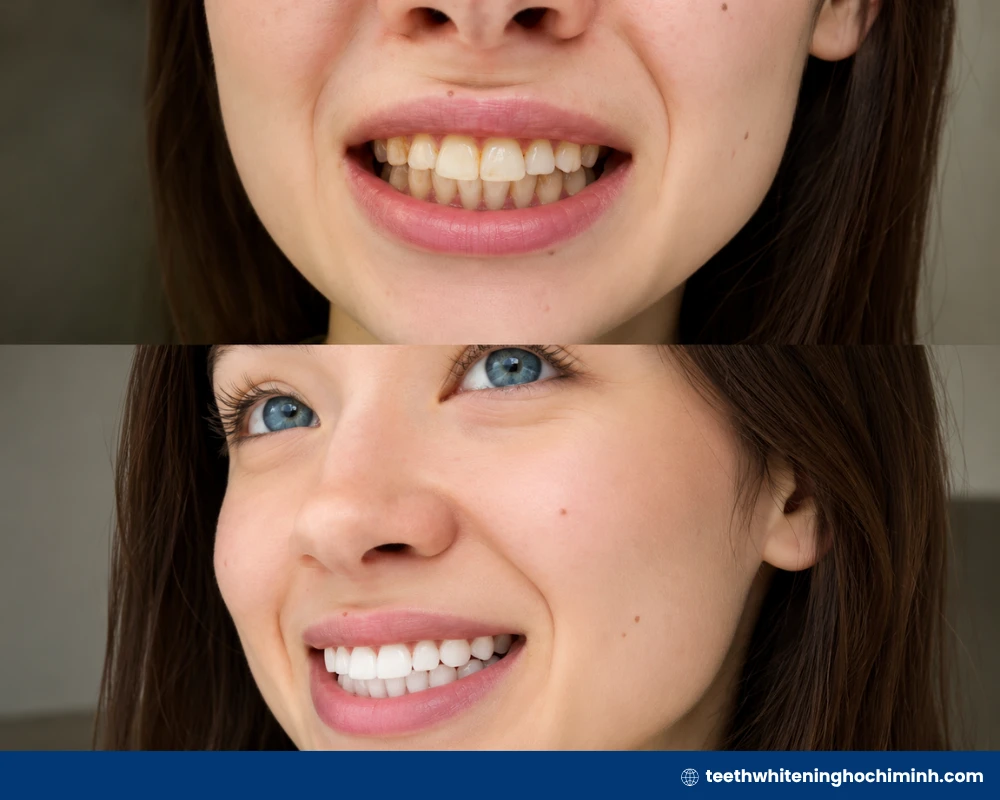
This distinction matters because online advice often blurs “cleaner” with “whiter”. A remedy that polishes away surface buildup is not the same as one that bleaches tooth structure the way peroxide-based treatments do.
Baking soda for natural teeth whitening at home
Baking soda is one of the more reliable options for natural teeth whitening at home because it is a mild abrasive. Mixed with water into a paste, it can lift light surface stains and neutralize acid in the mouth.
How to use baking soda safely
Mix baking soda with a small amount of water until it forms a soft paste. Brush gently with this paste two to three times a week instead of every day, then rinse thoroughly and follow with regular fluoride toothpaste.
| Read more: Best baking soda for teeth whitening results and reviews 10/2026
Risks of daily use
Daily brushing with baking soda wears down enamel faster than regular toothpaste. Once enamel thins, teeth often look more yellow, since the dentin layer underneath becomes more visible through the weakened surface.
Oil pulling as a natural at home teeth whitening habit
Oil pulling has weaker evidence for actual whitening, though it may support general oral hygiene as part of a natural teeth whitening at home routine. Swishing coconut or sesame oil for 10 to 15 minutes can reduce plaque and bacteria, which indirectly keeps teeth looking cleaner over time.
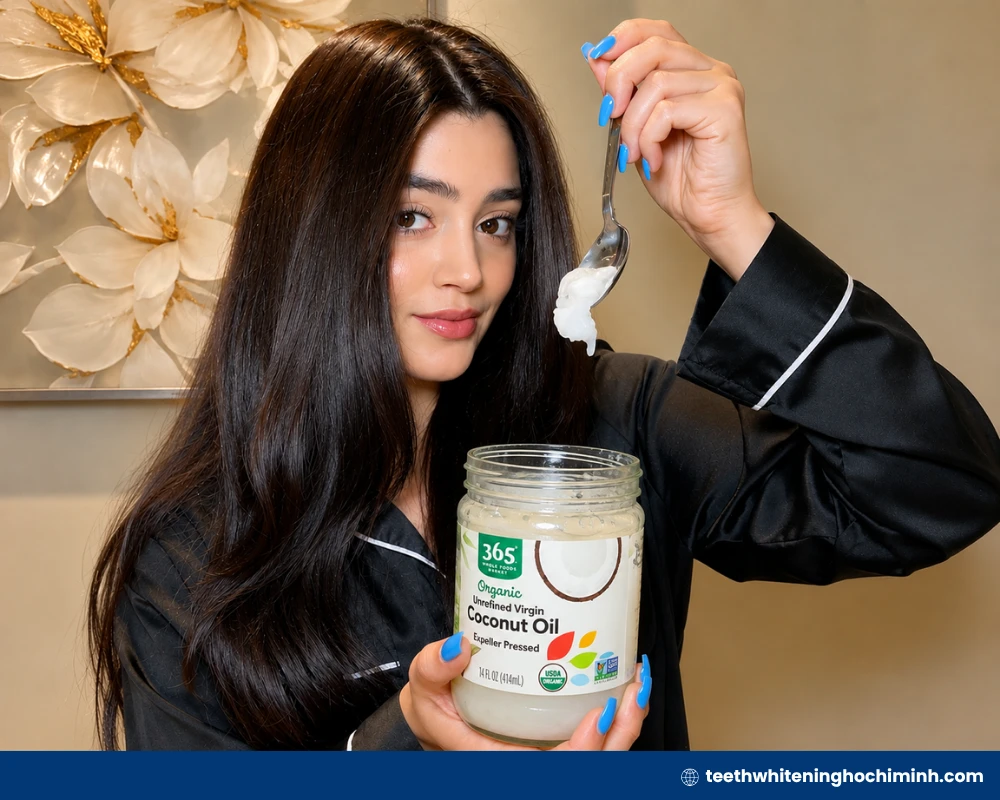
Clinical research published in the Indian Journal of Dental Research found that daily coconut oil pulling reduced plaque and gum inflammation scores over a 30-day period. That said, the American Dental Association has stated there is no reliable scientific evidence that oil pulling changes tooth color on its own. It works better as a supporting habit than as a standalone whitening method.
Is hydrogen peroxide safe for homemade natural teeth whitening?
Diluted hydrogen peroxide can be used as a short rinse before brushing, but concentration and frequency matter a lot for homemade natural teeth whitening. Undiluted or overused peroxide irritates gums and increases tooth sensitivity.
Hydrogen peroxide is the same active ingredient found in many professional whitening systems, just at a much higher concentration in clinical settings. At home, a properly diluted rinse breaks down surface stains gradually rather than bleaching teeth in one sitting. It should never replace fluoride toothpaste or regular brushing.
Strawberries and baking soda as a natural teeth whitening at home remedy
Strawberries contain malic acid, which some people use alongside baking soda for a mild whitening effect. This combination is one of the more studied natural teeth whitening home remedies, though results stay modest and temporary.
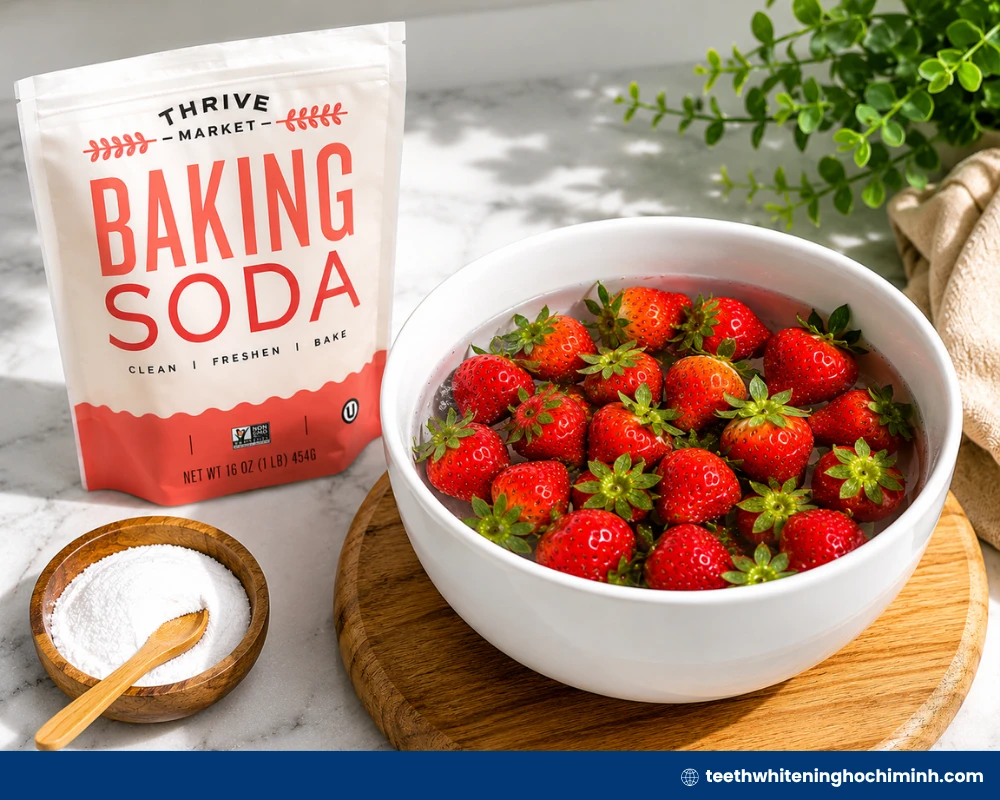
Mashing one or two strawberries with a small amount of baking soda creates a paste that can be applied for a few minutes before rinsing thoroughly. Used two to three times a week, it may lift light stains over several weeks. Daily use is not recommended, since the acidic and abrasive combination can wear down enamel with repeated exposure.
Why charcoal and acidic remedies can damage enamel?
Activated charcoal and acidic rinses like apple cider vinegar or lemon juice are popular in natural teeth whitening at home content online, but dental research does not support their long-term safety. Both categories carry real risk to enamel when used regularly.
Activated charcoal
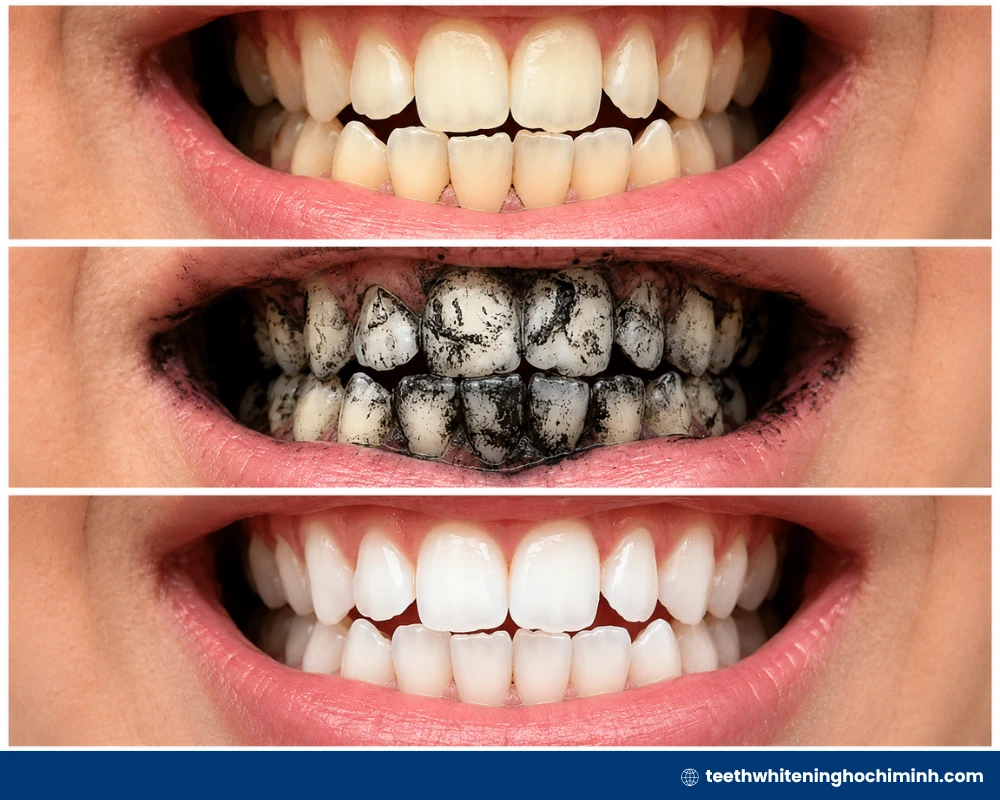
Charcoal powder is highly abrasive, and repeated brushing with it can scratch and thin enamel over time. Any brightening effect tends to fade quickly once the surface layer wears down further.
Apple cider vinegar and lemon juice
Apple cider vinegar has a pH between 2.4 and 3.0, which is acidic enough to soften and erode enamel within minutes of contact. Any whitening effect people notice is often the enamel wearing away and revealing the yellower dentin underneath, not an actual whitening reaction.
Best natural teeth whitening at home remedies compared
The table below summarizes how each natural teeth whitening at home method compares on effectiveness, timeline, and safety.
| Remedy | Effectiveness | Typical timeline | Safety notes |
| Baking soda paste | Mild, surface stains only | 3-4 weeks with 2-3x weekly use | Safe in moderation, avoid daily use |
| Oil pulling | Limited, supports oral hygiene | 4-6 weeks for plaque reduction | Low risk, not a standalone whitener |
| Diluted hydrogen peroxide rinse | Moderate, gradual stain breakdown | 2-4 weeks | Dilution is essential, avoid overuse |
| Strawberry and baking soda paste | Mild, temporary | 2-4 weeks with 2-3x weekly use | Acidic, limit to a few times per week |
| Activated charcoal | Not recommended | N/A | Abrasive, can thin enamel over time |
| Apple cider vinegar or lemon juice | Not recommended | N/A | Highly acidic, erodes enamel |
How long does natural teeth whitening at home take to show results?
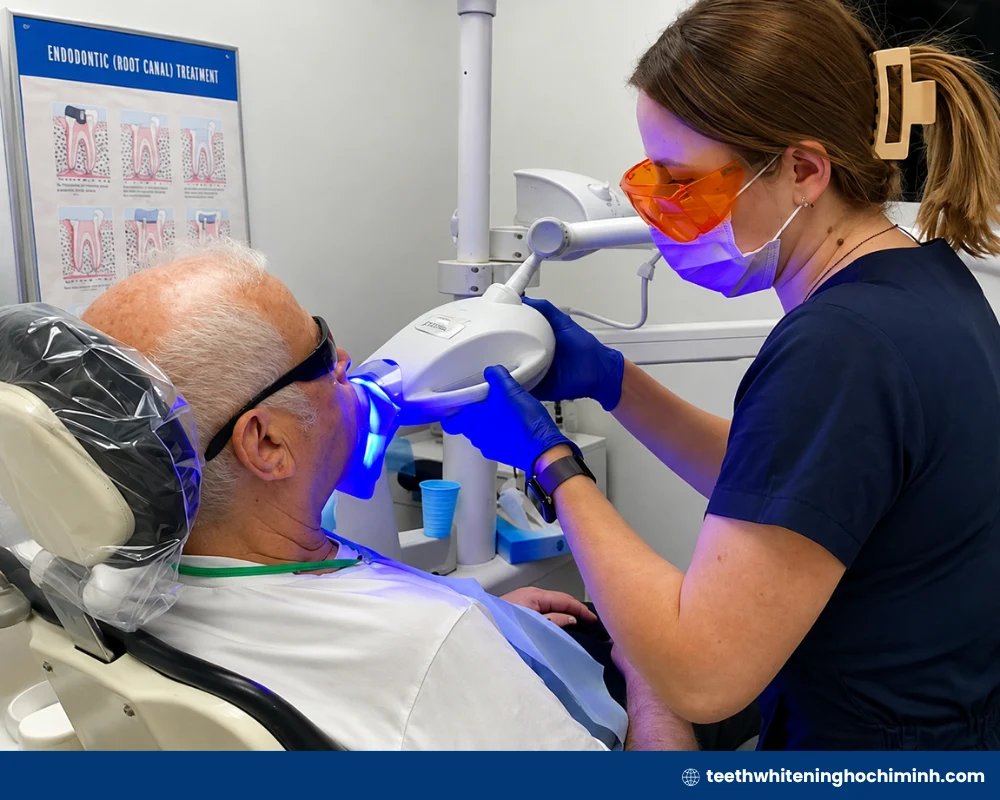
Most natural teeth whitening at home methods take several weeks to show any visible change, and the improvement is usually one to two shades at most. Professional whitening tends to work faster and produces more noticeable results within a single session or short treatment course.
Anyone expecting a dramatic transformation from home remedies alone will likely be disappointed. These methods work better as maintenance between professional visits than as a replacement for them.
Daily habits that support natural teeth whitening at home
Diet and daily routine make a bigger difference than most people expect. Reducing coffee, tea, red wine, and tobacco slows down new staining, which makes any whitening effort last longer.
Rinsing with water after dark-colored drinks helps too, since it limits how long staining pigments sit on enamel. Combined with consistent brushing and flossing, these small habits often do more for long-term brightness than any single remedy on its own.
When should sensitive teeth avoid these remedies?
People with sensitive teeth or existing enamel erosion should be more cautious with best homemade natural remedies for teeth whitening, since abrasive and acidic ingredients can make sensitivity worse. Baking soda and charcoal are the most likely culprits.
Anyone noticing increased sensitivity to hot or cold after starting a home remedy should stop and let enamel recover. A dentist can confirm whether the sensitivity is from a remedy or from an unrelated issue like an exposed root or existing decay.
When natural remedies are not enough
Deep or long-term discoloration usually does not respond to natural teeth whitening at home methods, regardless of how consistently they are used. In these cases, a professional evaluation is the more reliable next step, especially for expats unfamiliar with local dental options.
For anyone based in Vietnam weighing at-home methods against clinical treatment, Teeth Whitening in Ho Chi Minh City is a useful reference point. The site breaks down clinic options and pricing, along with what to expect from professional whitening compared to natural approaches.
Quick checklist for safe natural teeth whitening at home
Before trying any remedy above, it helps to keep a few safety habits in mind so the routine stays effective without harming enamel.
- Use baking soda paste no more than two to three times a week
- Dilute hydrogen peroxide properly before using it as a rinse
- Avoid daily use of activated charcoal or acidic rinses like vinegar or lemon juice
- Stop any remedy that causes noticeable sensitivity
- Pair home remedies with reduced coffee, tea, and tobacco intake for better results
- See a dentist before starting any remedy if enamel is already thin or sensitive
Best natural teeth whitening at home remedies can help maintain a brighter smile between professional visits, but they work slowly and have real limits. Understanding which methods are backed by evidence, and which ones carry real risk to enamel, makes it easier to choose a routine that actually helps. This kind of awareness also prevents long-term enamel damage from trial-and-error remedies.